Face or Body, Never Both: Why Confidence On Shoots Matters!
Why models so often like their face or their body in a photo, but rarely both, and why the best frames come when a shoot stops feeling like a job.
Of everything I've learnt from shooting swim, the thing that still fascinates me most isn't the light, or the location, or even the swimwear. It's confidence, and how clearly it shows up on camera, or doesn't, often in ways the person in front of the lens can't see at all.
I've had girls come to me before a swimwear photoshoot and say, and I quote, "I never like my face and my body in a photo, it's either one or the other." I've heard it enough times now from models just starting that I stopped treating it as a throwaway comment and started paying attention to what they're seeing.
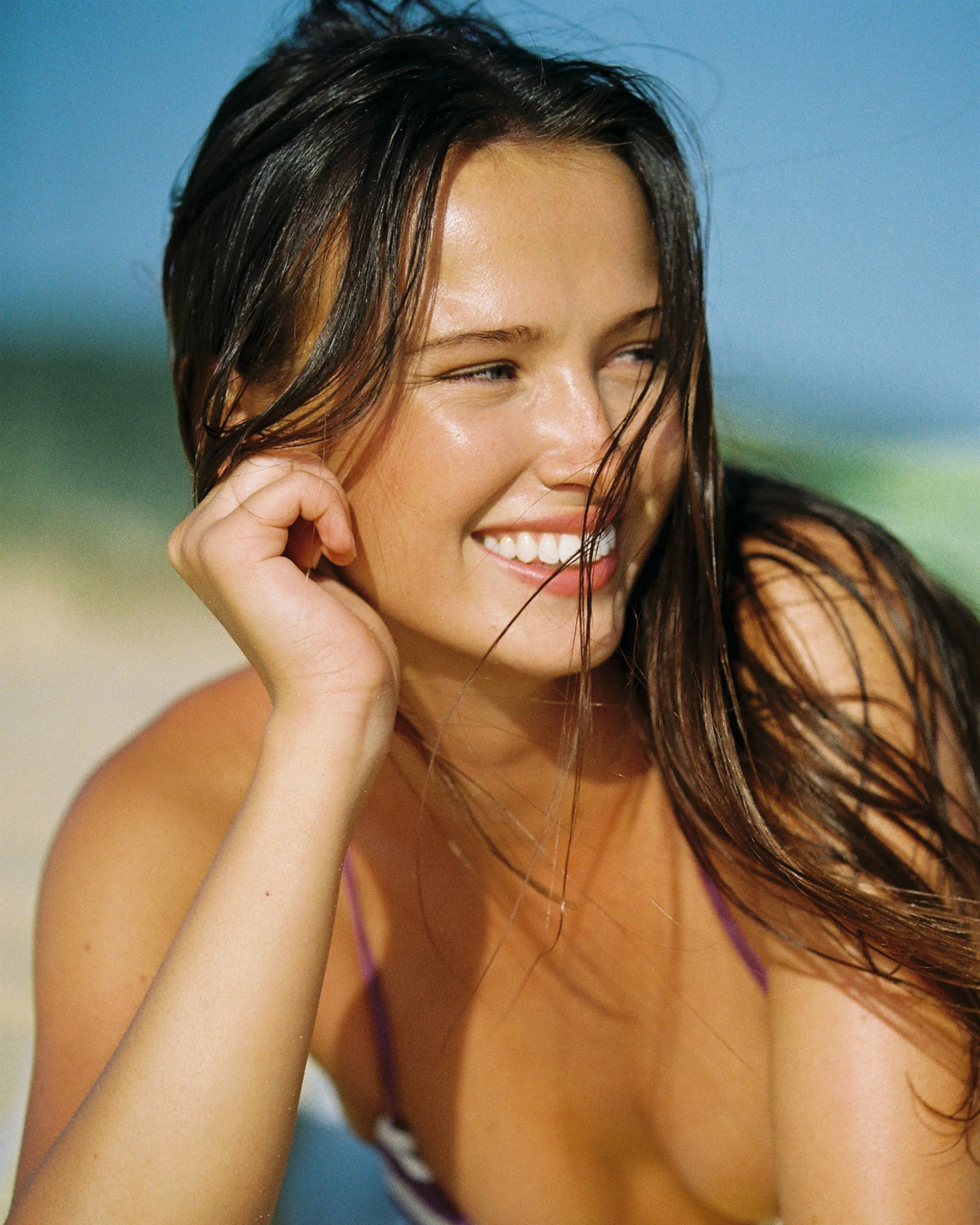
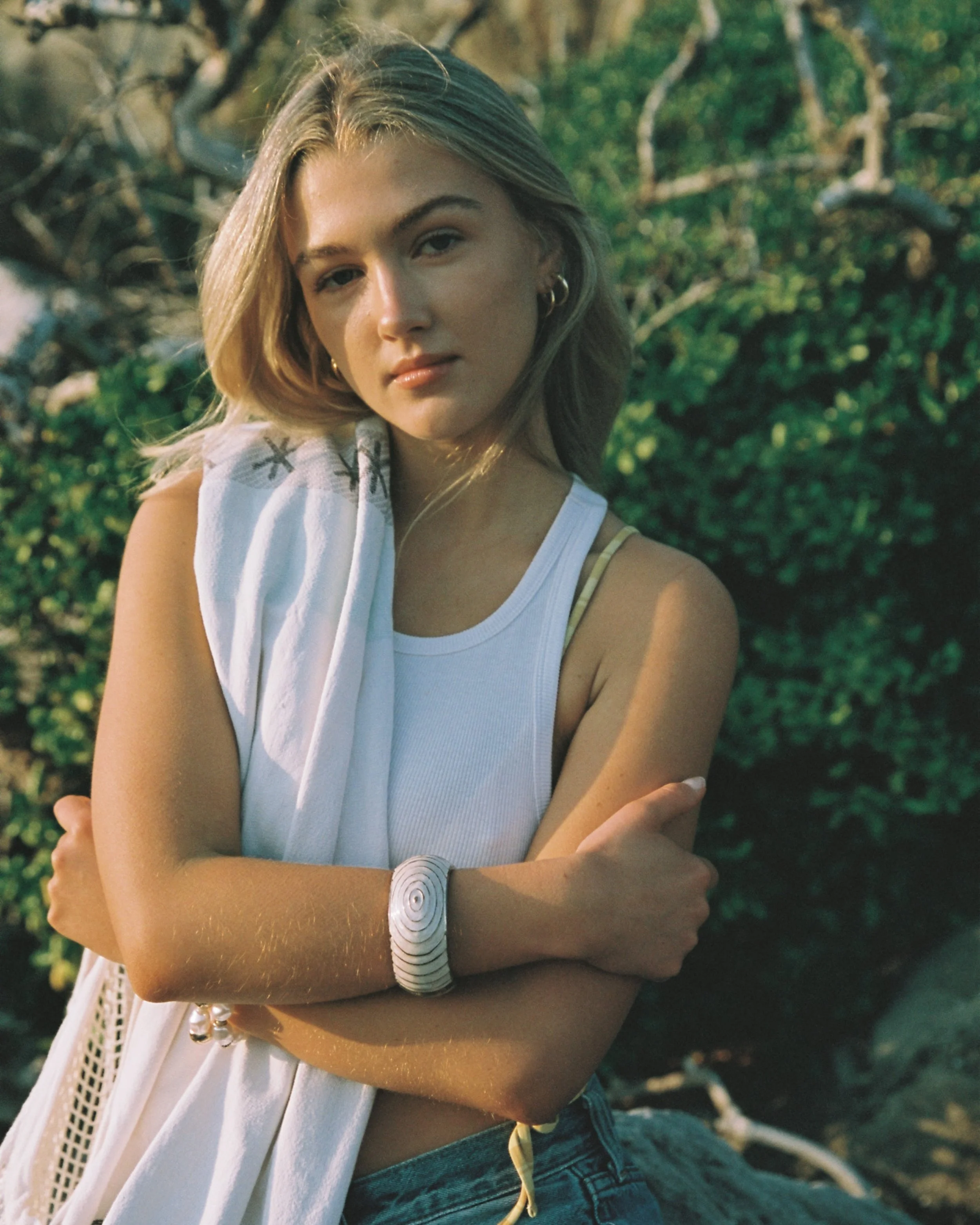
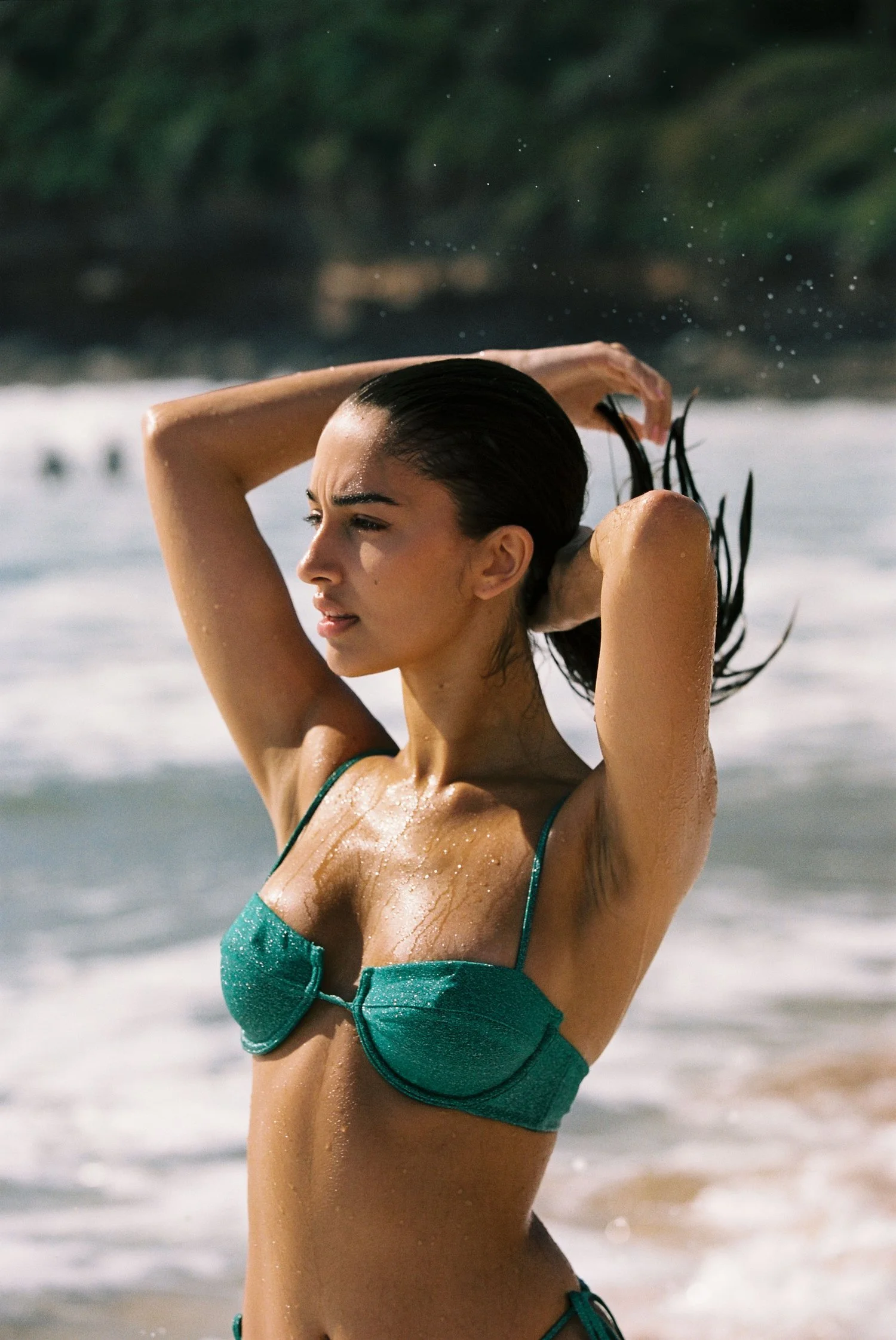
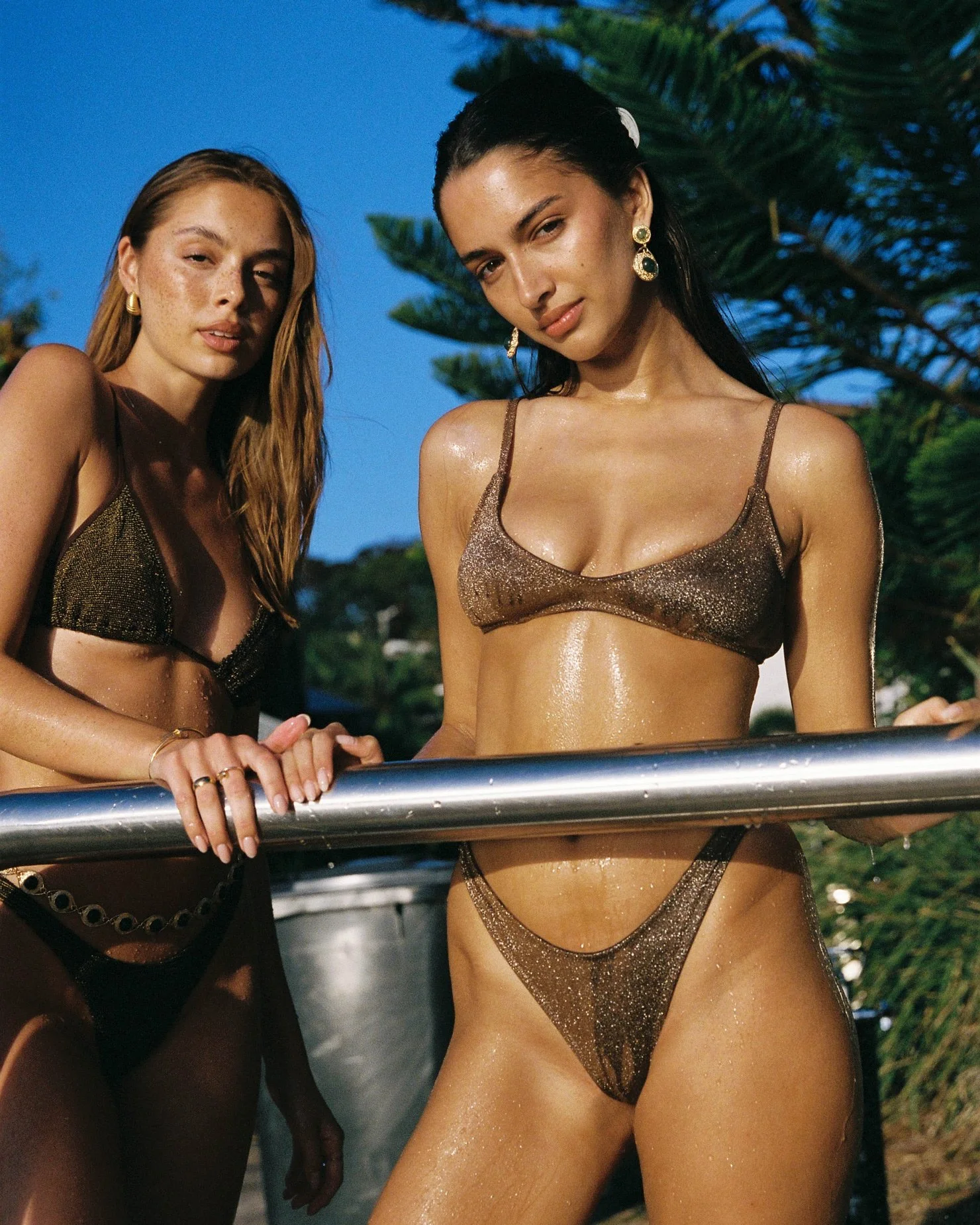
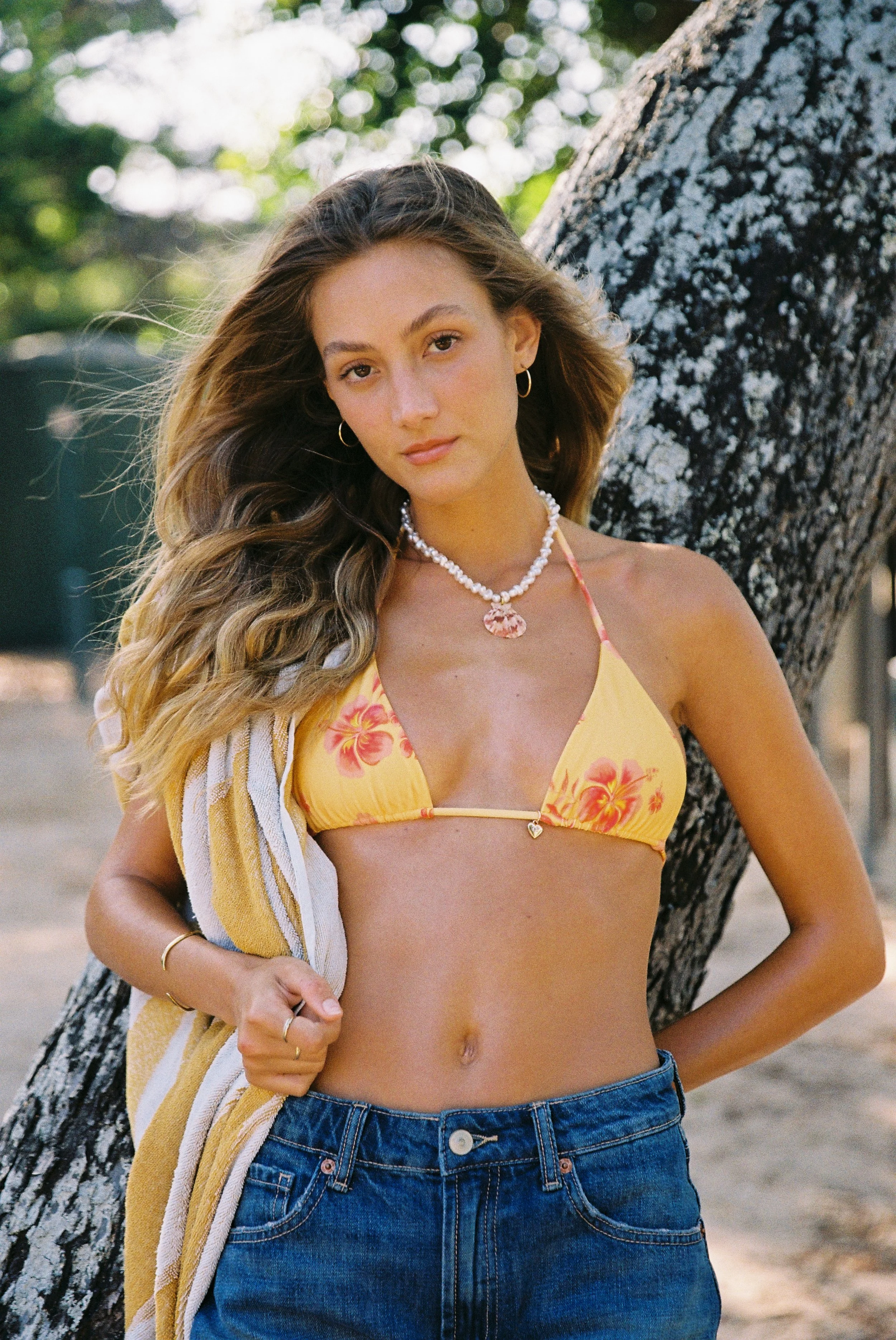
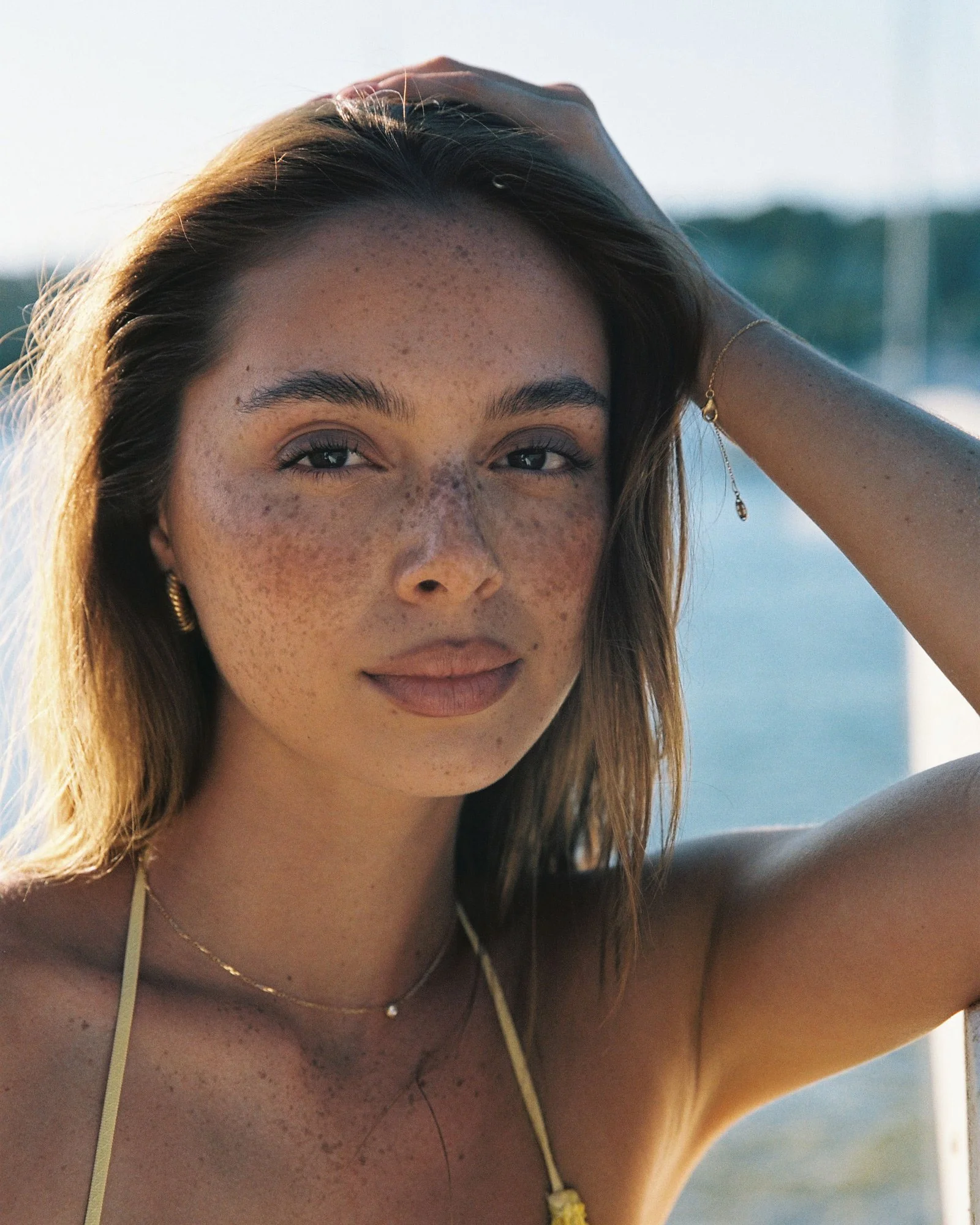
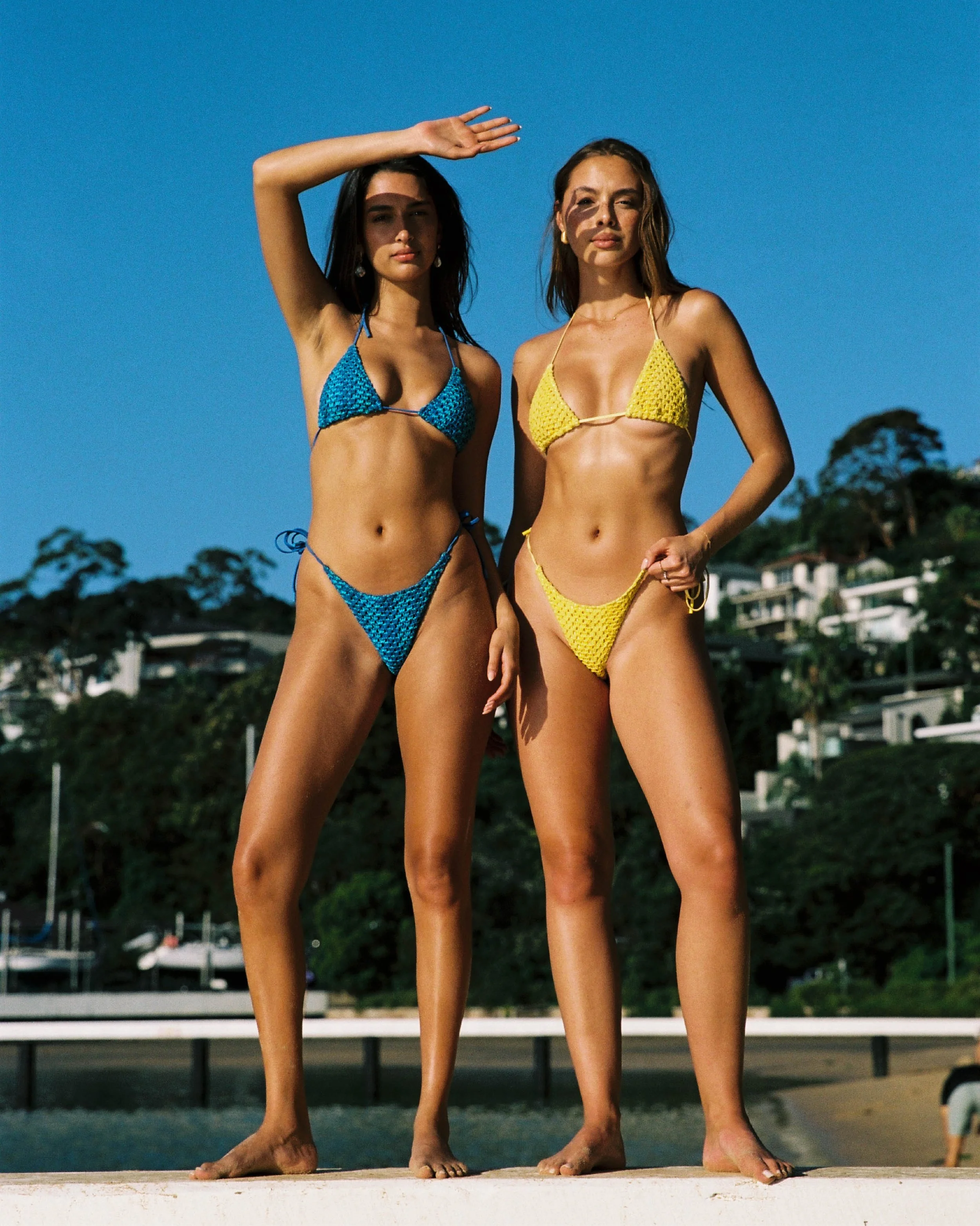
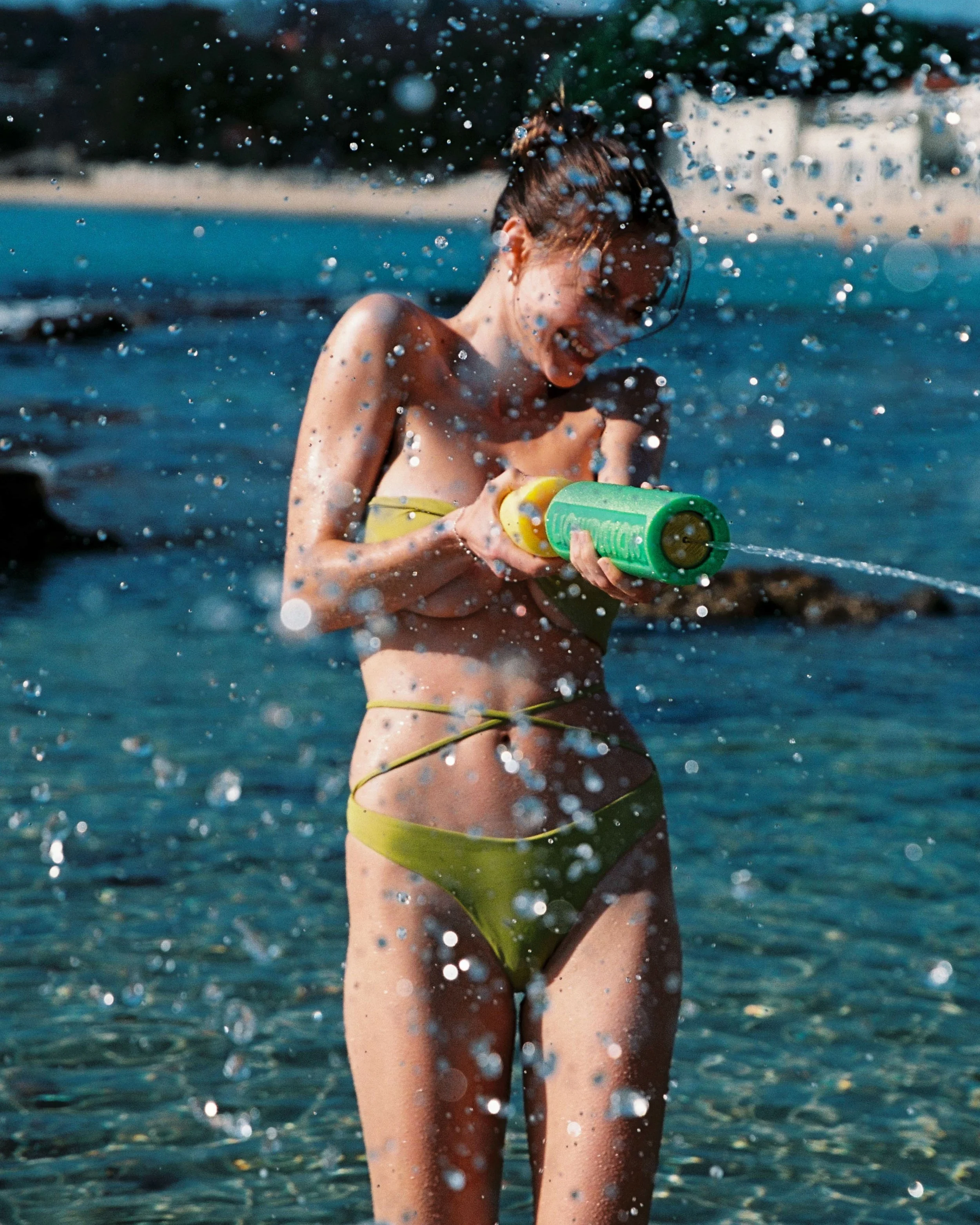
Why you don't like how you look in photos
Part of it has nothing to do with the photo at all. In a well-known 1977 study, researchers showed people two prints of their own face, a normal photo and a mirror-reversed one, and most preferred the mirror version, the face they see every morning, while their friends preferred the true photo, the face they know.
So every photo of you starts at a slight disadvantage, because it's a version of your face you rarely see. But that isn't the whole story, and it doesn't explain what I see on shoots all the time: the same girl loving one frame and not being able to stand the next, taken two seconds later, in the same light and the same pose.
Why you look tense in photos: it lives above the eyes
It's hard to quantify, but in my experience, it comes down to how the upper face looks, the area above and around the eyes.
Concentrating on what you're being directed to do means you're actively thinking and engaging with the direction you're being given, chin down, weight on the back foot, hand off the hip, eyes just past the lens, and well… we tend to need to concentrate for that. All of a sudden the small muscles in your face are stressed. The brow draws in slightly, the eyes narrow a touch, the forehead tightens, and none of it is big enough to notice in a mirror, but all of it is enough to ruin the feeling that the shot is easy and relaxed and enjoyable.
I can usually see it well before a model can. The body is exactly where we talked about, the light is doing what it should, and the face is working just a little too hard, like they’re doing a maths problem instead of enjoying a holiday.
It isn't only a photographer's hunch, either. Researchers who measure facial muscle activity have found that the corrugator, the muscle that pulls your brows together when you frown, becomes more active as mental effort goes up, and the same thing happens with physical effort, which is a very scientific way of saying your face tells the camera you're working, even when you think it isn't.
That's why so many girls feel they get a good face or a good body in a shot, but rarely both. When the body is positioned well, you've usually had to think about it to get there, and the thinking shows up in the face first.
"Nothing behind the eyes" is really about what's around them
So many models don't have any feeling in their photos. "Nothing behind the eyes" is what's said to me, again and again, by clients, by agents, and sometimes by the models themselves when they're scrolling back through their own portfolios. But I don't think it's the expression in the eyes that's making a shot feel flat. It's all the small microexpressions around them.
There's good research on this too. A genuine smile, what psychologists call a Duchenne smile, engages the muscle that rings the eye, the one that lifts the cheeks and creases the corners, and across dozens of studies people tend to read those smiles as more genuine and more positive than smiles made with the mouth alone. The interesting part is that it can be performed: in one study, around 71% of people could produce that eye crease on purpose.
So technically, you can do it on cue. What you can't do is hold it while your brow is tight from concentrating on where your left hand is meant to be. The tension wins, and that's what people are picking up on when they say a photo feels empty.
Positioning is only half the shot
When you're given directions, it's hard to just "relax", which is why I focus so much on the vibe.
You can position someone perfectly, and it still takes more than that to get a good shot. Once the body is where it needs to be, you then need to focus on the emotional nuance, your state, how you feel, what's going on behind your face, while your body does what it's been asked to do. That second part is the key, and it's the part most people skip, because it's harder to direct and much harder to fake.
So how do we stop the tension creeping in?
Well, it's not easy… I'll tell you that much. It's practice. It's having a great photographer give you enough direction to get you to the right spot, then letting that direction go and focusing on the emotional connection you have with the camera.
"The last hour is always the best" (it isn't)
There's a line I hear on nearly every shoot, usually from the model, sometimes from a stylist or an assistant, often while we're packing up: "the last hour is always the best."
And it's often rubbish. Nothing magical happens at the three-hour mark. What people are feeling in that last hour is flow. It's the point where the shoot is working, where you're enjoying it, and it feels less like a job and more like you're telling a great story together. You're engaged in the movement, the moment and the mood, rather than just going from one look to the next.
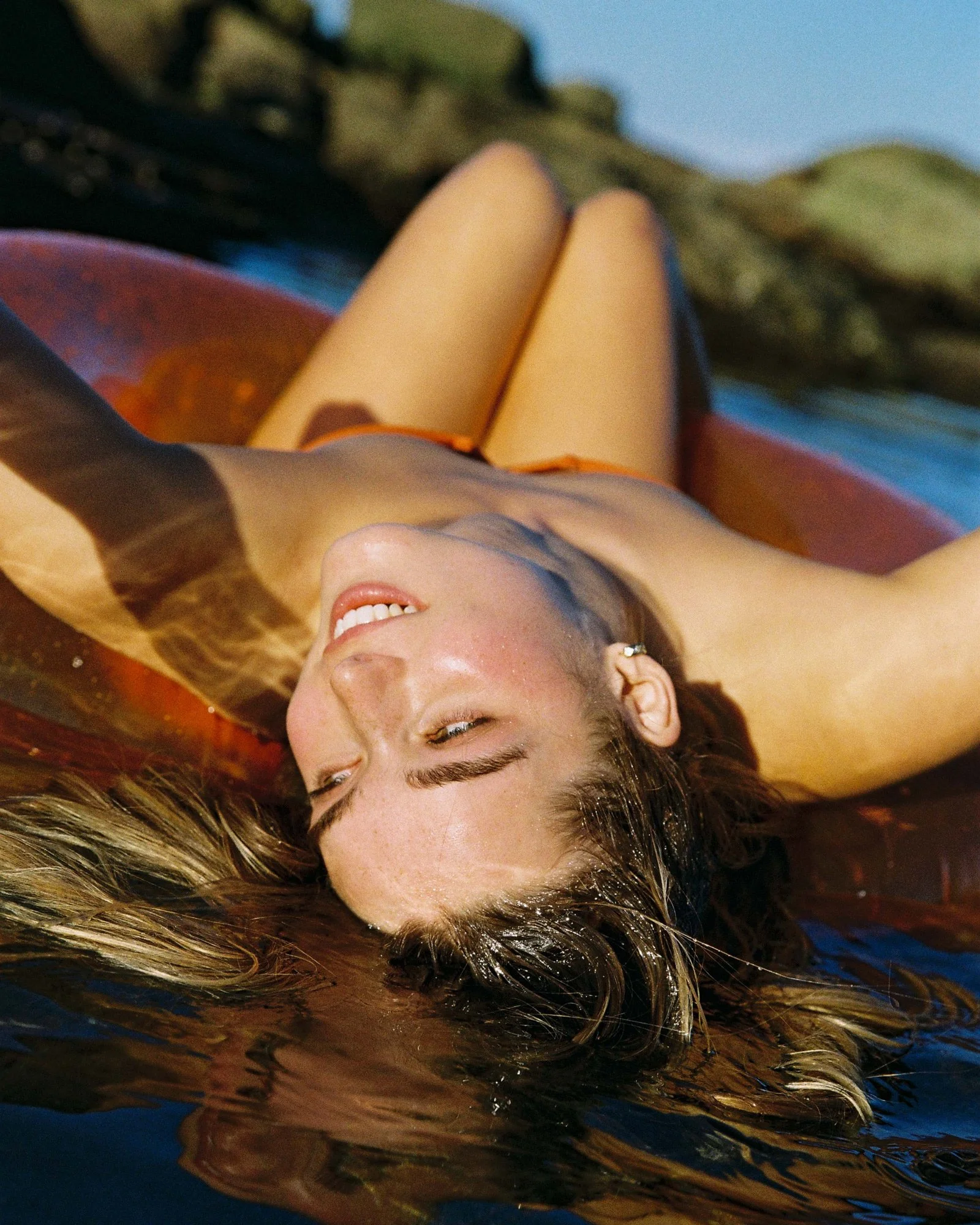
I shot with Megumi McKenna from Vivien's at Little Bay on an afternoon when I'd normally have wrapped as the sun dipped, but the sky went full theatre, clouds and colour and a full moon over the water, so we kept going. People would point to those frames as proof that the last hour is always the best. I don't think it was the hour. By then we'd worked through the jeans, the brown bikini and the blue Fae Swim set, the pears she'd been holding between looks had somehow become part of the vibe, and nobody was thinking about the next look anymore. We were just in it.
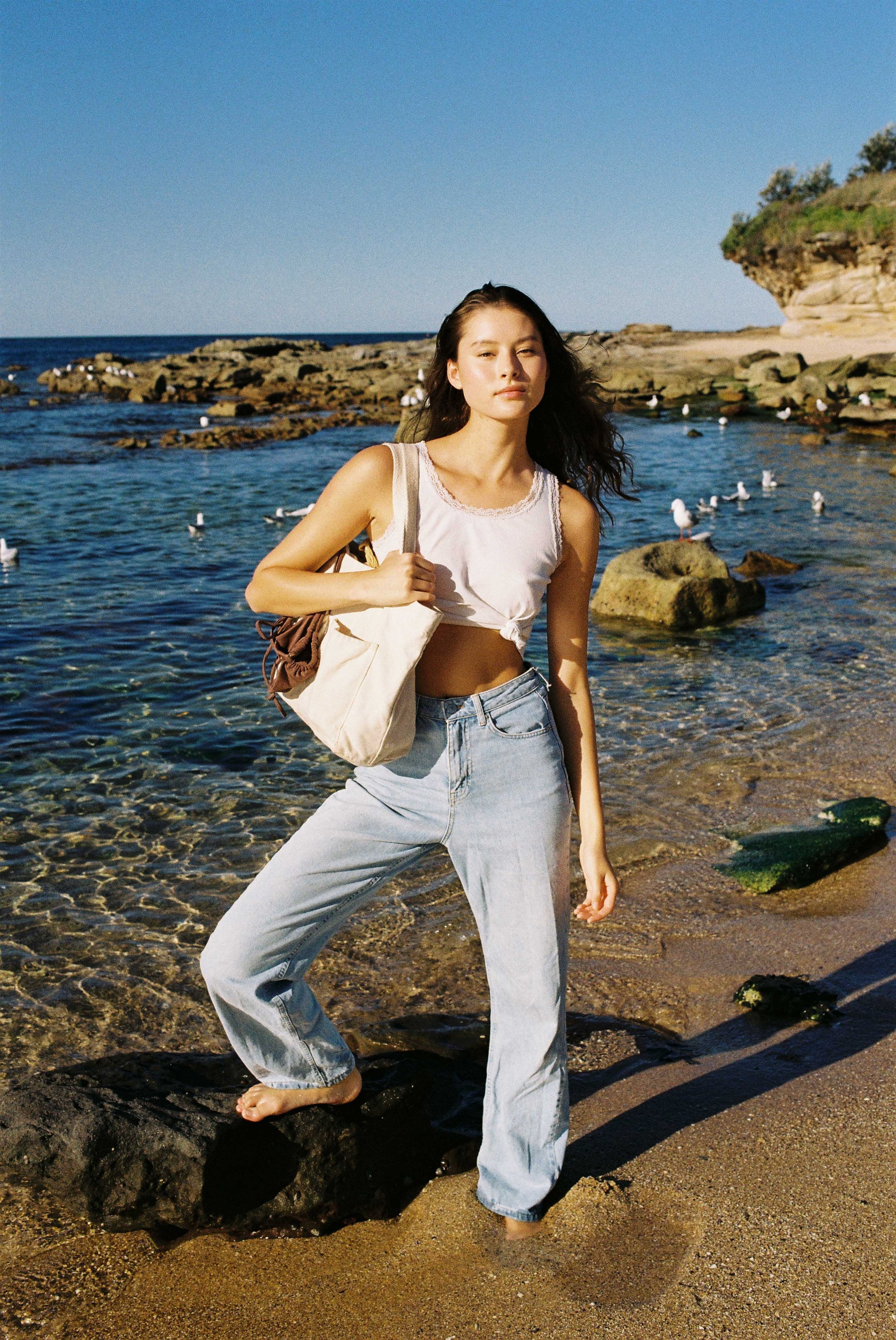
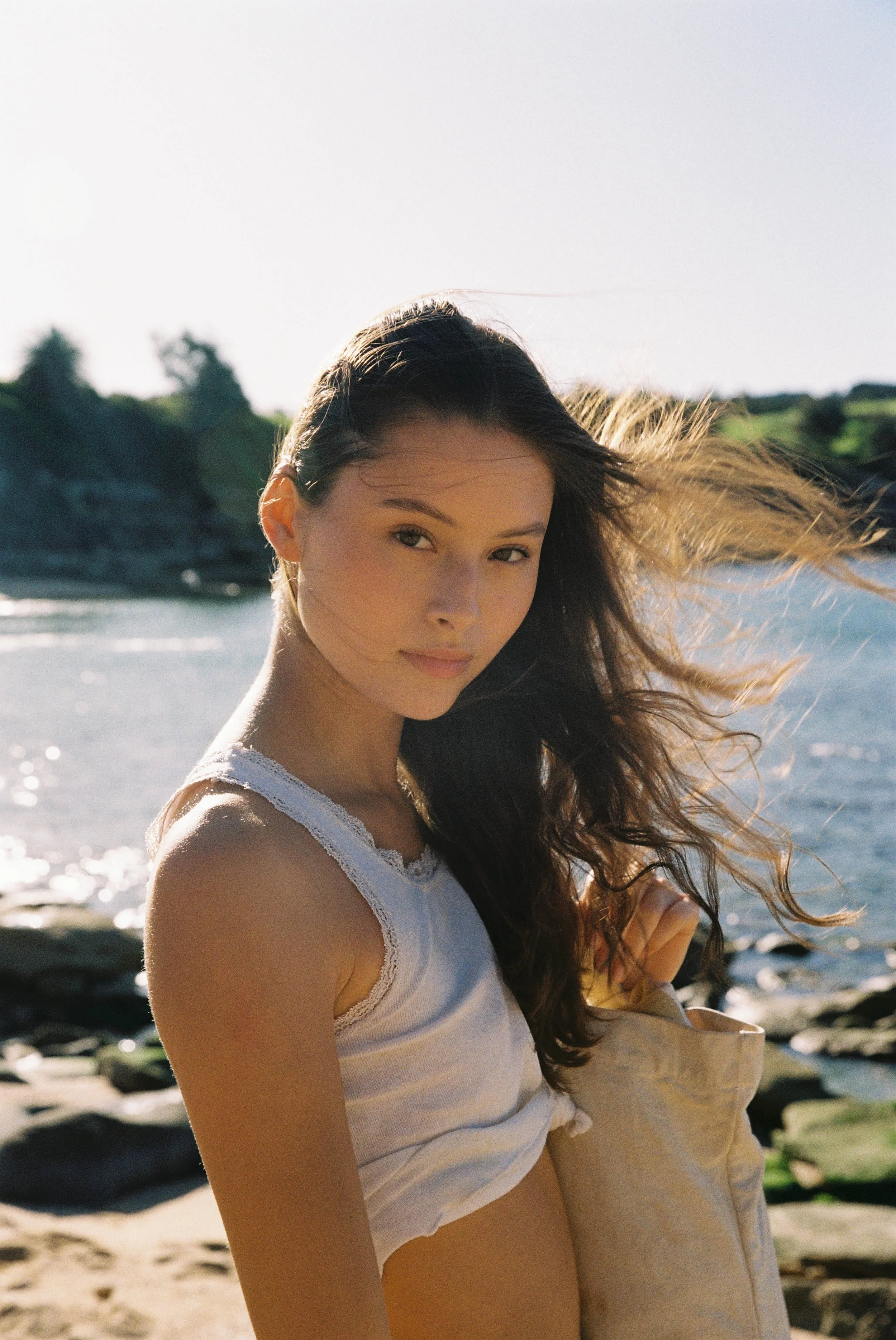
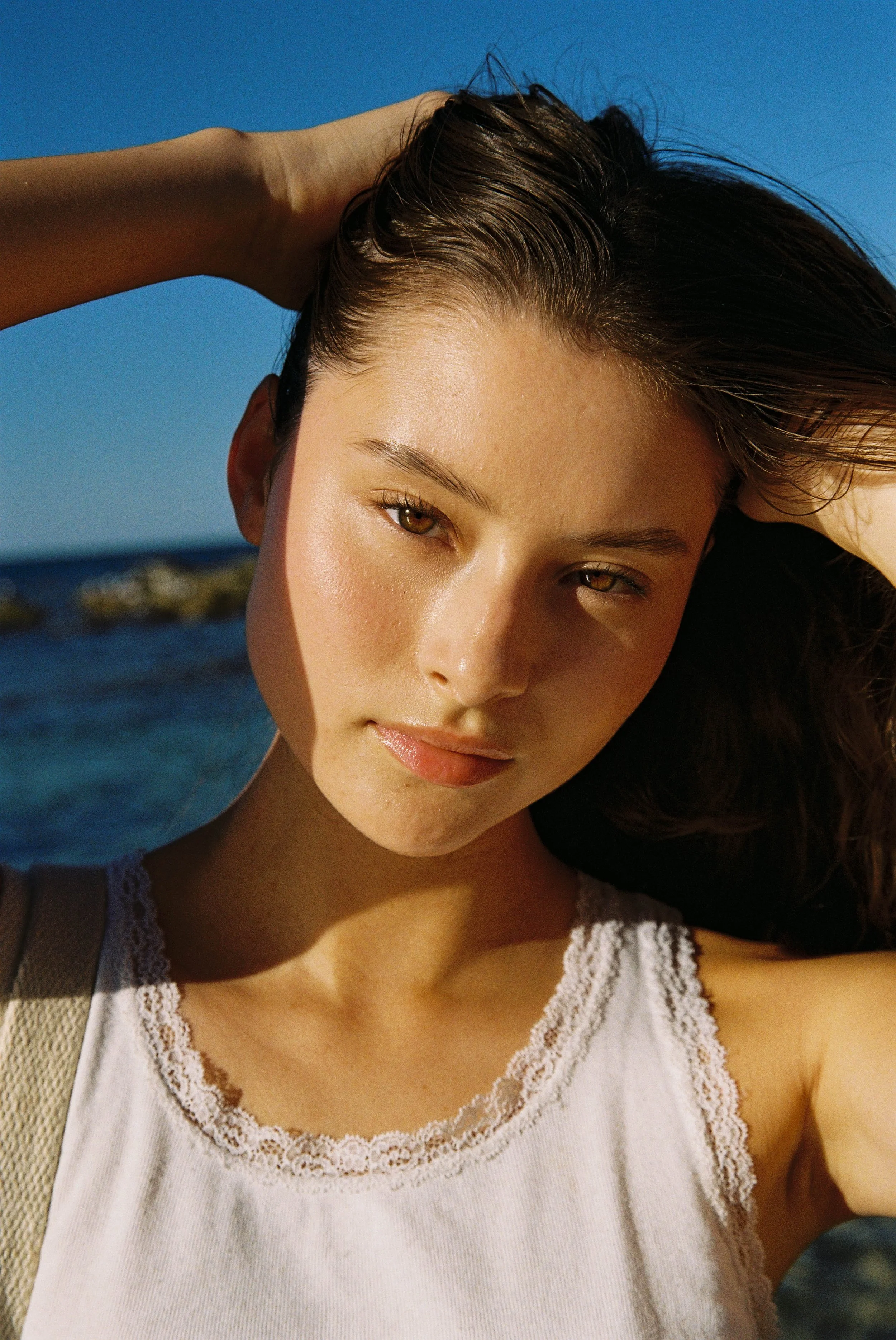
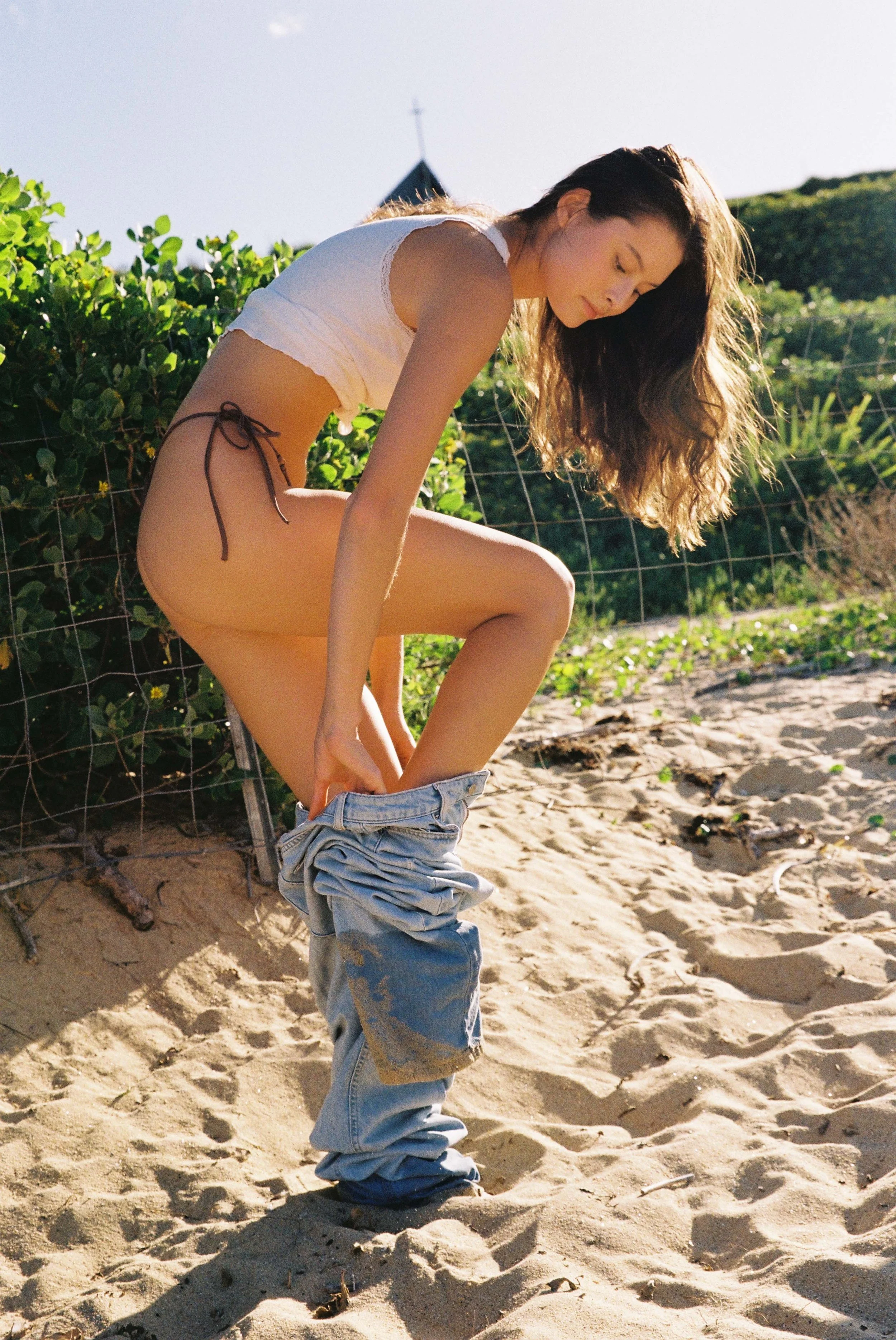
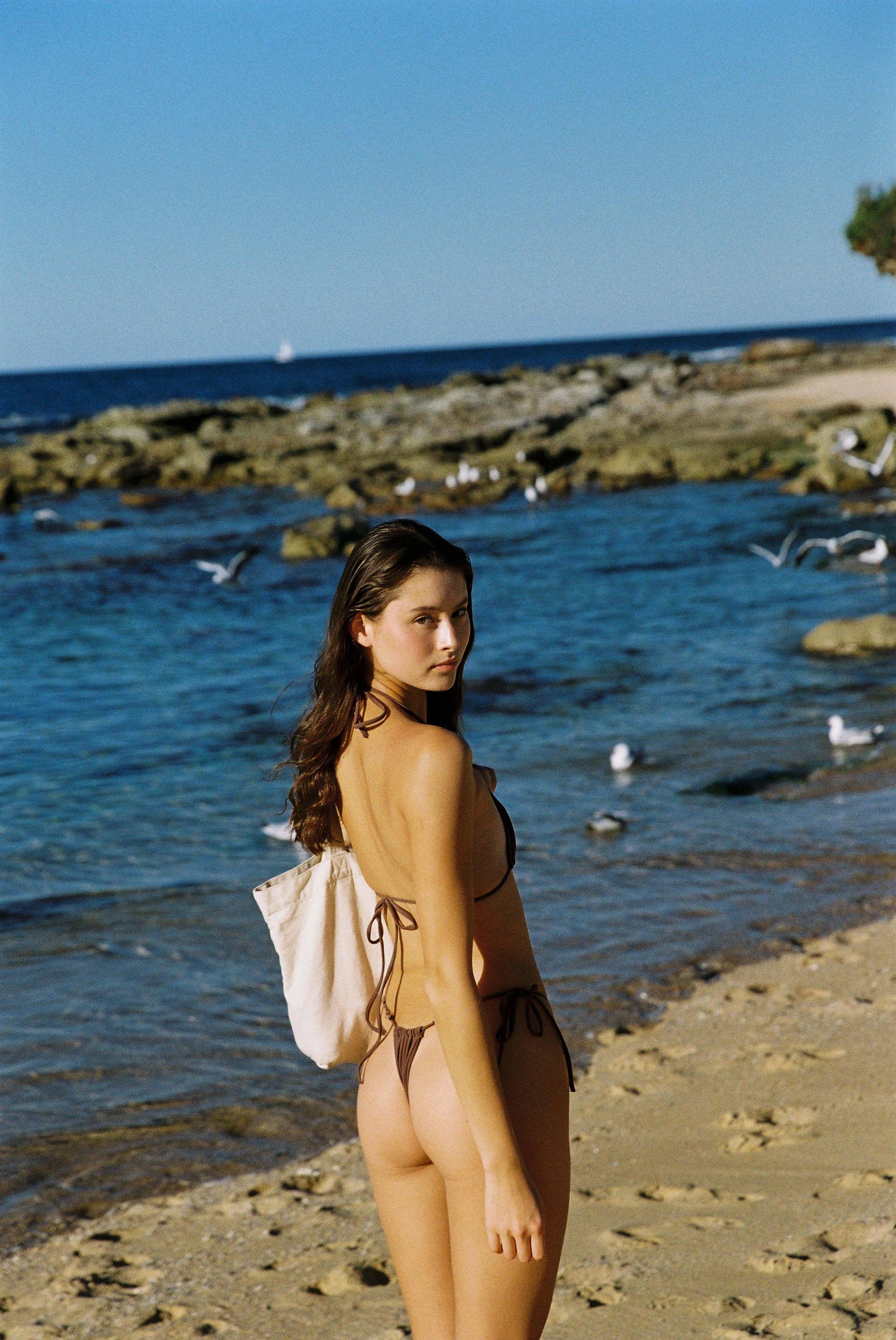
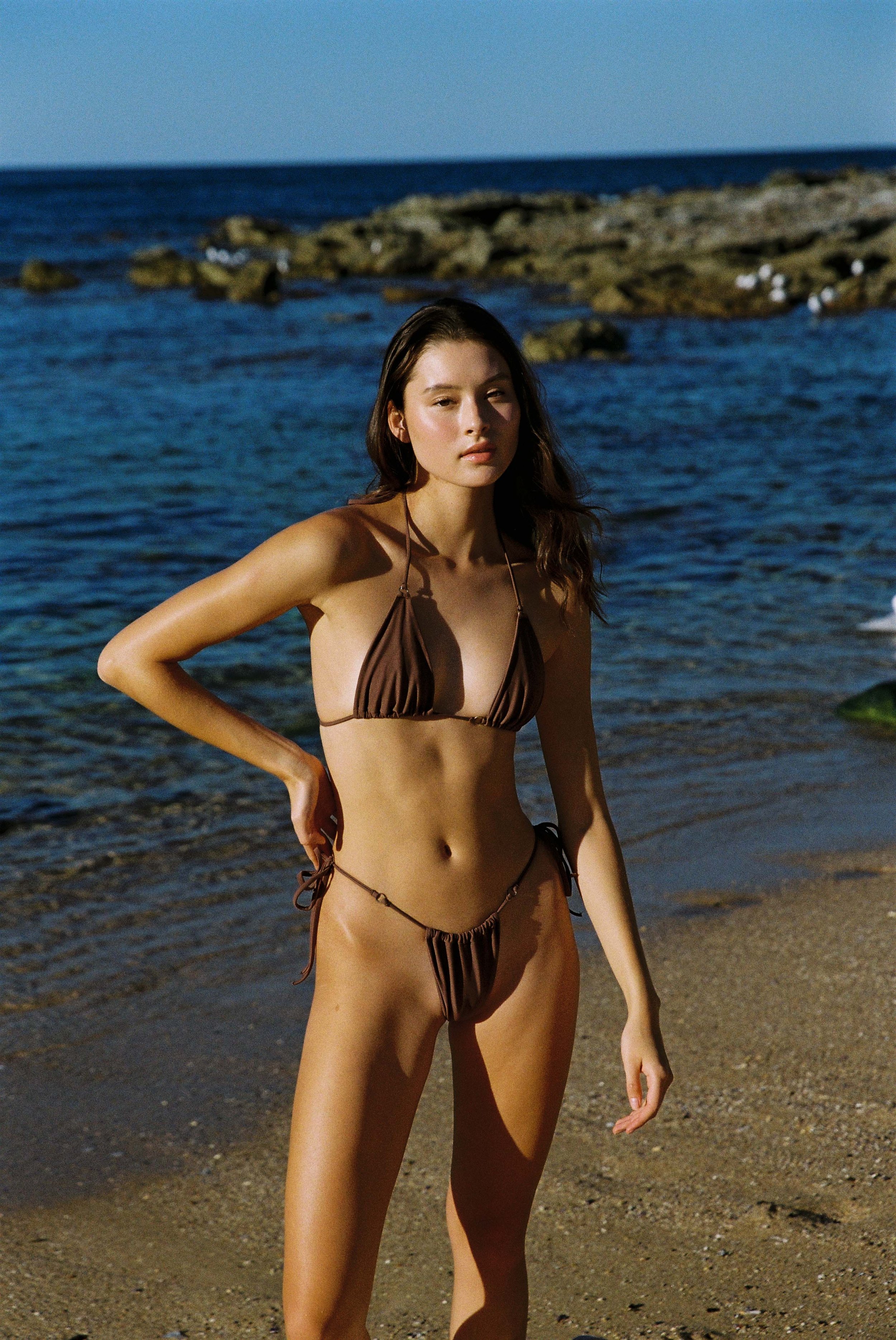
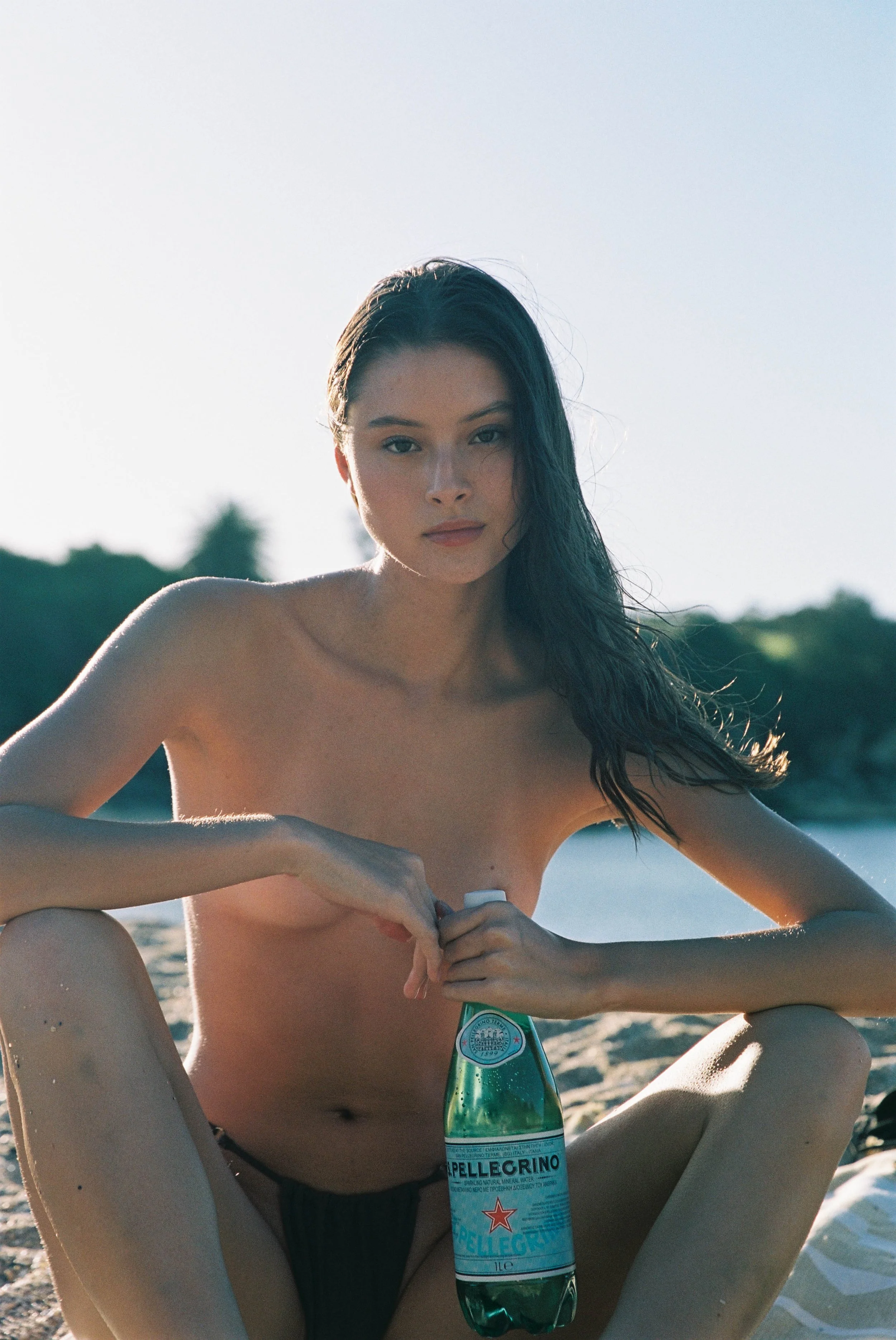
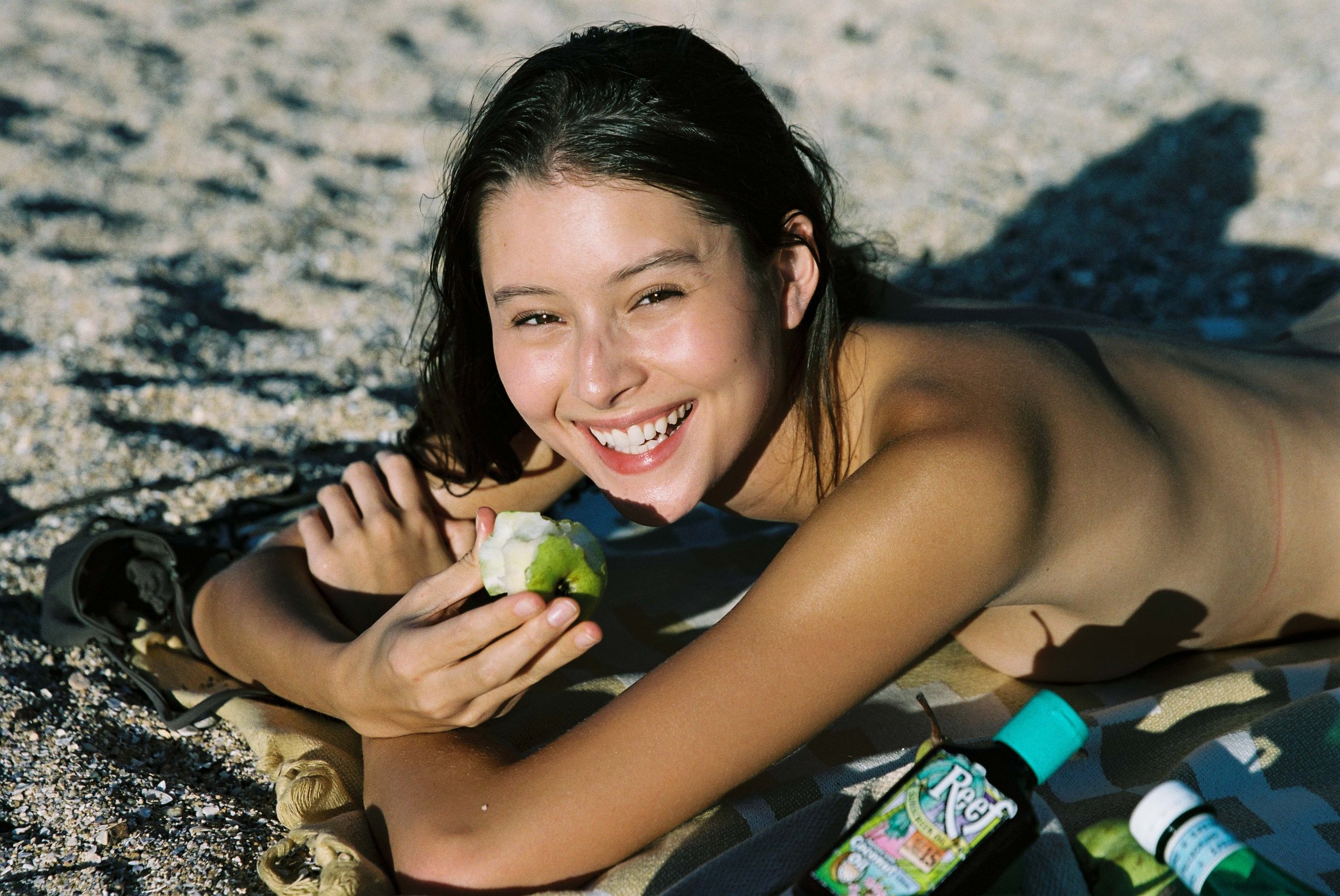
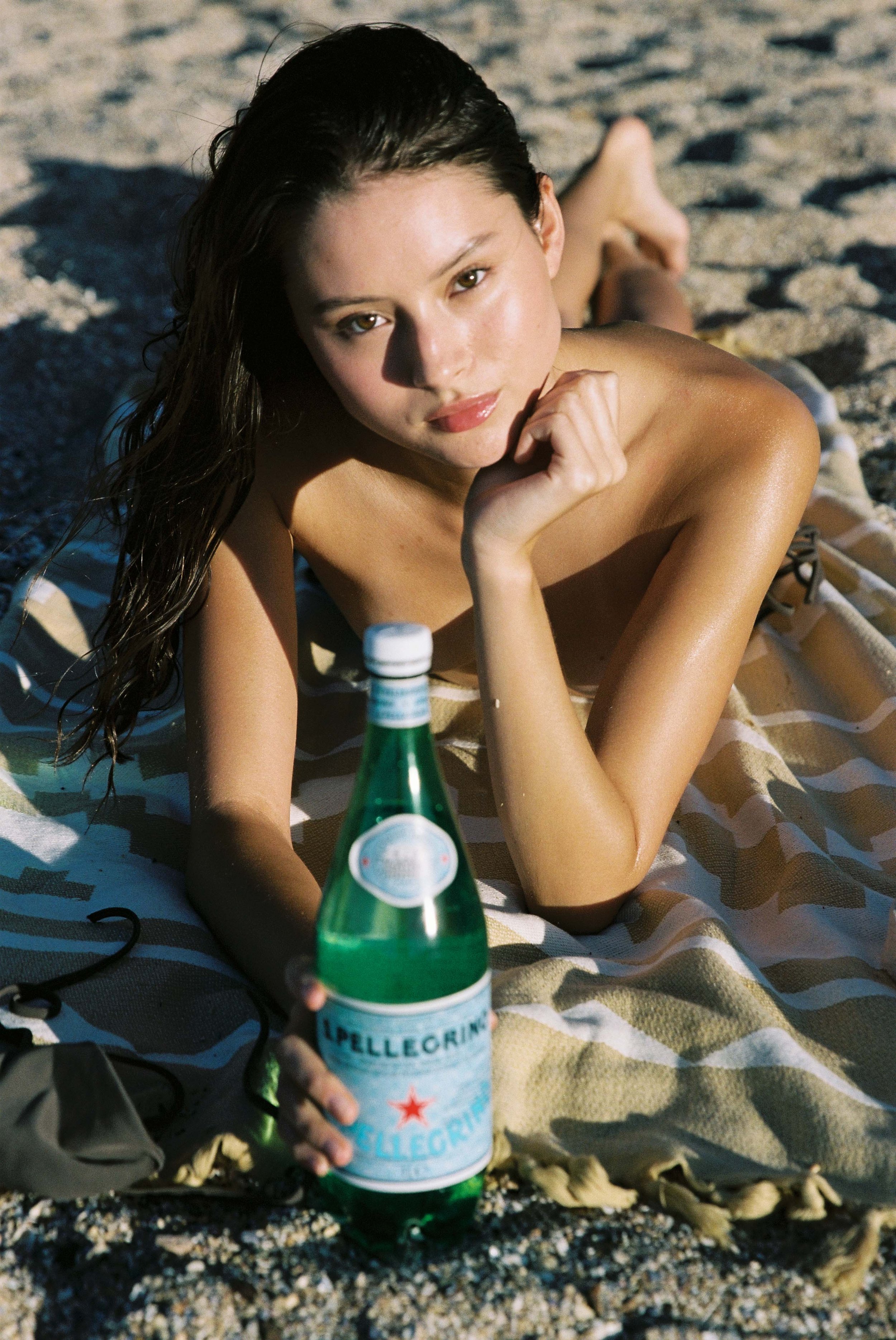
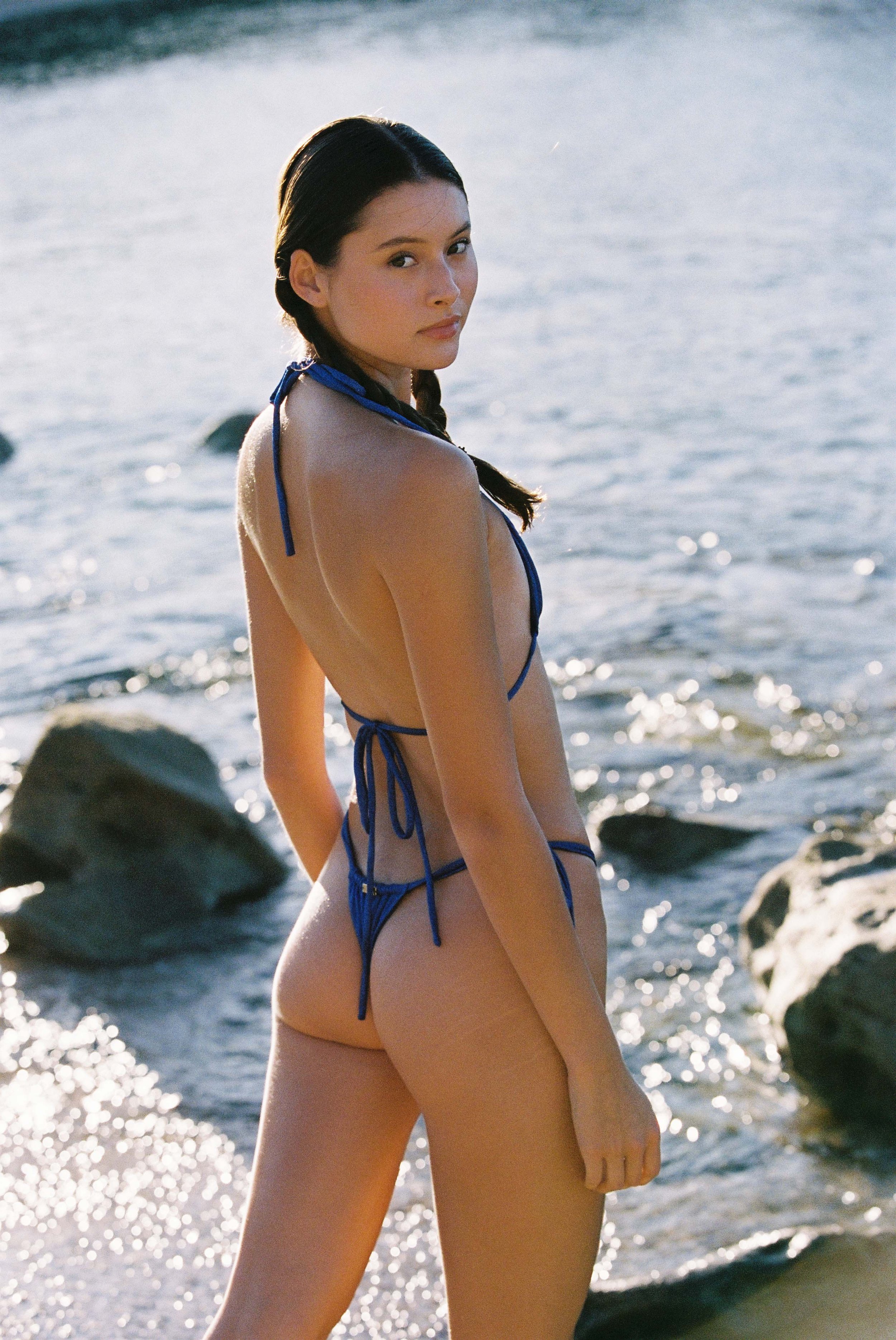
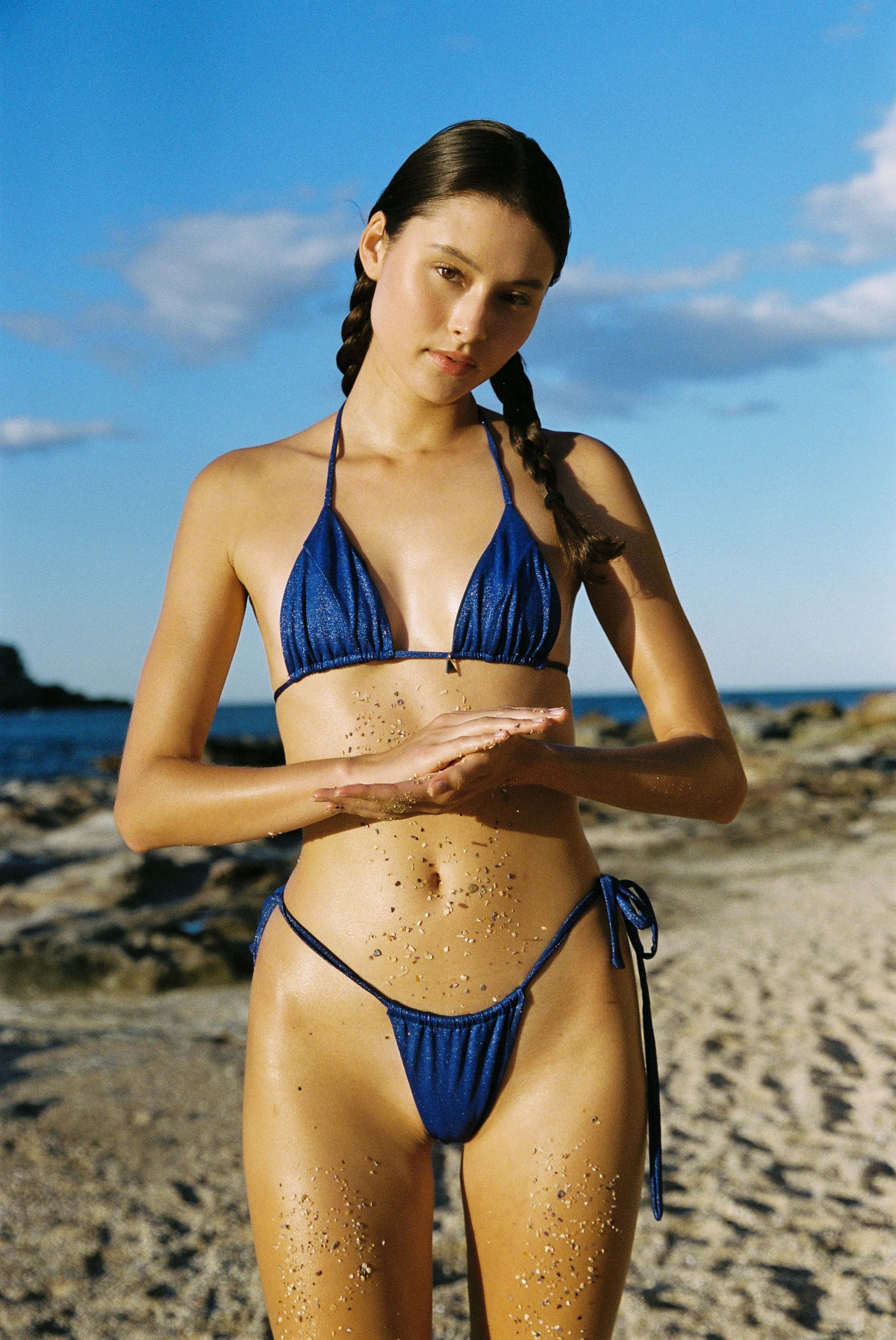
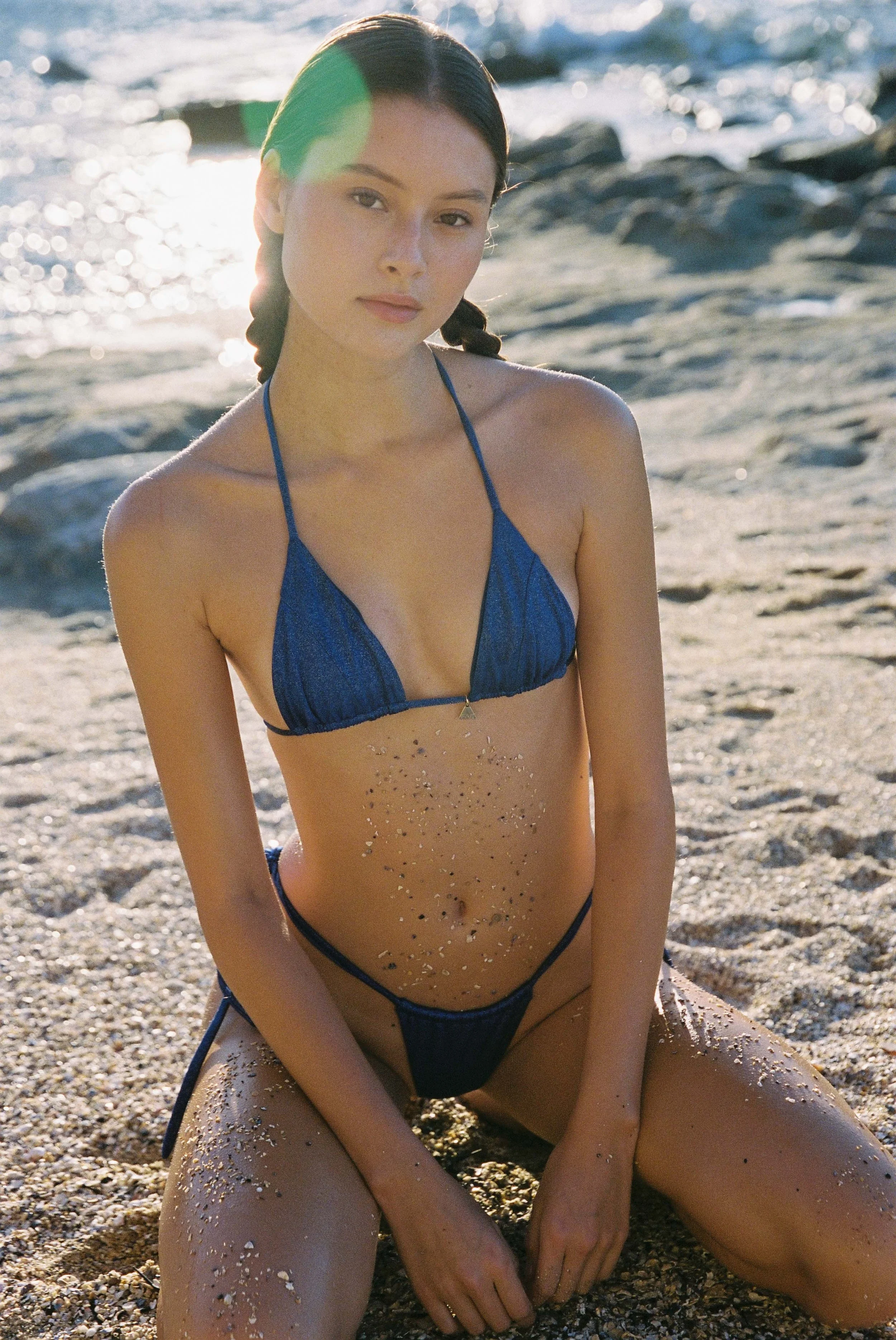
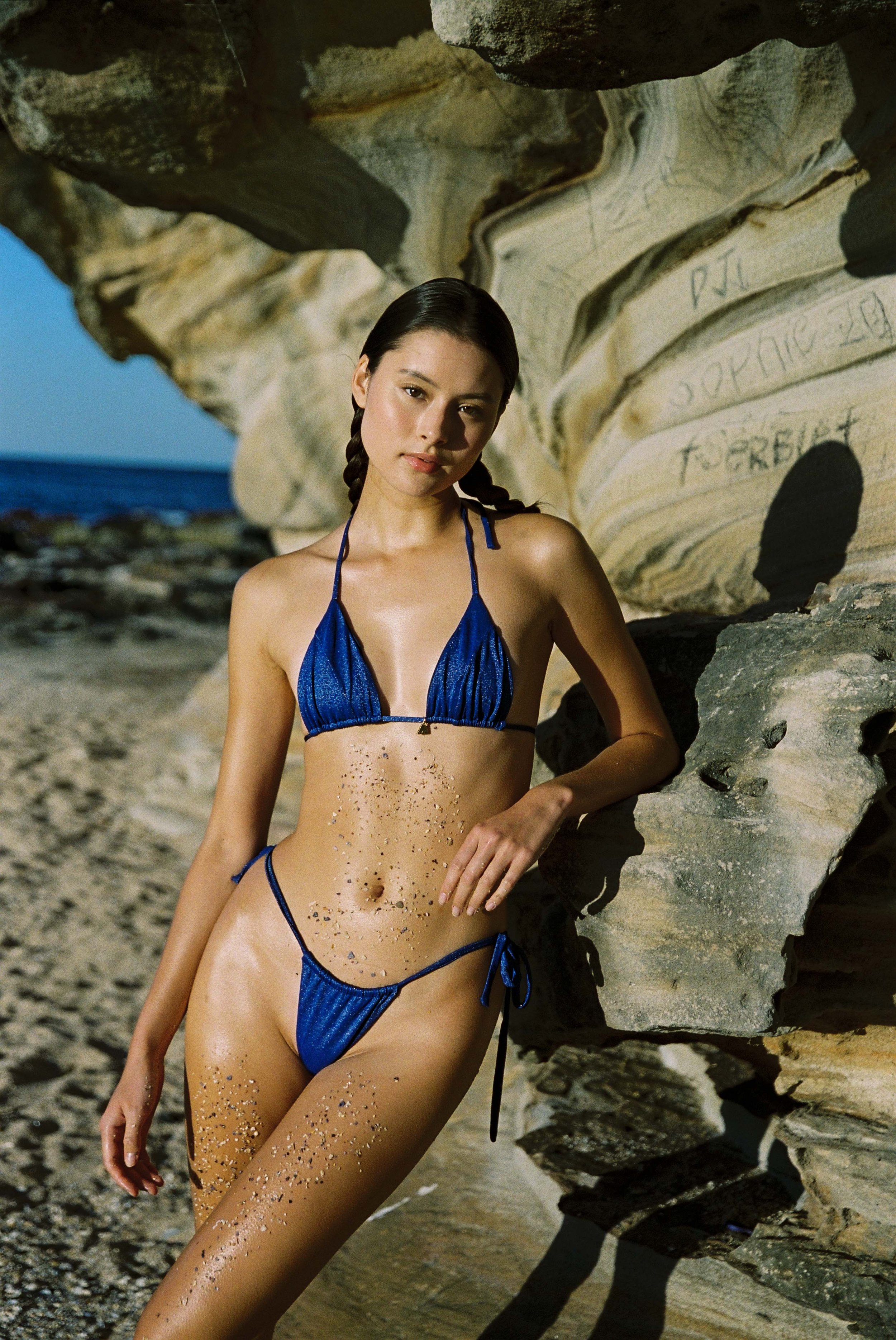
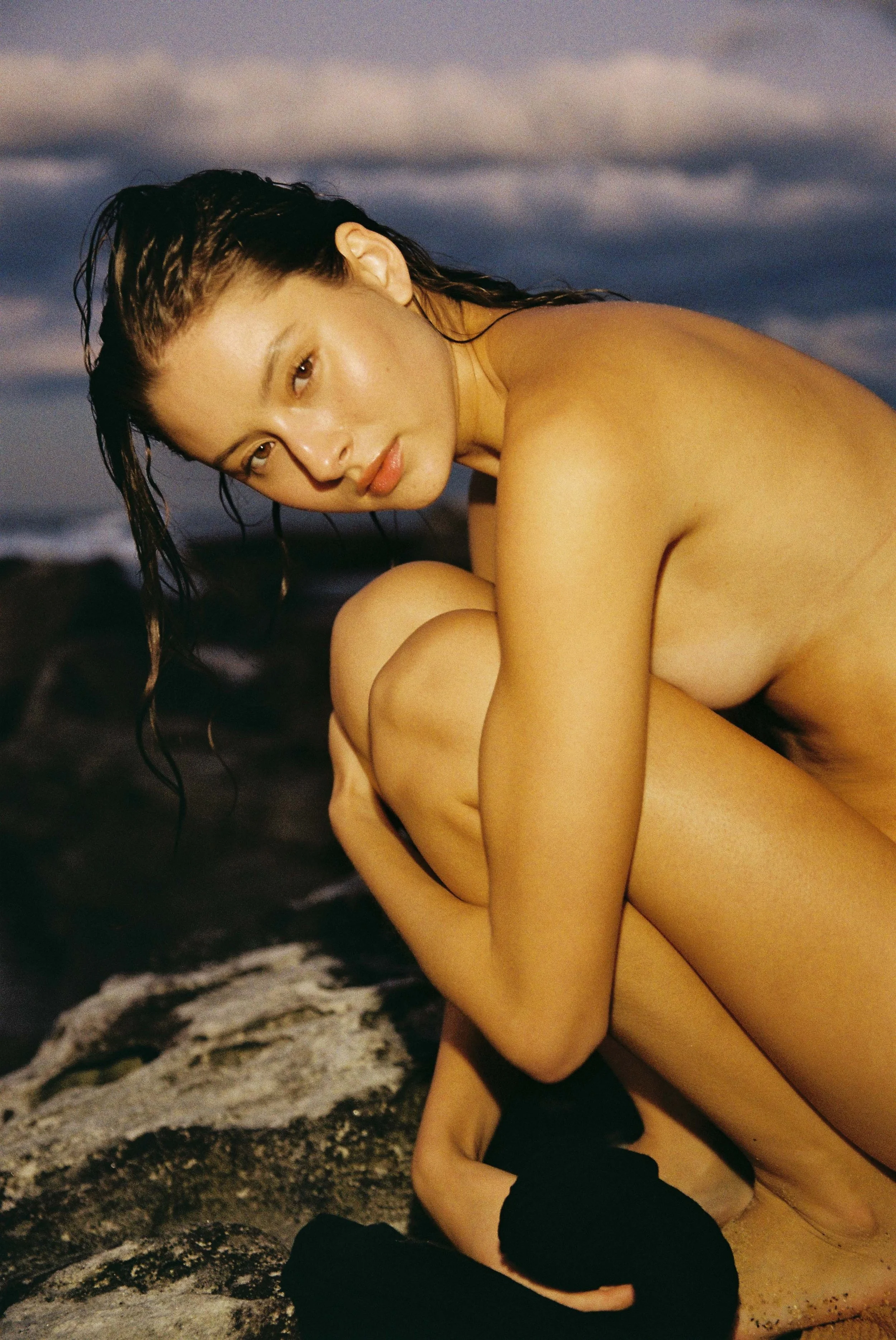
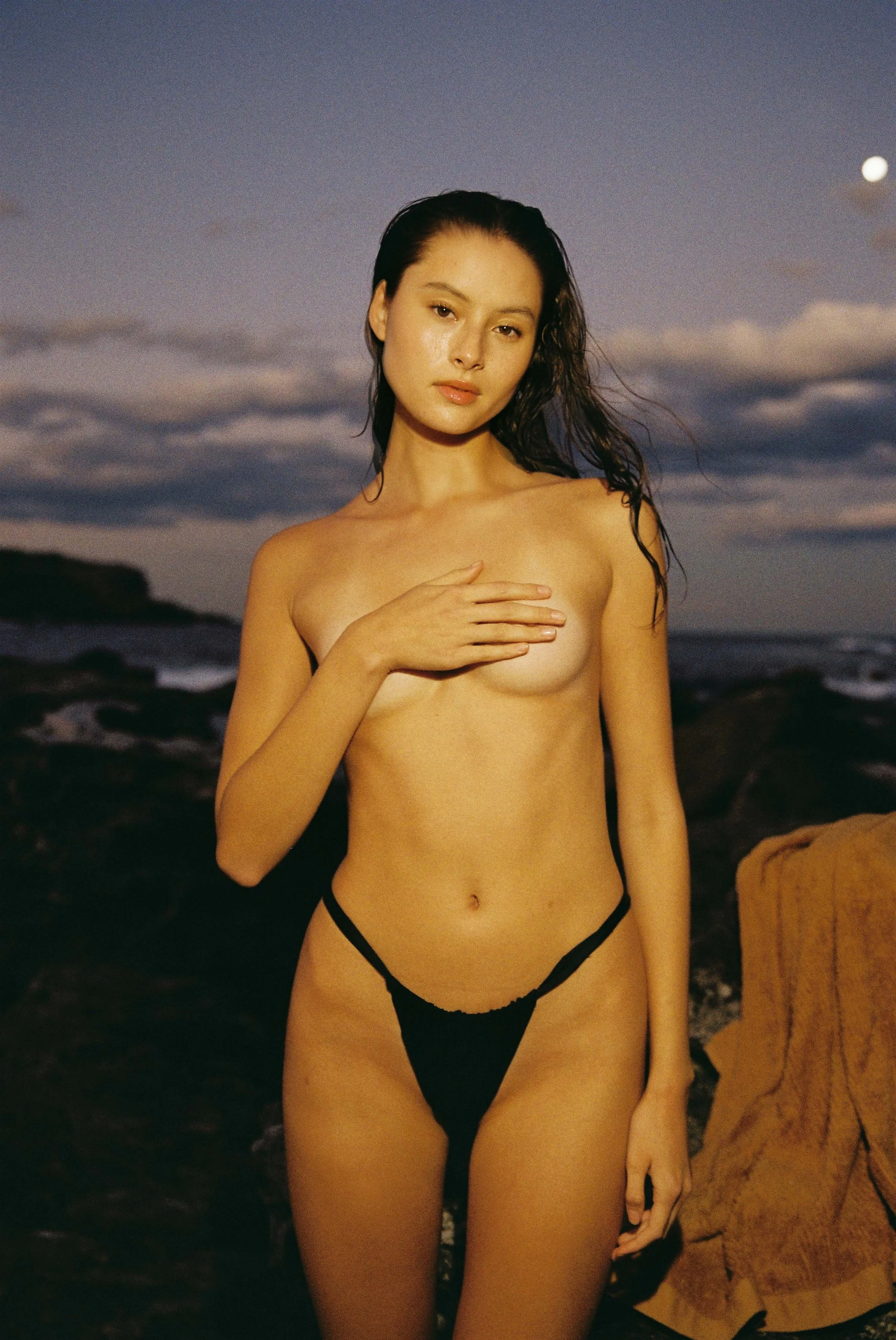
Megumi McKenna, Vivien's Models, at Little Bay. See the full shoot.
Psychologists have a name for that state. Mihaly Csikszentmihalyi called it flow, being so absorbed in what you're doing that you stop watching yourself do it, and that's exactly what's happening in the face. You've stopped monitoring yourself, the concentration has gone quiet, and the small muscles around the eyes have finally let go.
The reason it tends to happen late is simple: it takes time to get there. Most shoots spend the first hour working through looks, adjusting straps, checking angles and worrying about how it's all coming across, and it's only once the looks stop feeling like a checklist that anyone relaxes into it. But if flow is what makes the last hour good, then the job isn't to wait for it. The job is to get there sooner, and to stay there once you do.
How I get models into flow: I yap. A lot.
Being told to relax won't relax you, and it's never relaxed anyone I've photographed. My way of getting there is talking. I tend to yap, A LOT, and you'd be surprised at the difference this makes, because we're usually talking about emotional things, telling stories, the good ones and the stupid ones and sometimes the sad ones, and stories create emotion. When you're halfway through telling me about something that actually matters to you, you're not thinking about your brow, or your hand, or whether your stomach looks okay, and your face is just doing what faces do when they're feeling something.
I also have a very off sense of humour, and I lean very heavily on it, which you can confirm with any of the girls who have worked with me. By being the butt of the joke I can get a reaction out of someone, a real laugh, and a real laugh, for a split second, clears everything off the face. That split second is very often the frame we both end up choosing.
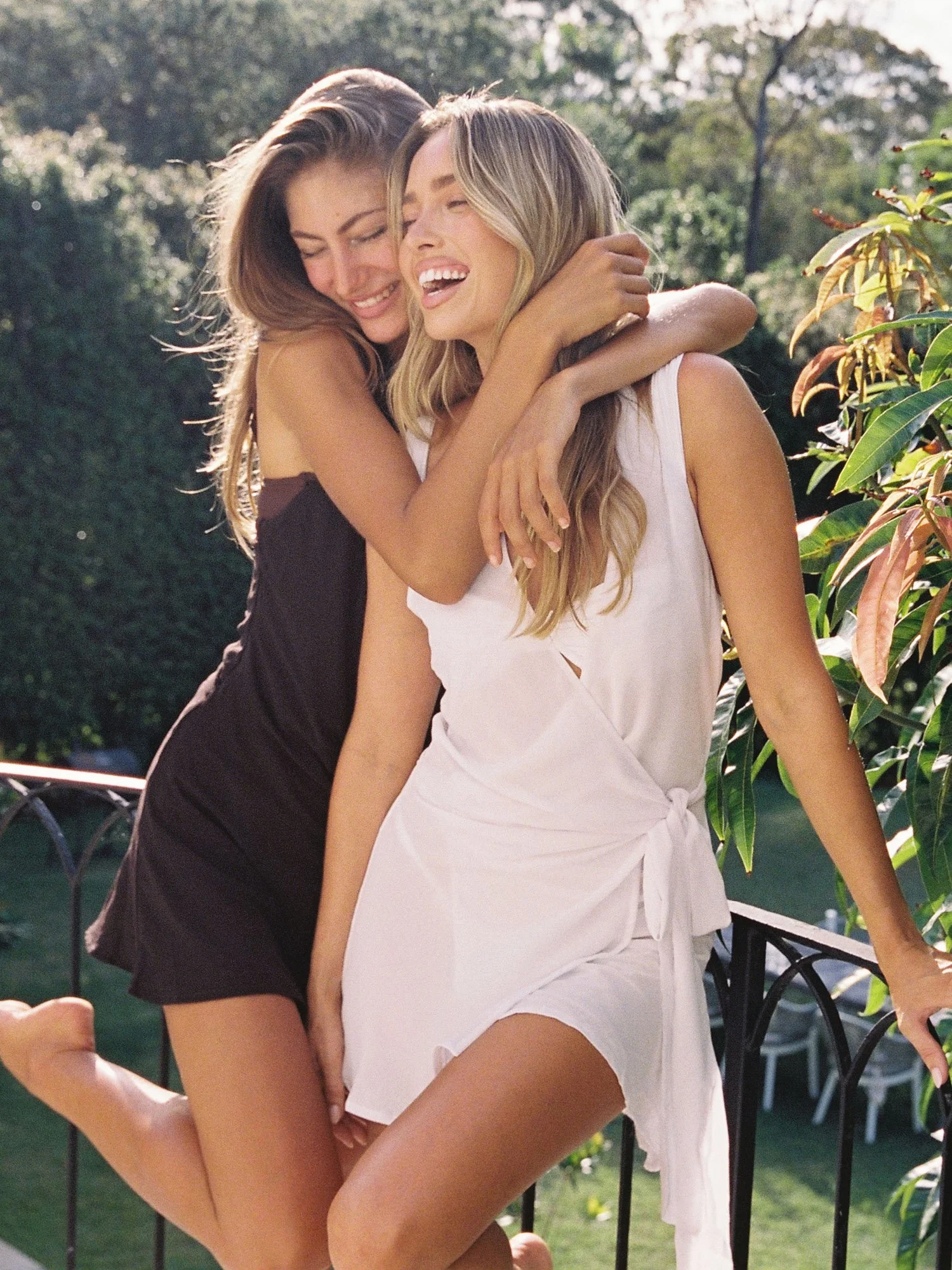
You see the same thing when two friends are on set together. My shoot at Clontarf was meant to be a solo session with Kushi Leggo, until Emma Hedley joined at the last minute, and the dynamic between the two of them was something you can't fake, and can't direct into place either.
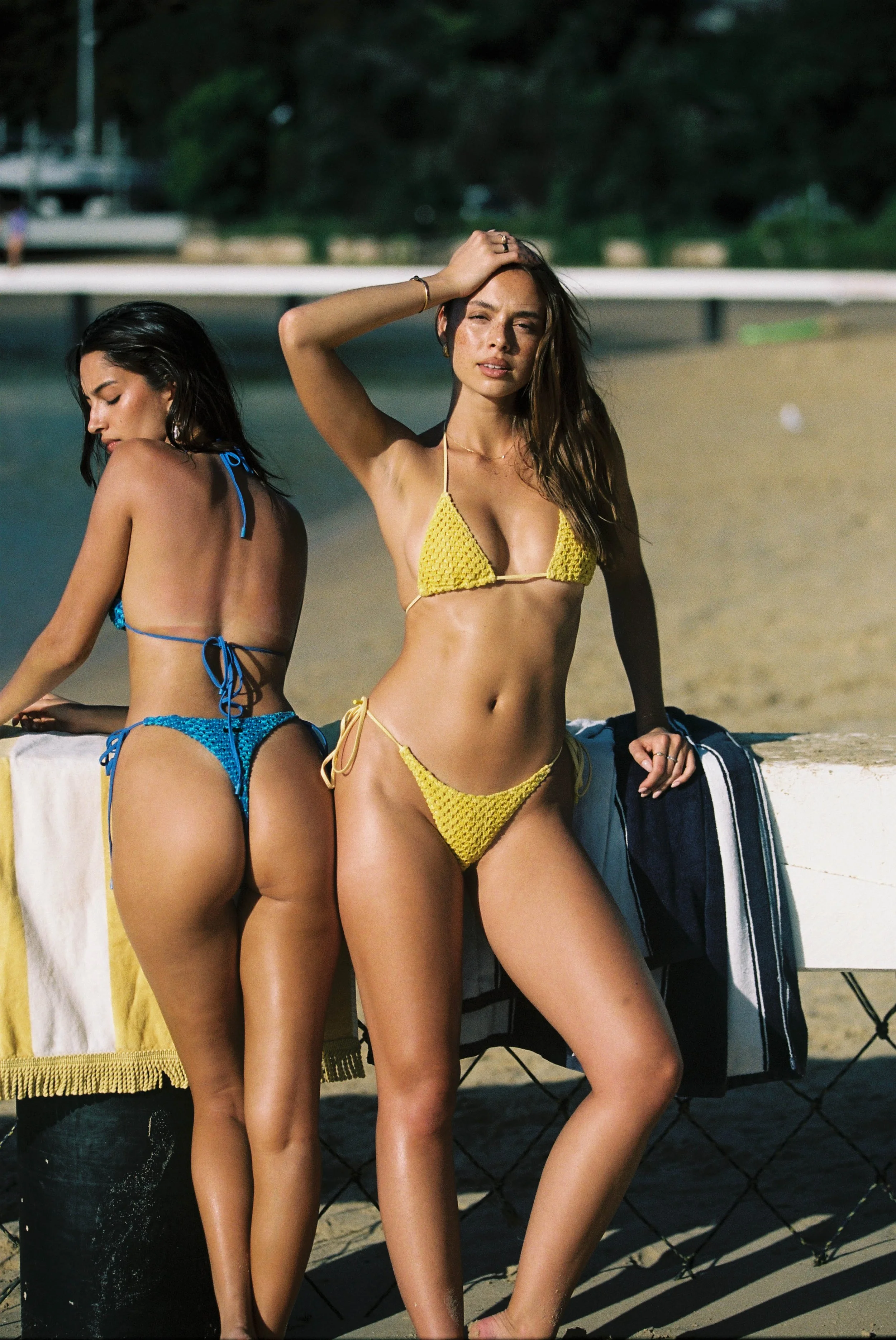
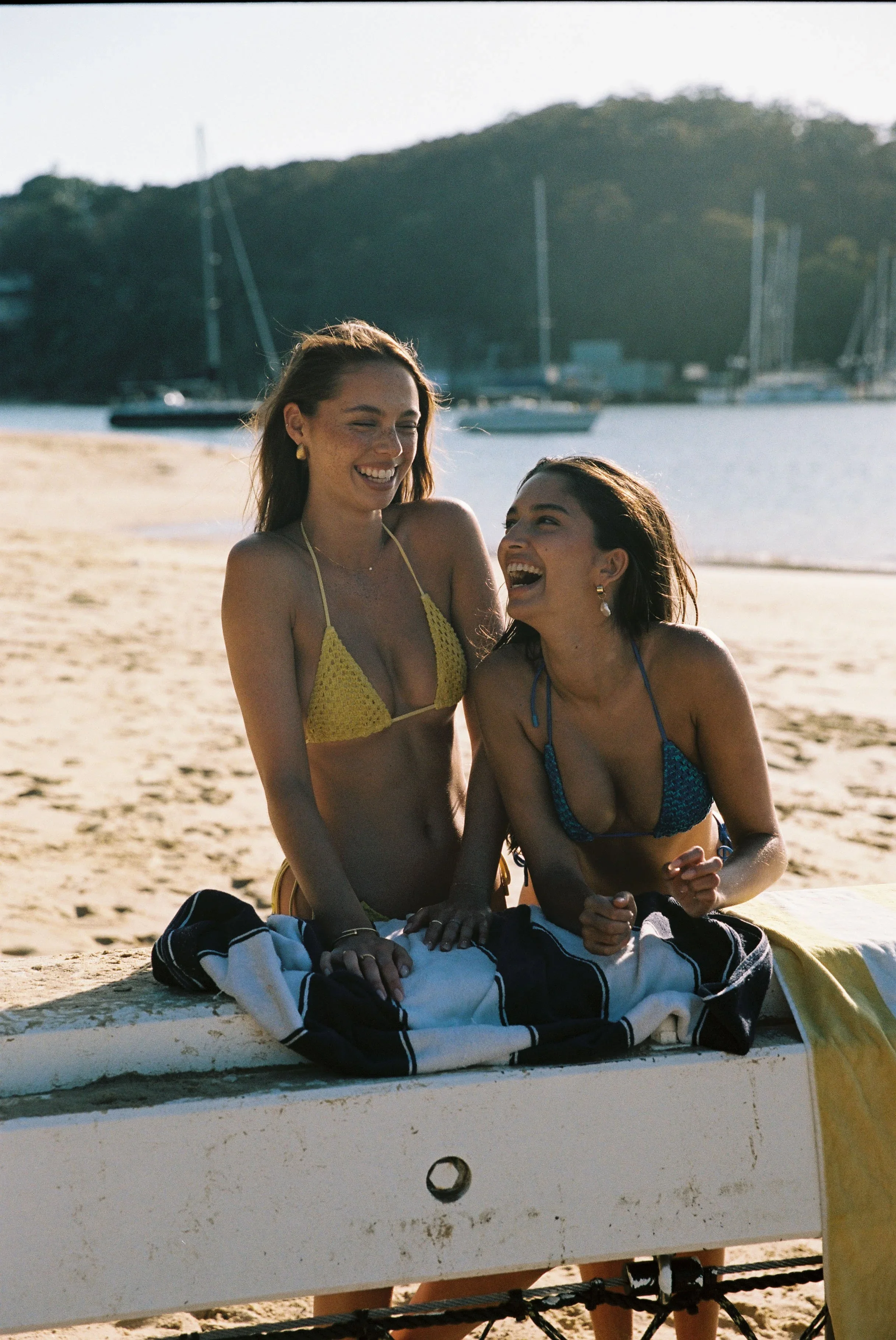
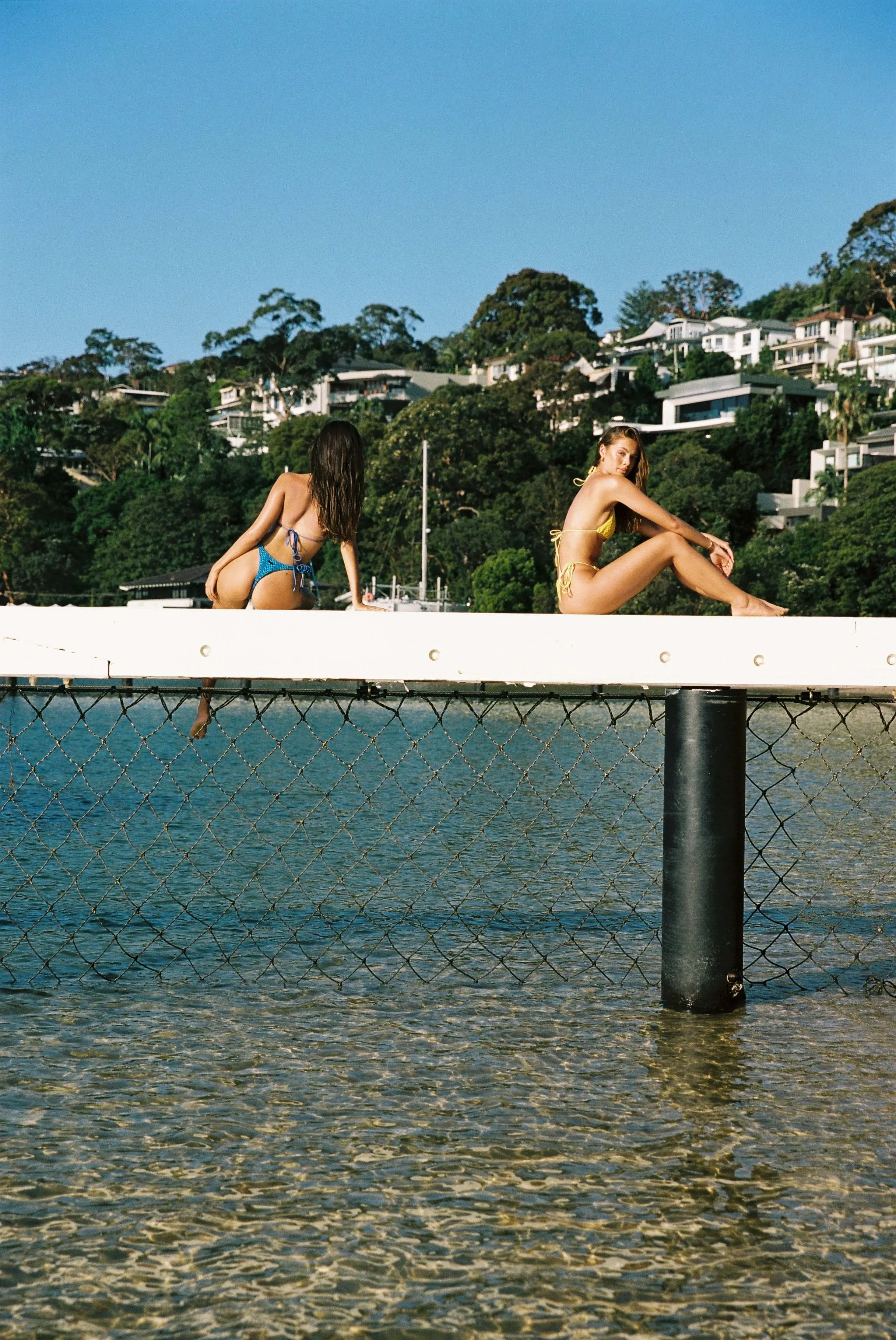
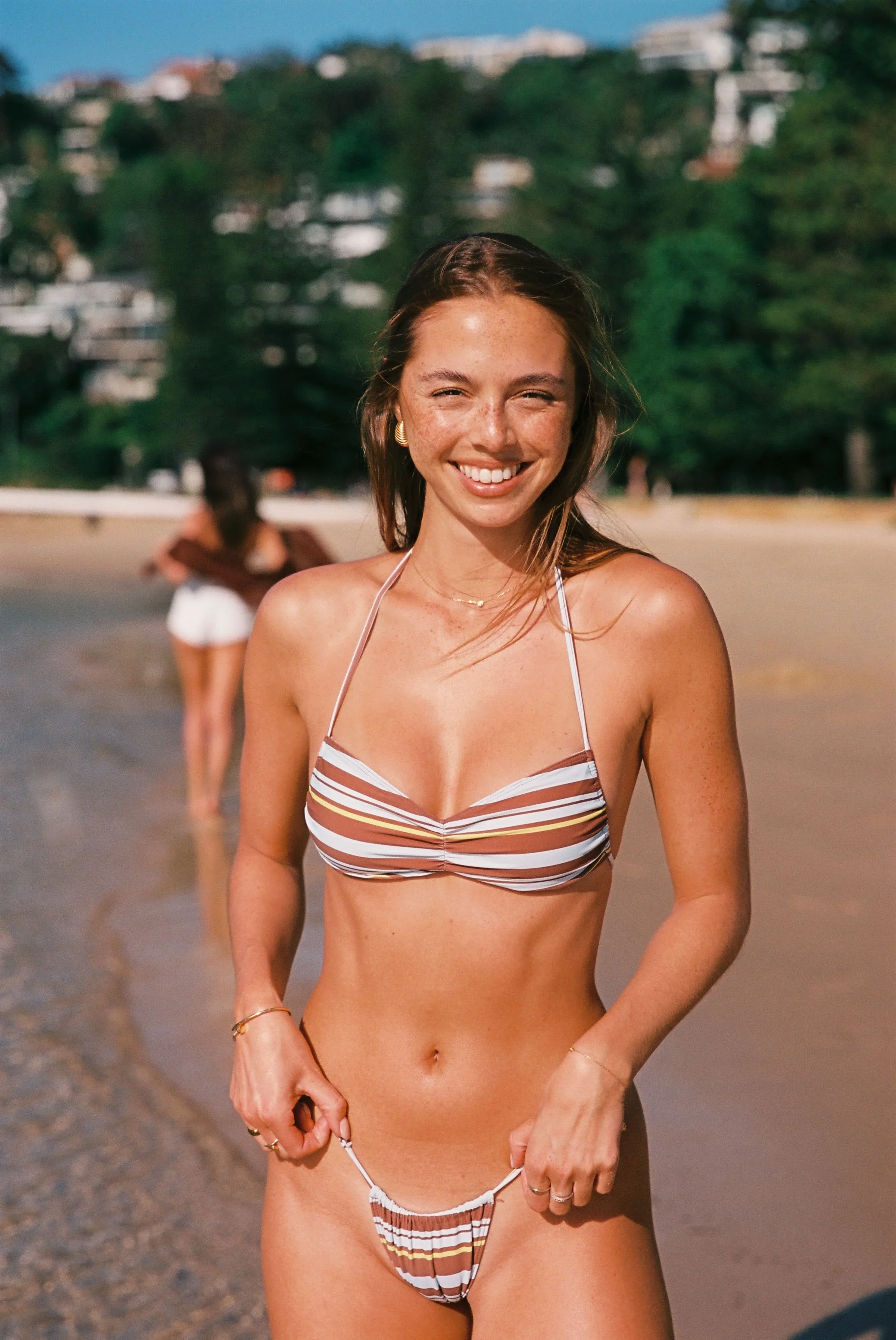
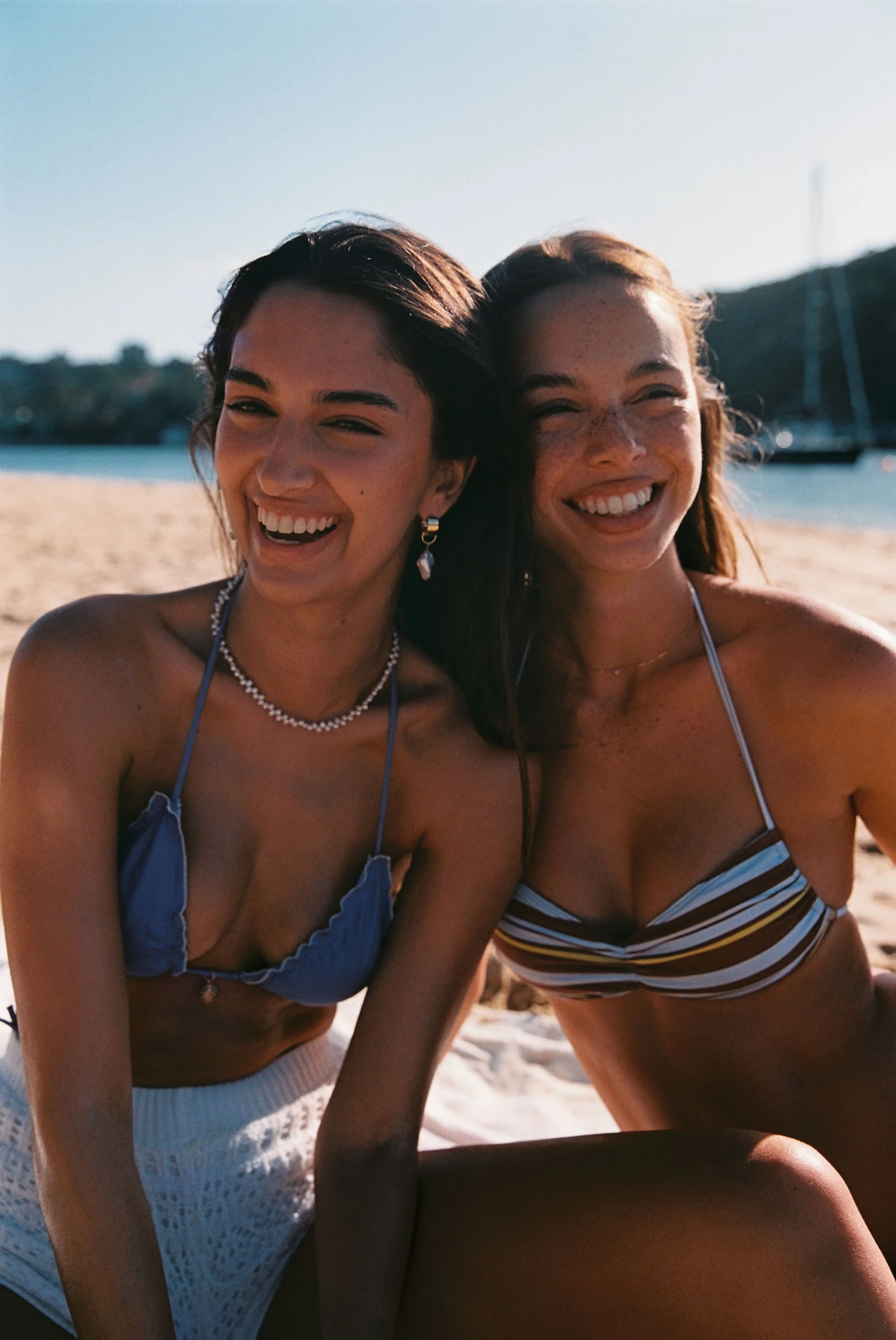
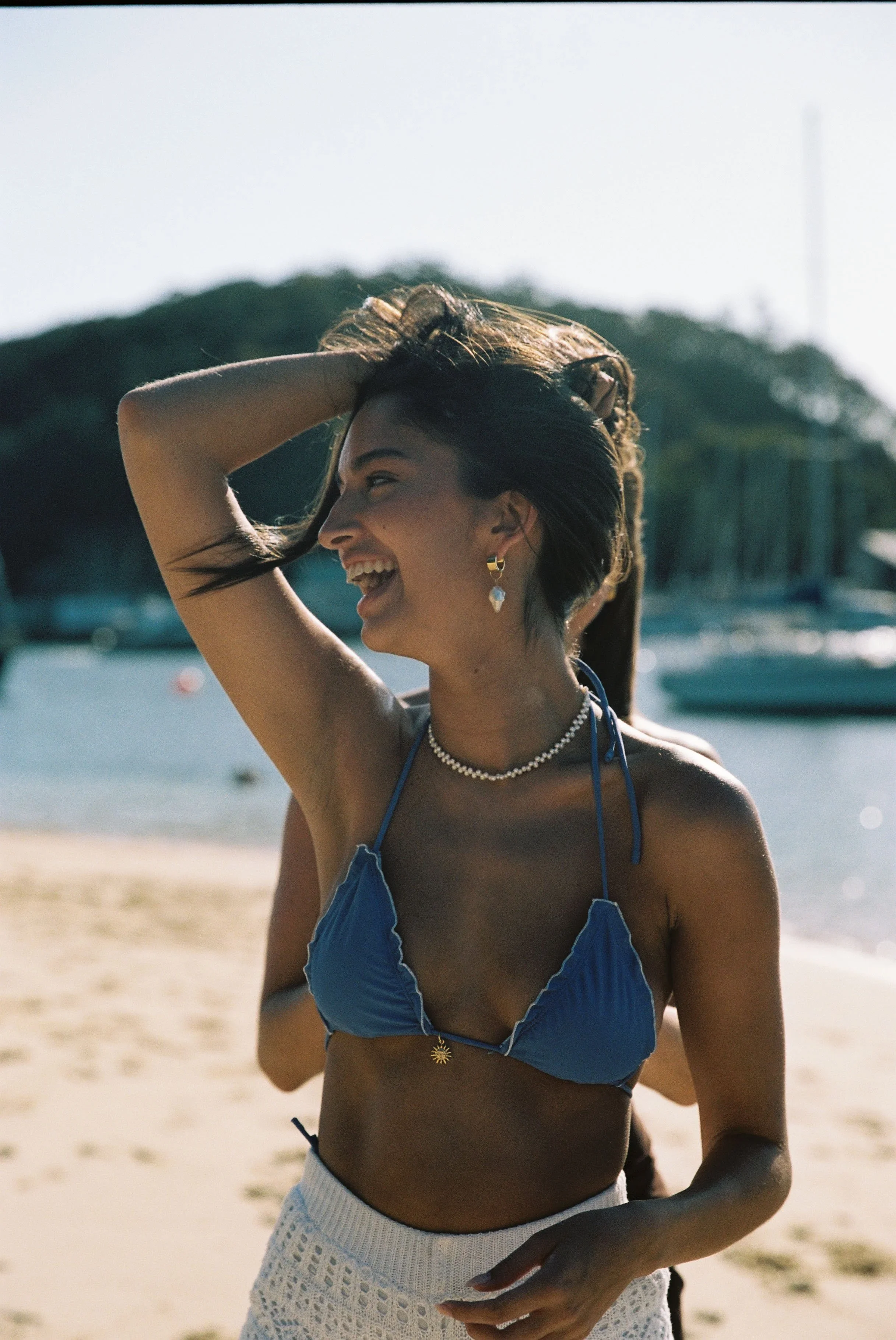
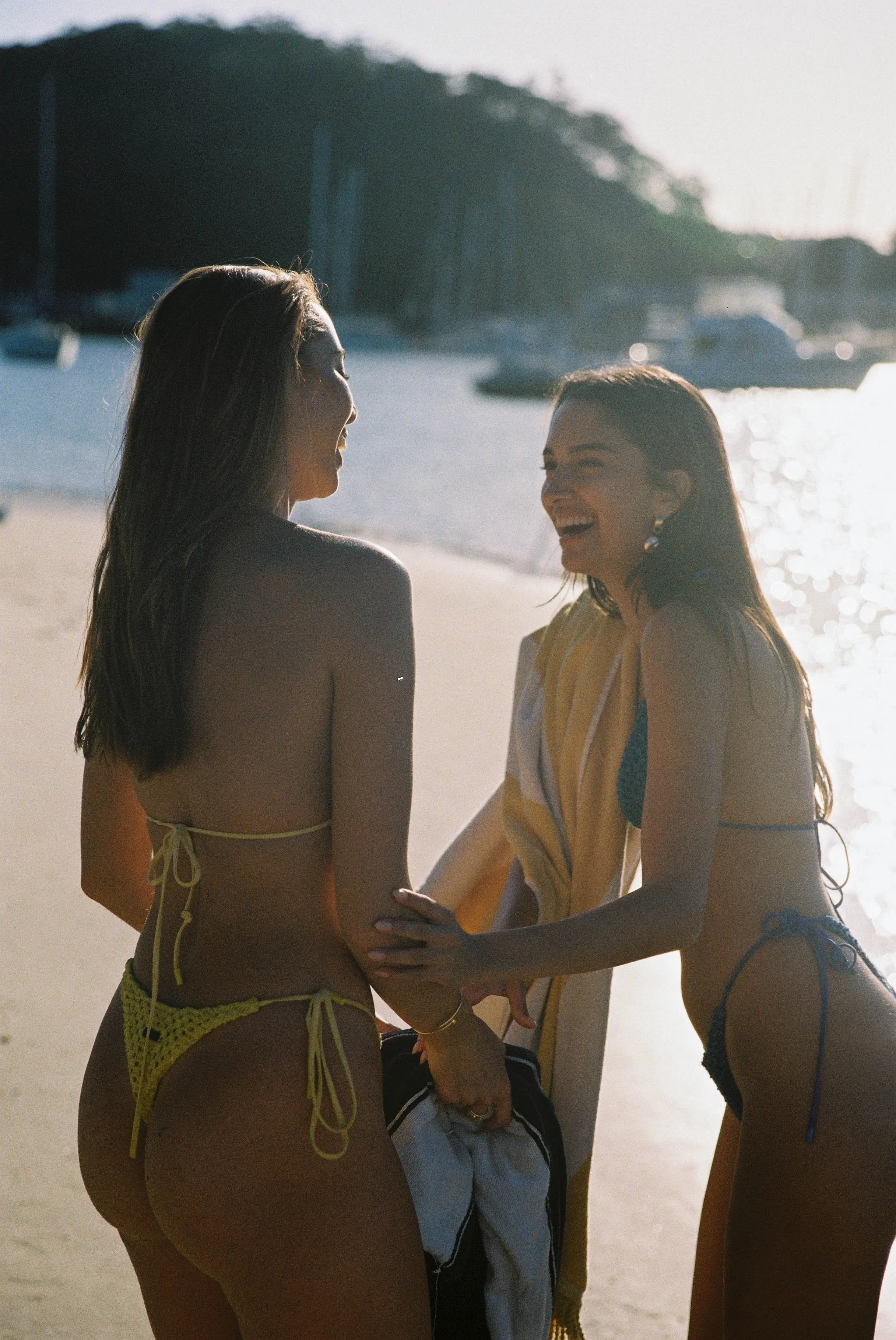
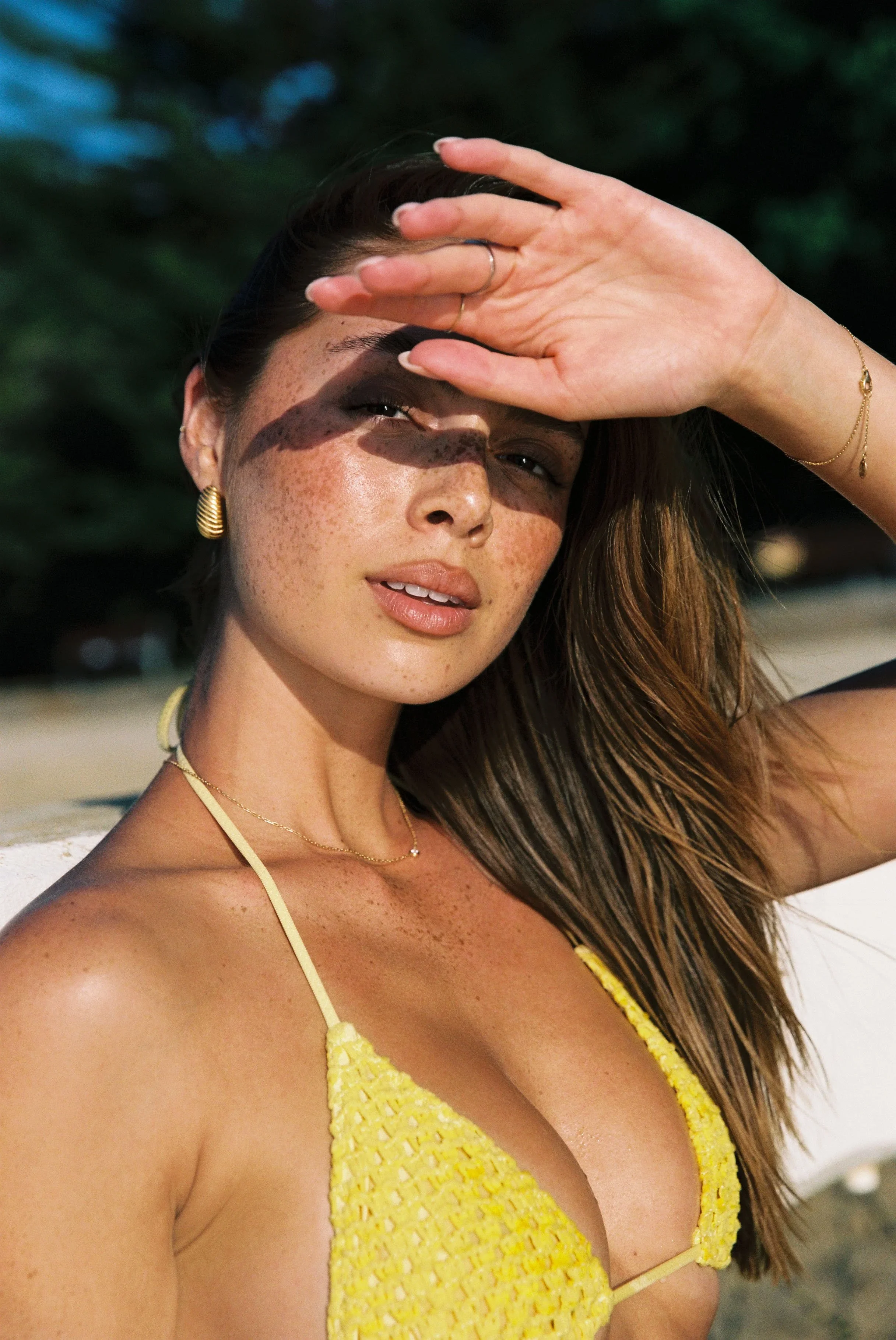
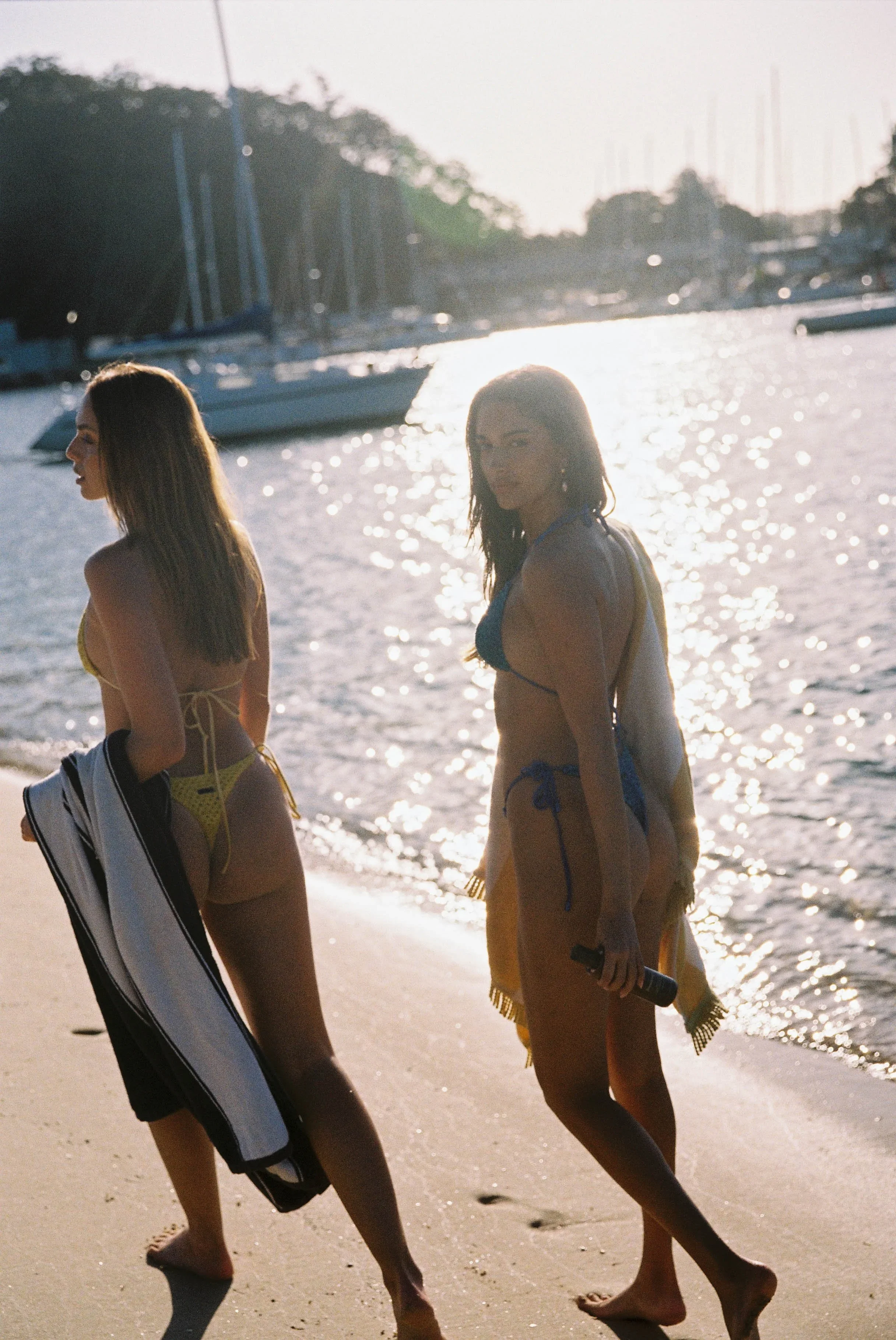
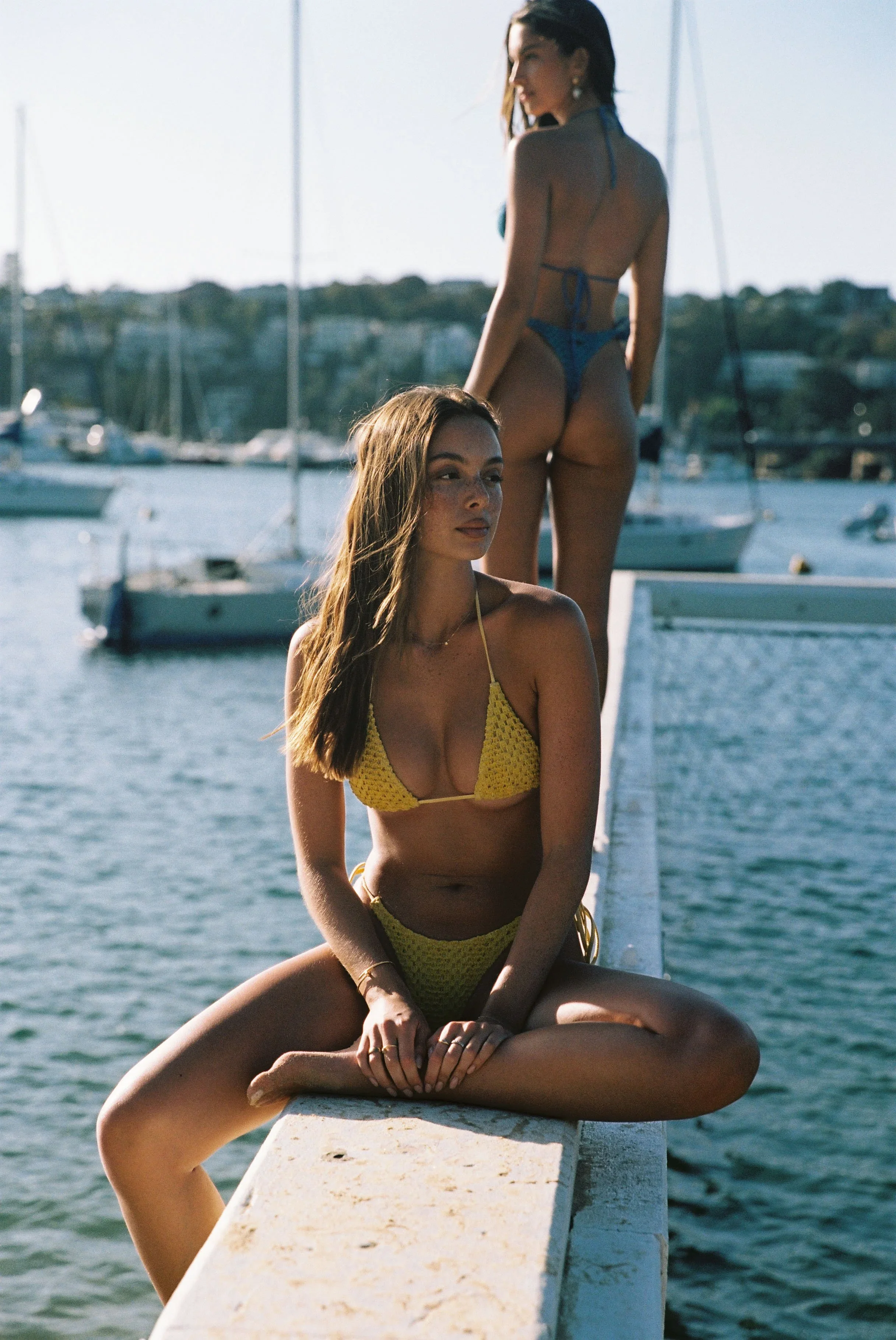
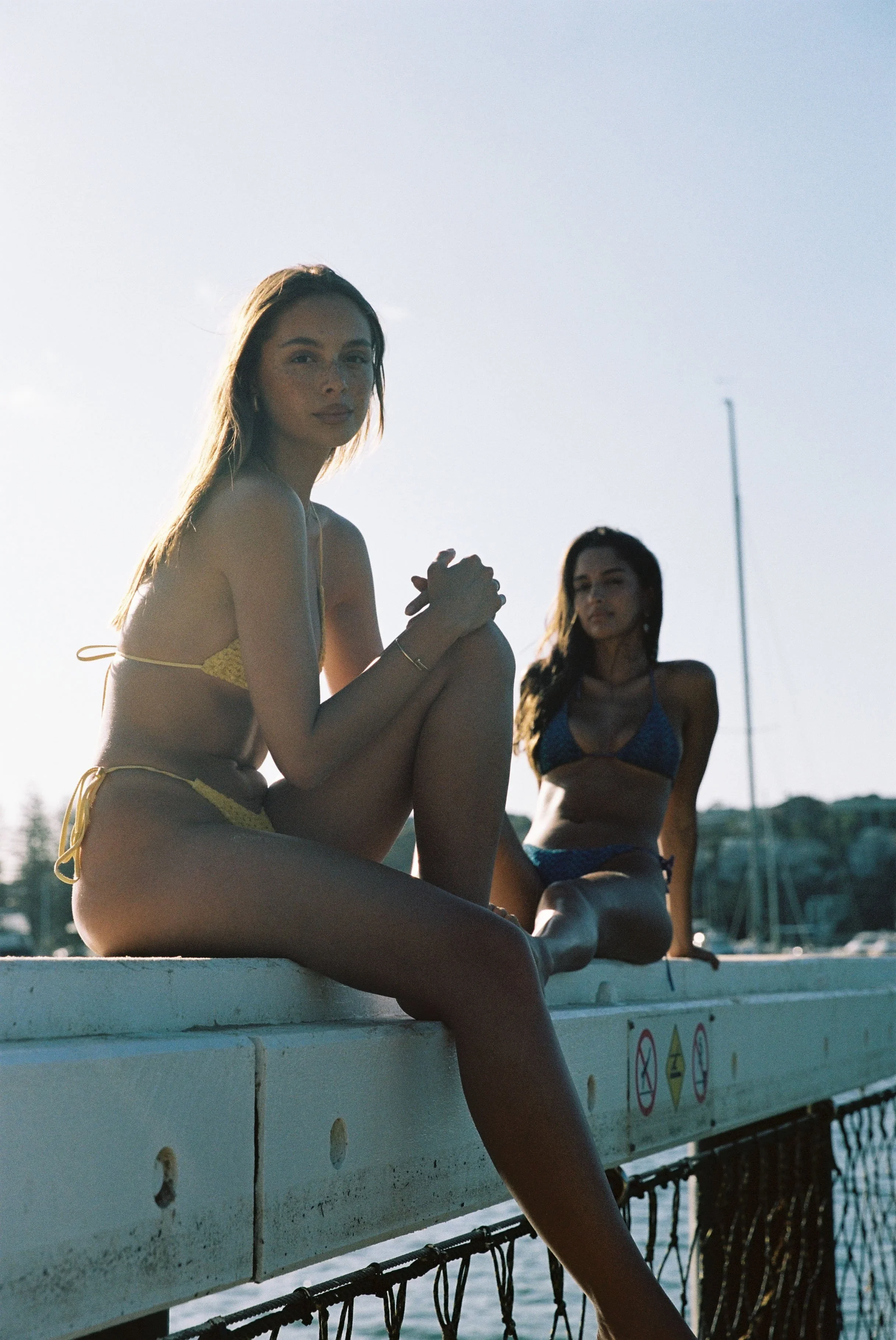
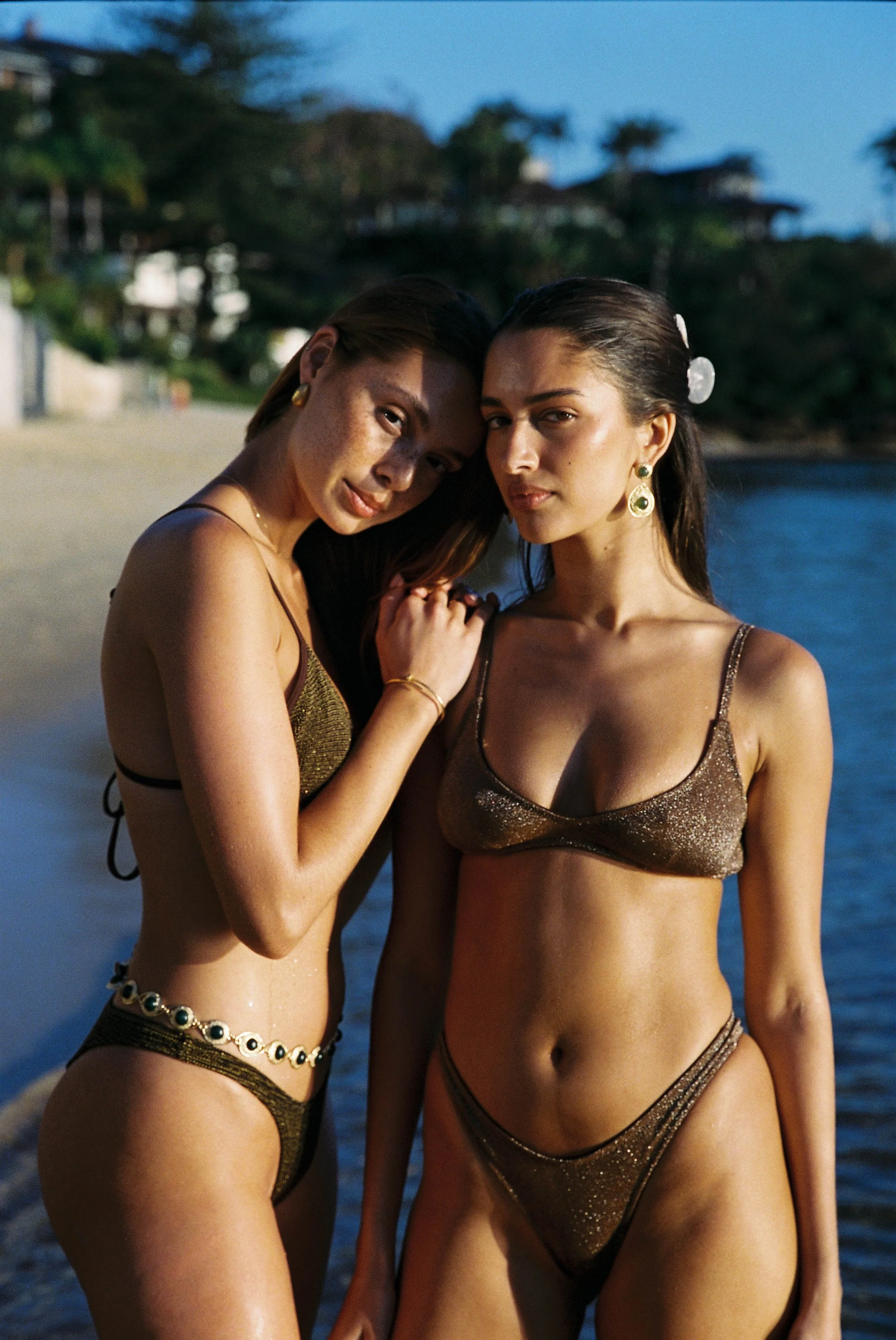
Kushi Leggo and Emma Hedley, Scoop Management, at Clontarf. See the full shoot.
I've written before about why comfort is the missing ingredient in good portraits, and it's the same reason I won't shoot with someone I haven't spoken to first. The vibe starts well before anyone's in the water, and the more of it we've built before the first frame, the sooner we find the flow on the day.
A note for photographers: direct the vibe, not just the pose
If you shoot swim, or portraits of any kind, the biggest mistake I see is giving direction and then going quiet behind the camera, because that silence is exactly where models start concentrating, and concentrating is where the upper face tightens.
Direct the body, then give them something to feel. Talk, ask questions, tell a story against yourself. Your job isn't finished when the pose is right; that's where it starts. The light is the easier part, as I wrote in Sunlight Is Simple. The harder skill is people, and it starts long before the shoot, with how you reach out to models and build trust and a clear creative direction they can actually feel part of.
How to prepare for a swimwear shoot
Stop just focusing on good positioning and looking "hot". Inner confidence is key.
One of the hardest parts about modelling is that you can't have a bad day, because it'll show up on the shoot, whether you think you've hidden it or not. You have to be able to compartmentalise, or, if it's at all possible, move the shoot. There's nothing like a swim shoot when you're on your period and feeling bloated, or the morning after a fight with your partner, or at the end of a long week with no sleep after too many castings.
It adds up! And that's important to note, because you need to be on it, every single time.
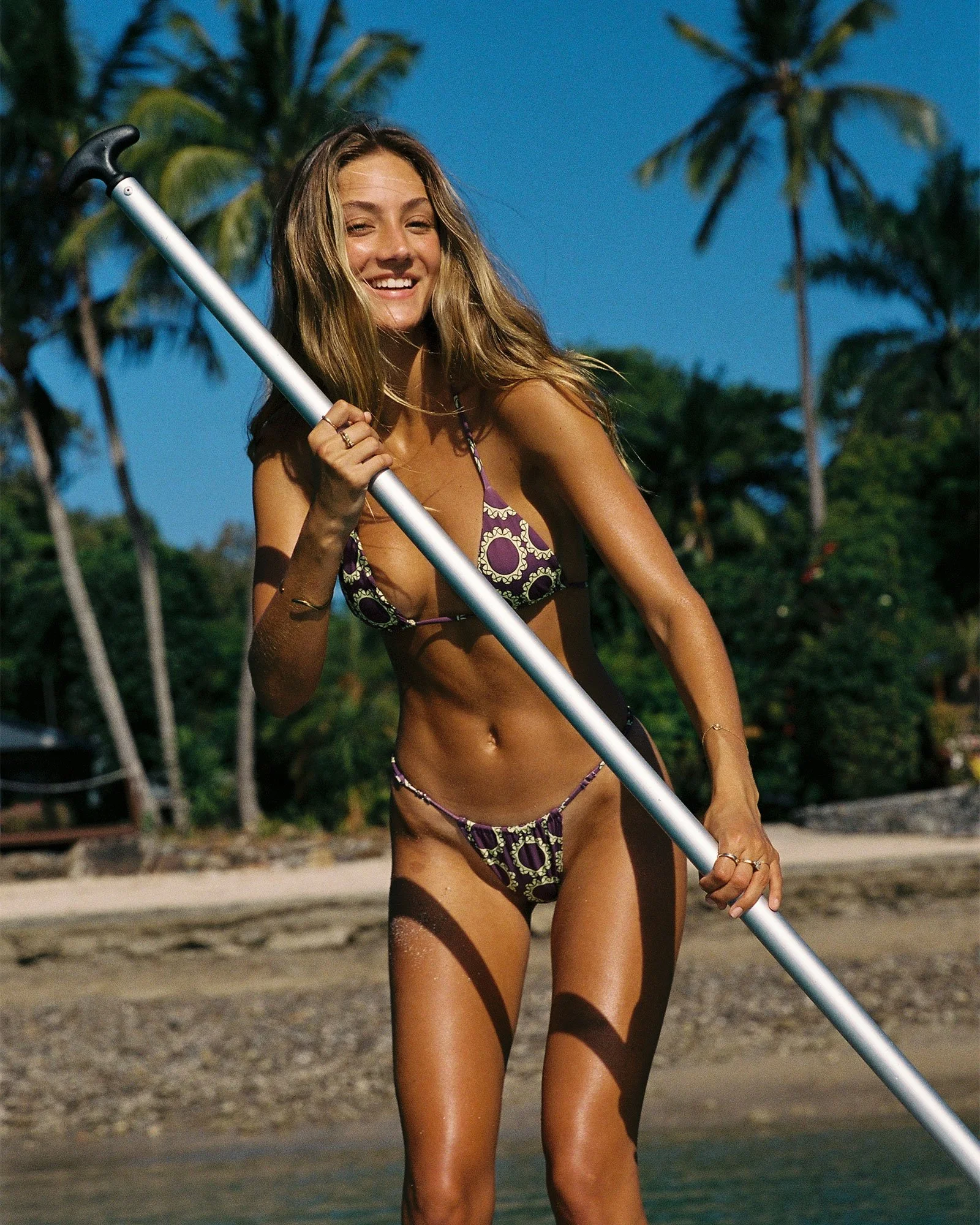
Jayde Pollard from Icon is one of the best examples I've got. I met her by chance on a morning walk near the boathouse at Little Manly, pitched a sunrise paddleboard shoot on the spot, and less than a week later, she was out on the water before dawn. It was only after we'd finished that she told me she's terrified of sharks. You would never know it from the images, and that's what compartmentalising looks like when it's done well.
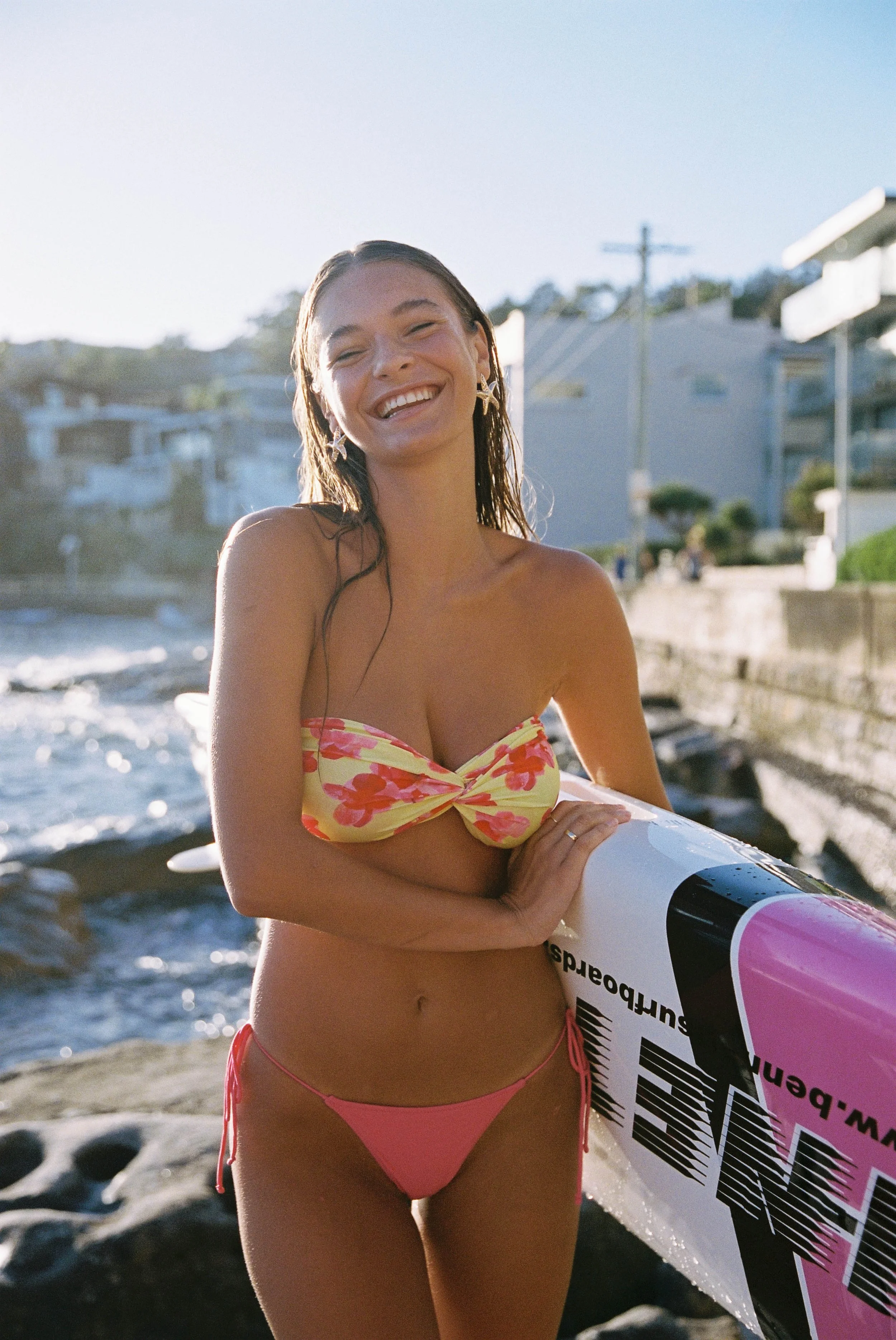
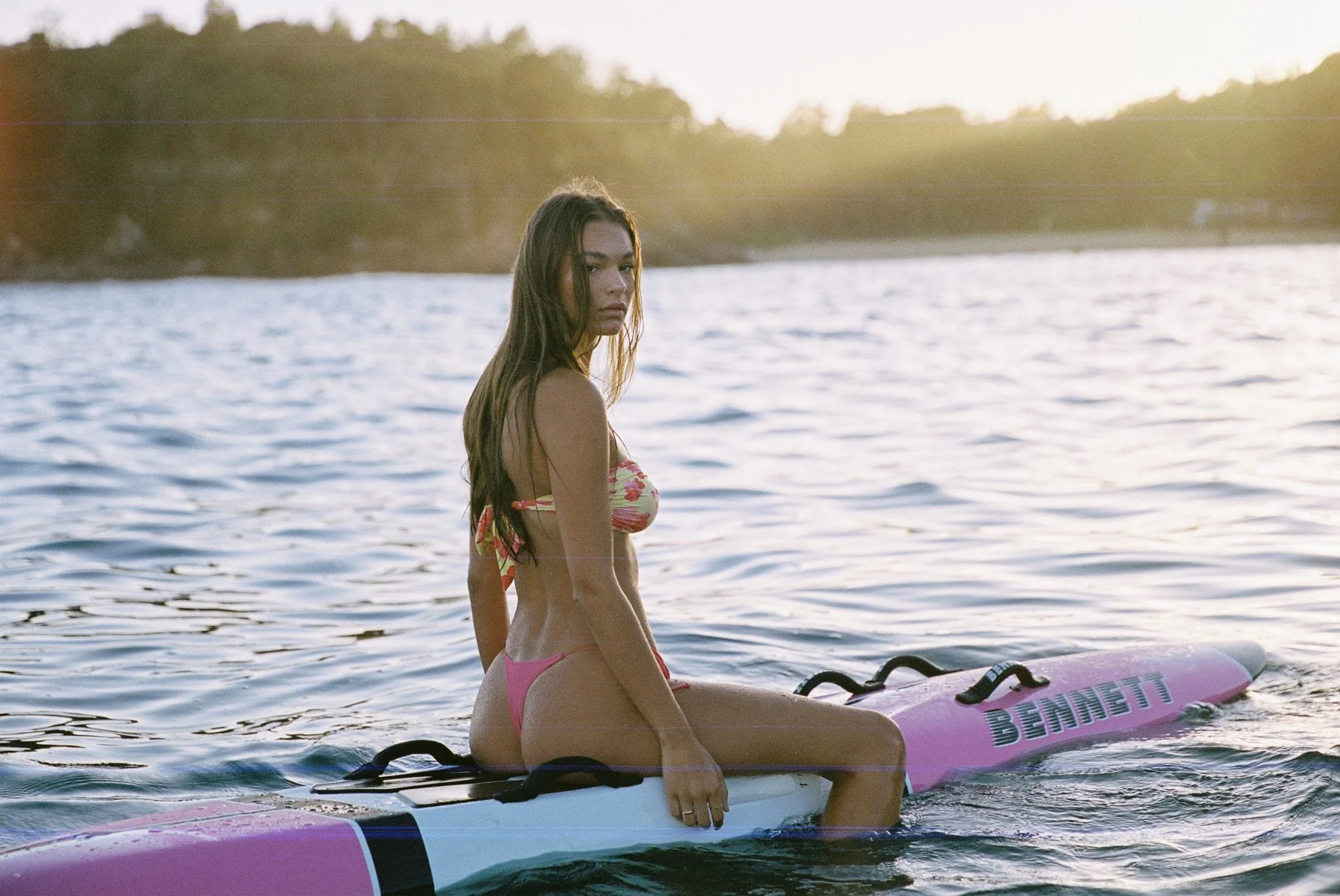
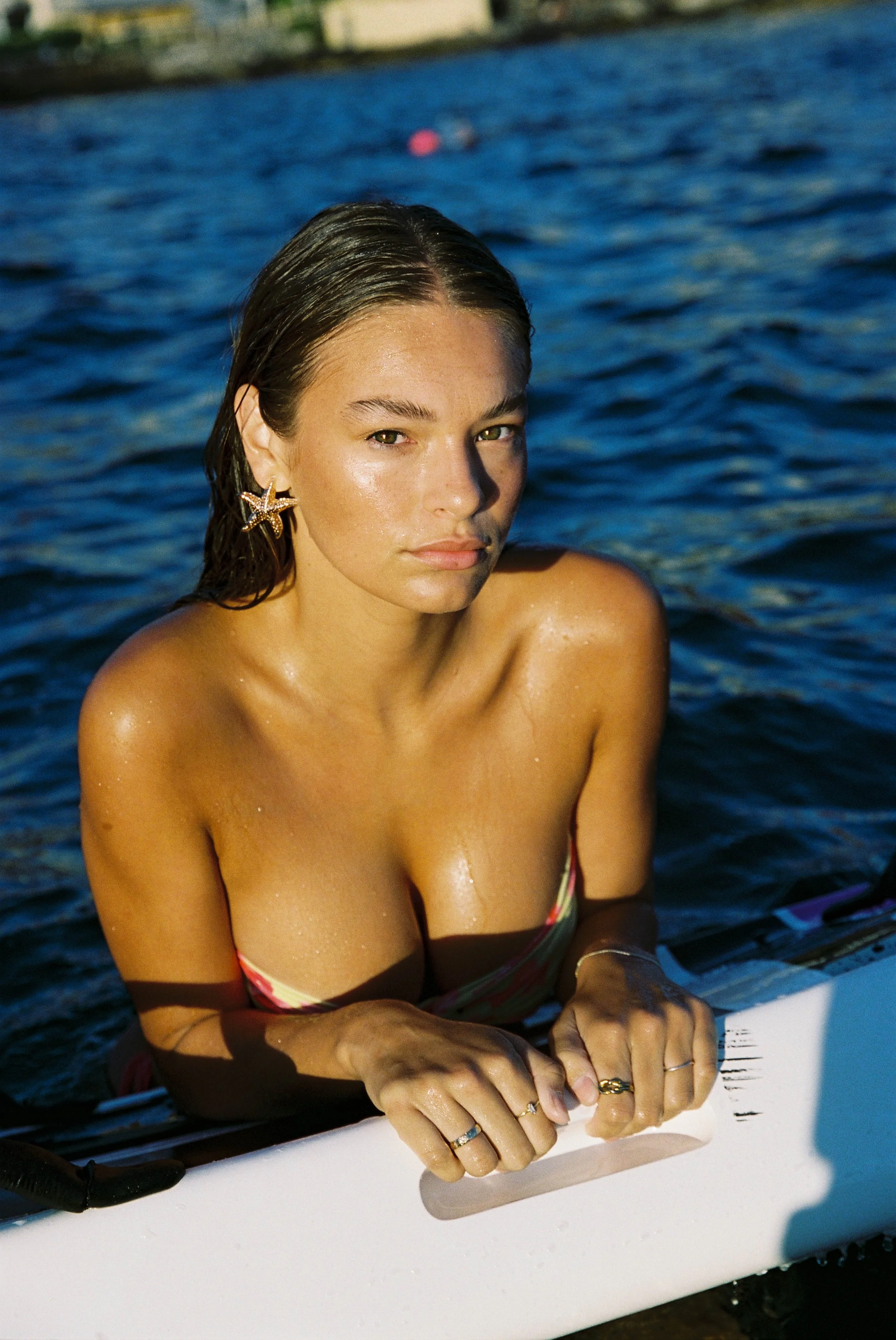
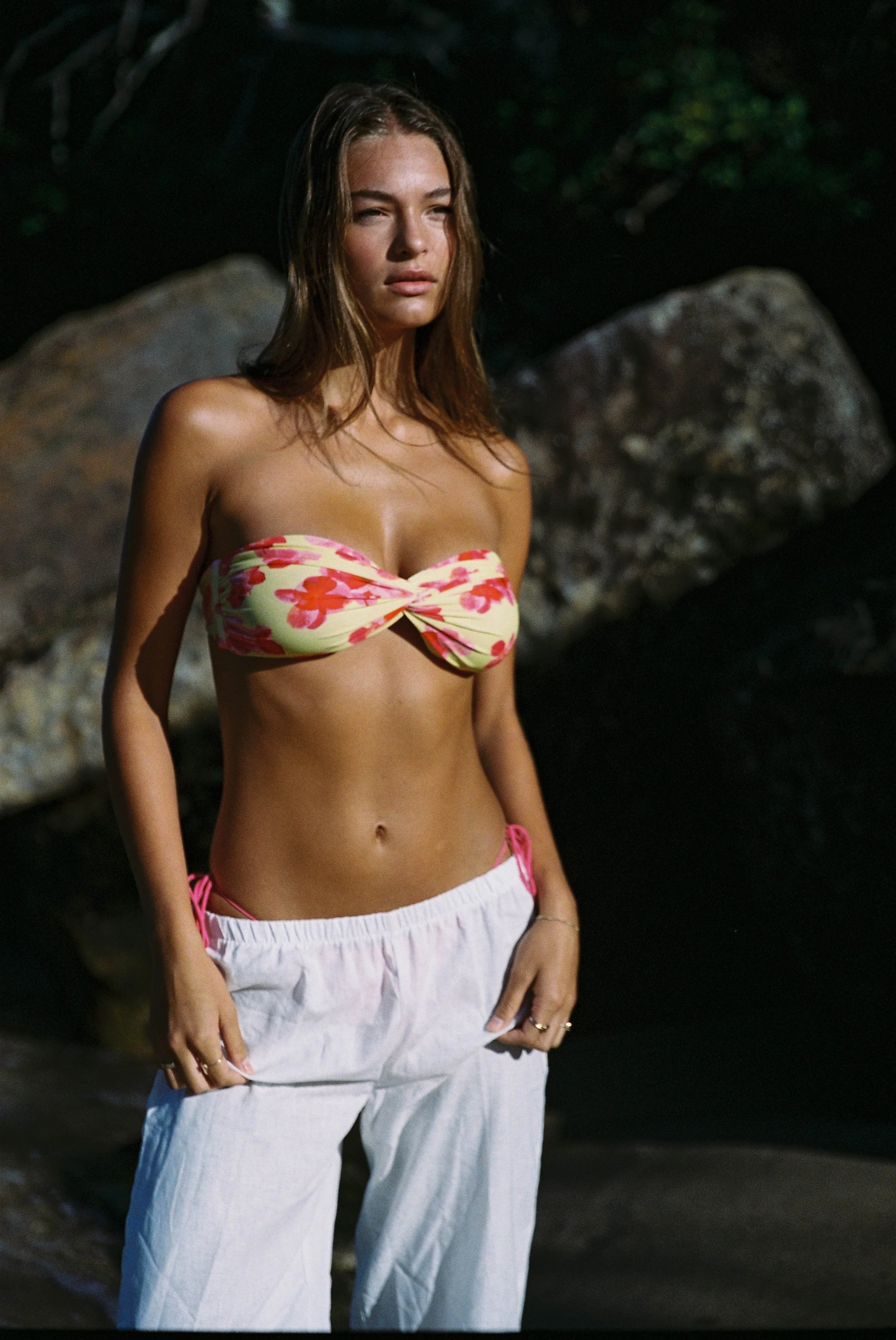
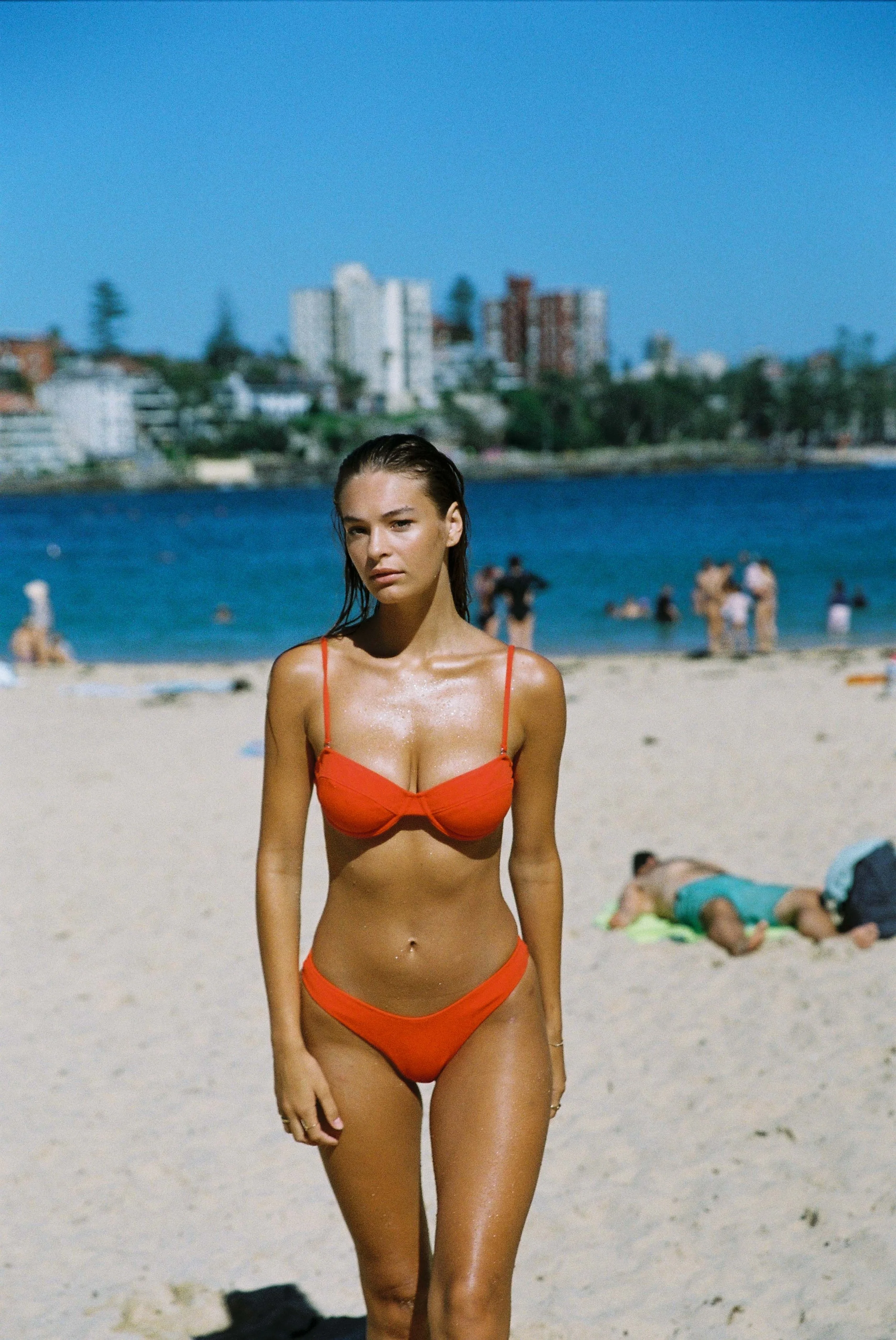
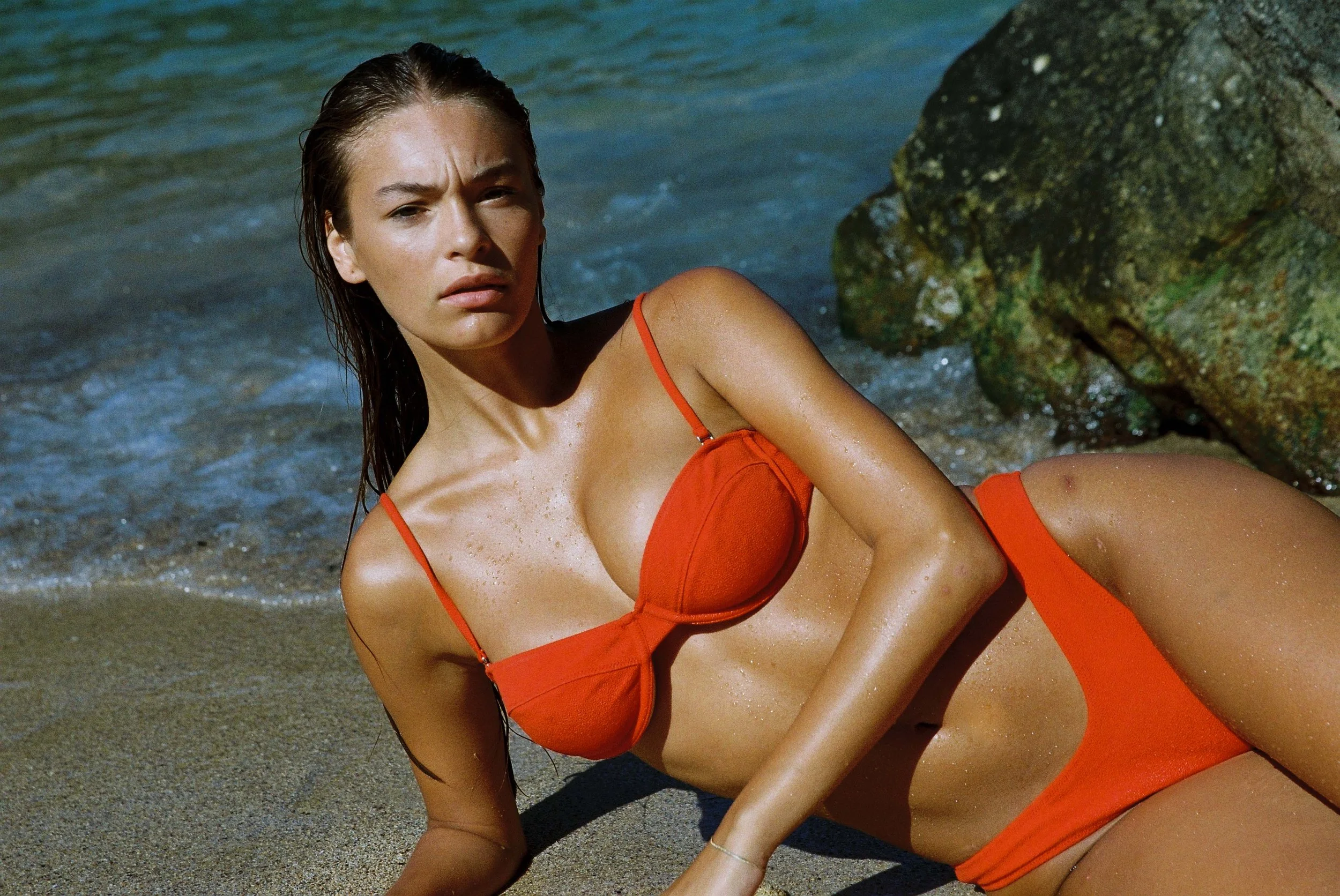
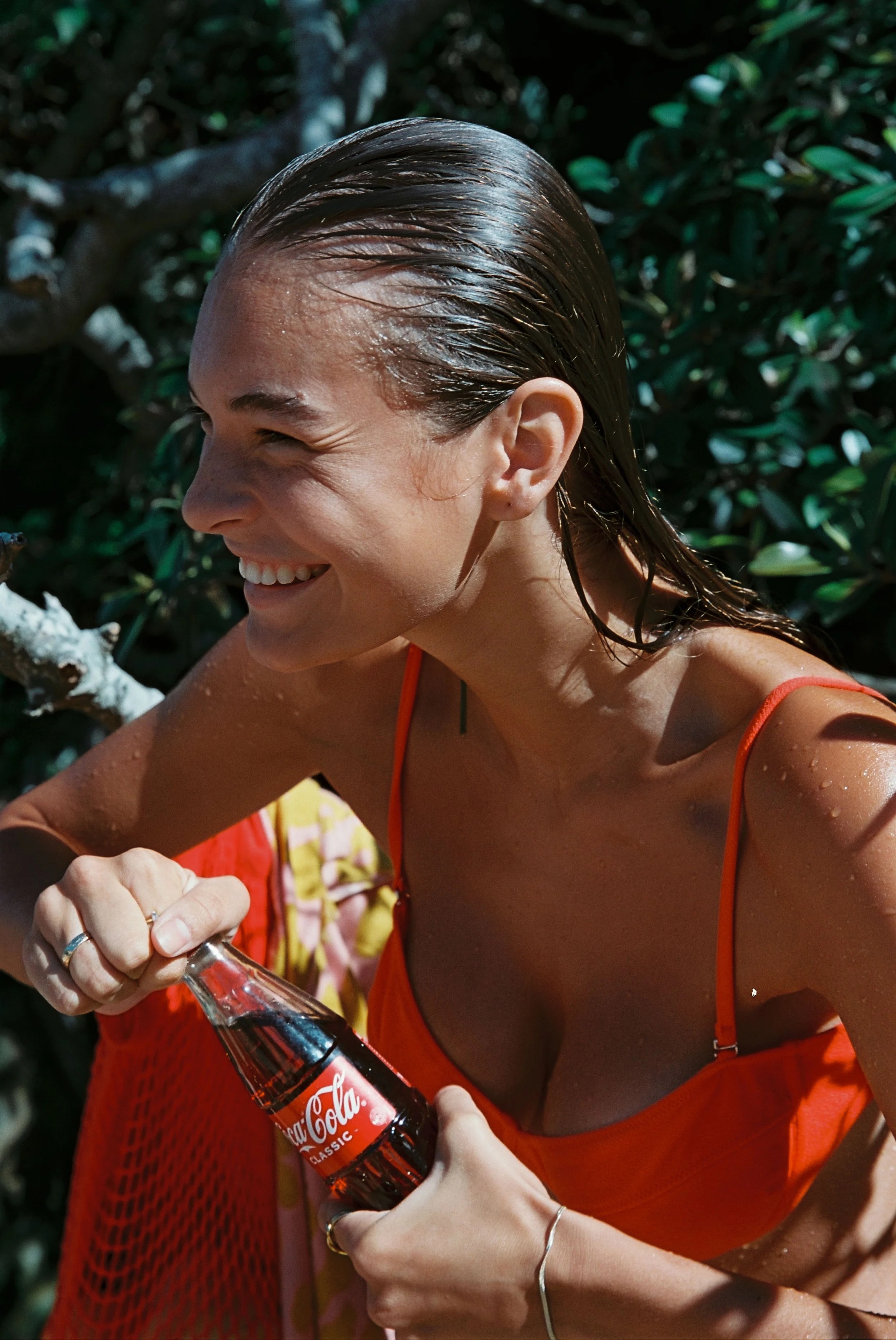
Jayde Pollard, Icon Management, at sunrise in Little Manly. See the full shoot.
A few things that help:
Protect the night before. Sleep does more for your face than any last-minute workout does for your body.
Tell your photographer if you're not feeling it. A good one will slow the start, change angles, or keep things covered for longer, and if it's really bad, ask to move it early rather than on the morning.
Don't try to fix it in the frame. If you catch yourself frowning, don't concentrate harder on not frowning. Breathe, look away, and keep talking.
Practise being directed. The more a pose becomes muscle memory, the less you have to think about it, and the less your face gives away. Regular tests help, and if you're not sure where to start, here's how to find photographers to build your portfolio.
Presence over measurements
Ecomm is different to what I do. It's clean and consistent and it's about the product, which is also why your portfolio isn't a campaign. In campaigns, like the swim work I've shot for Vacay Swim and Rusty in the Whitsundays, it's the smiles, the expressions, the movement and the vibe that carry the work, and none of that can be positioned into place.
Megumi, Kushi, Emma, Jayde and Jennifer all work internationally, and it shows in their work. When I look back at those shoots, what stands out isn't anyone's measurements. It's that each of them had a presence the camera picked up on straight away. Jennifer Lamb from Chic is from Florida and was in Sydney with her agency when we shot, the first time we'd ever met, and she braved a cool spring day in swimwear without any of it reaching her face.
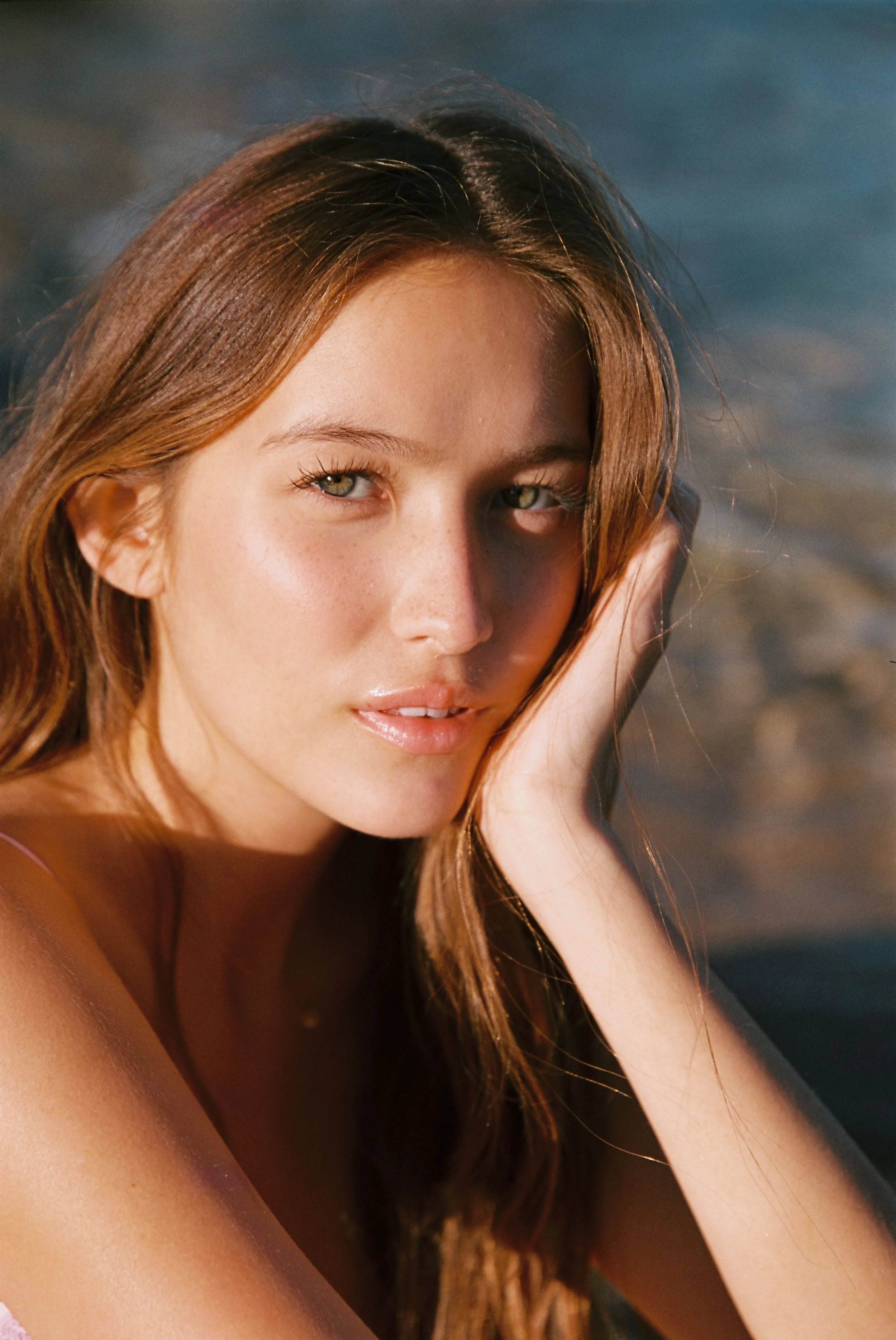
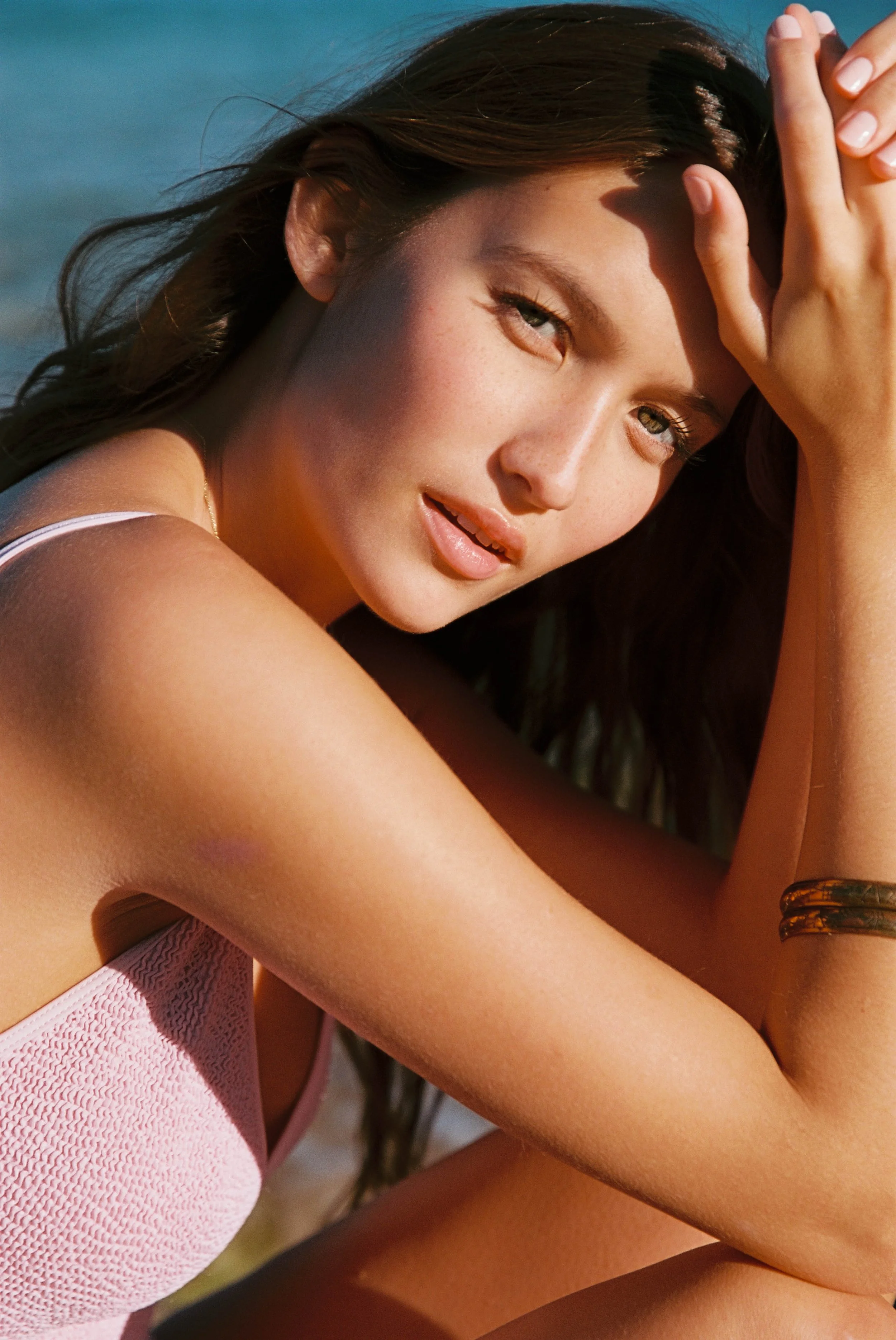
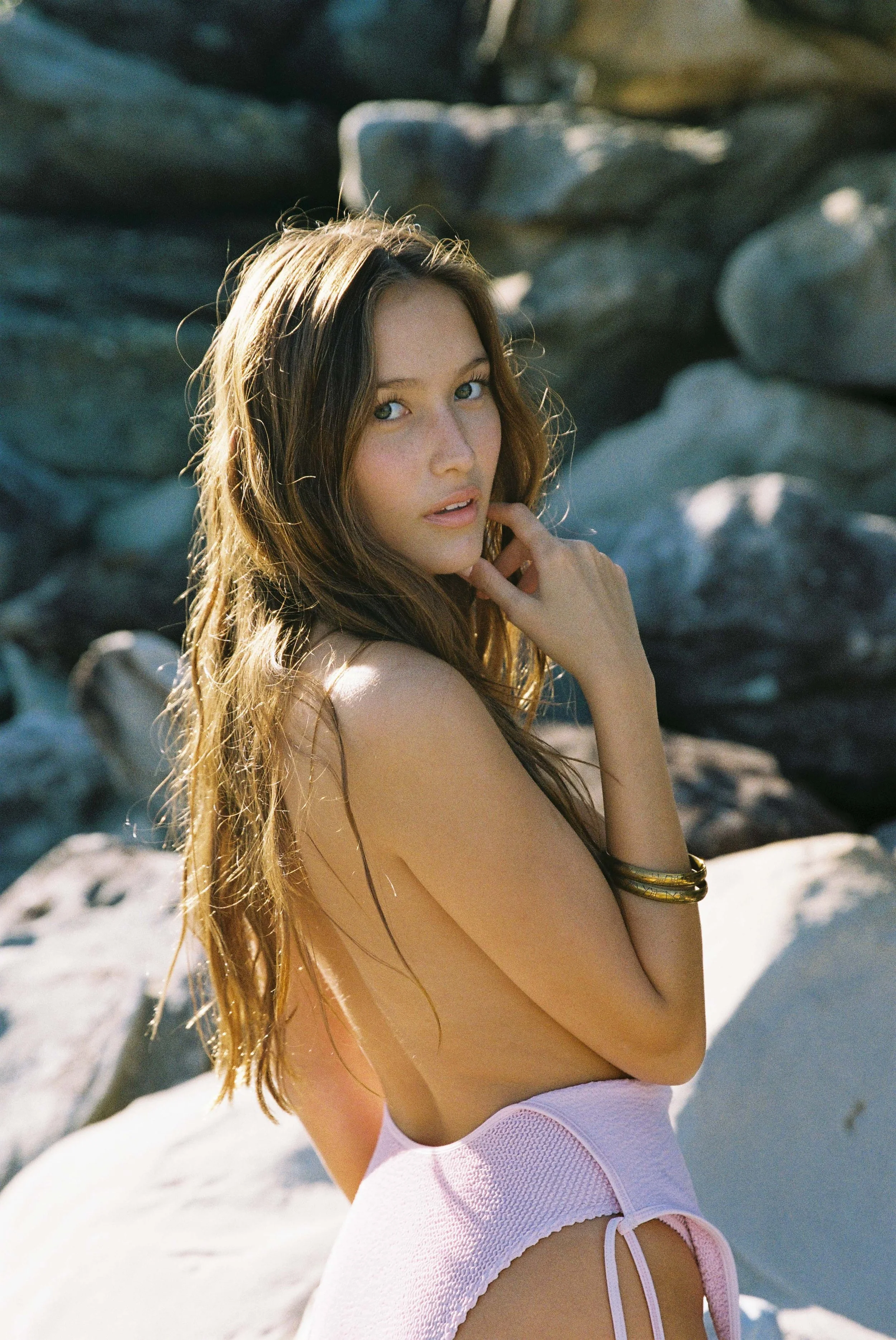
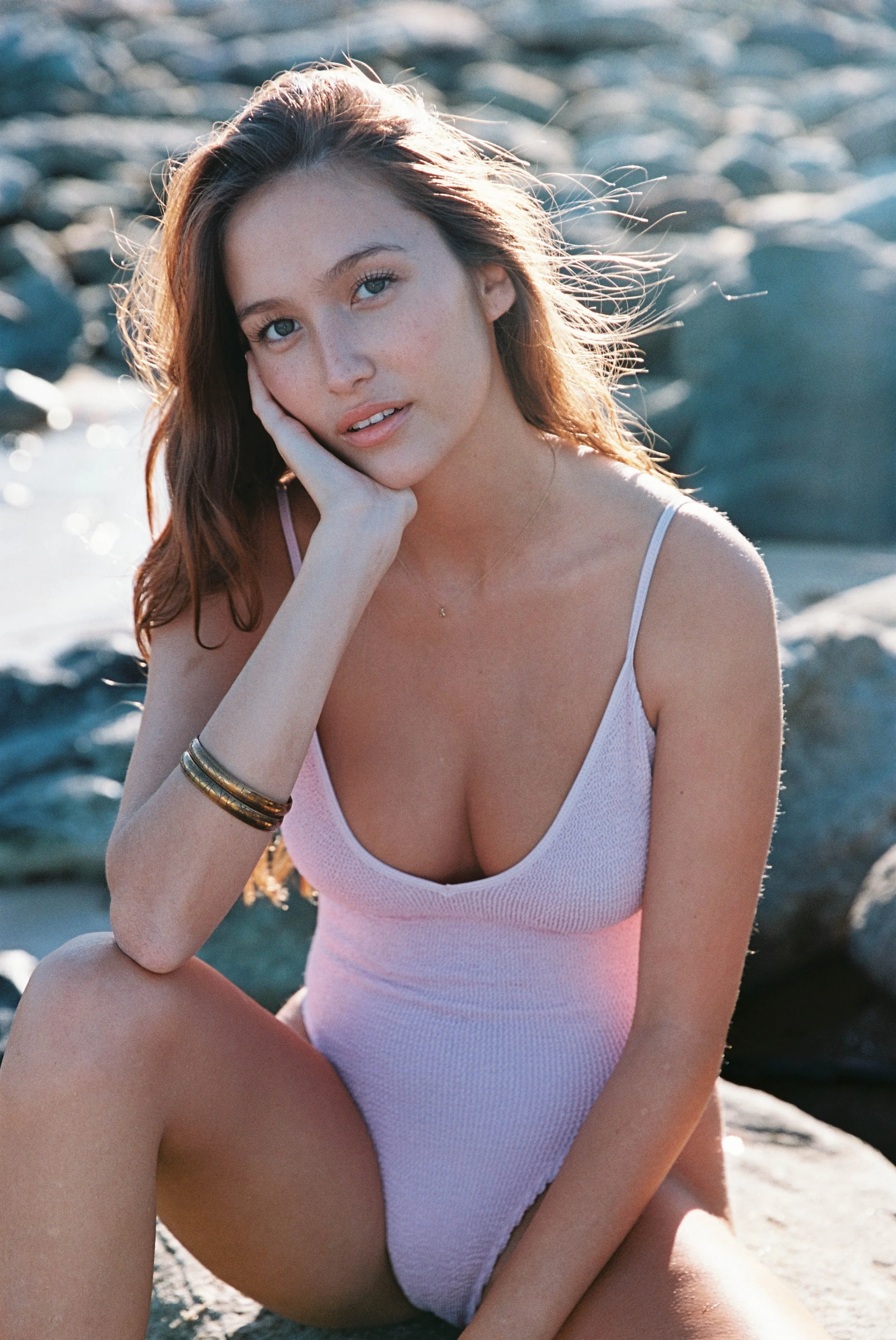
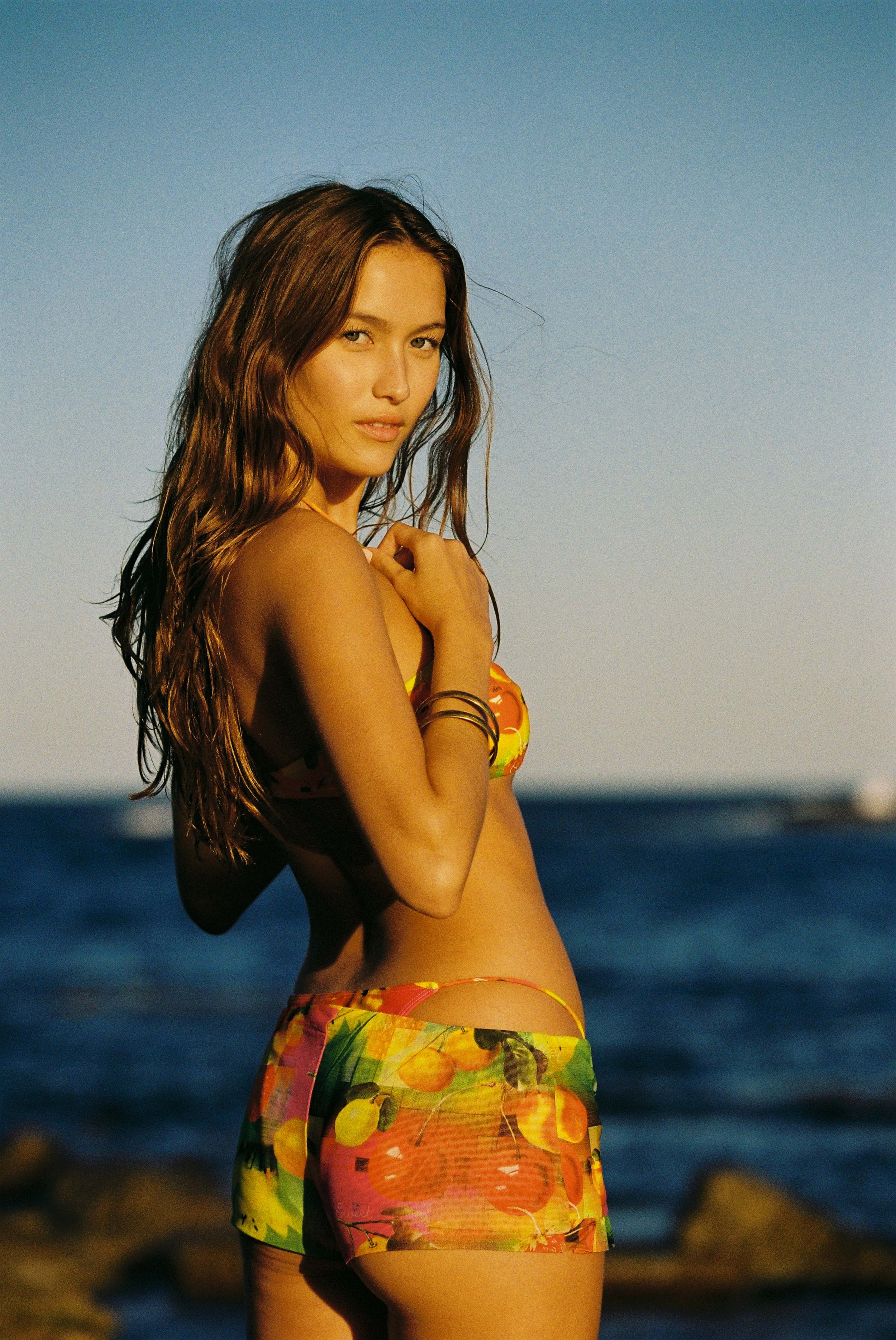
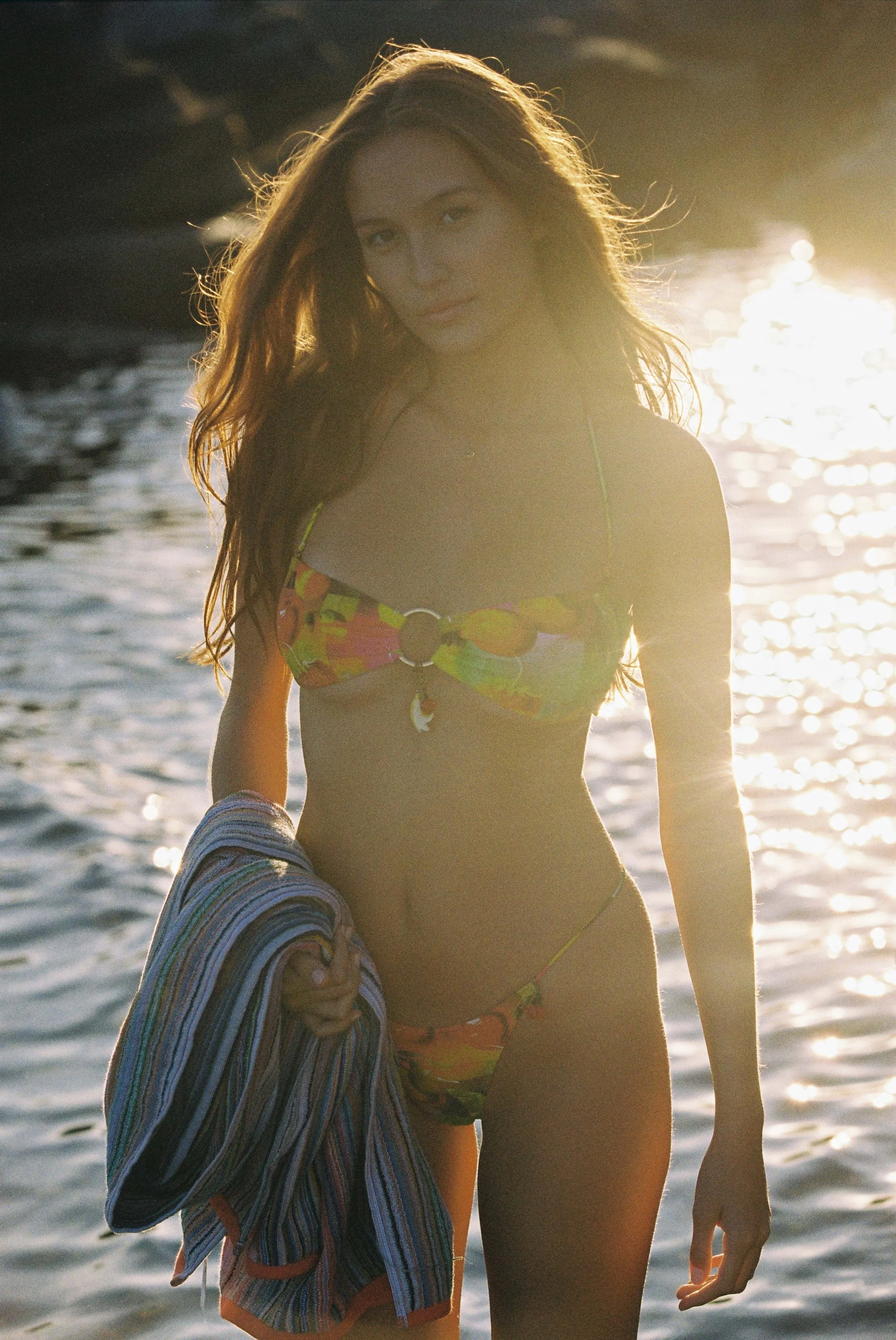
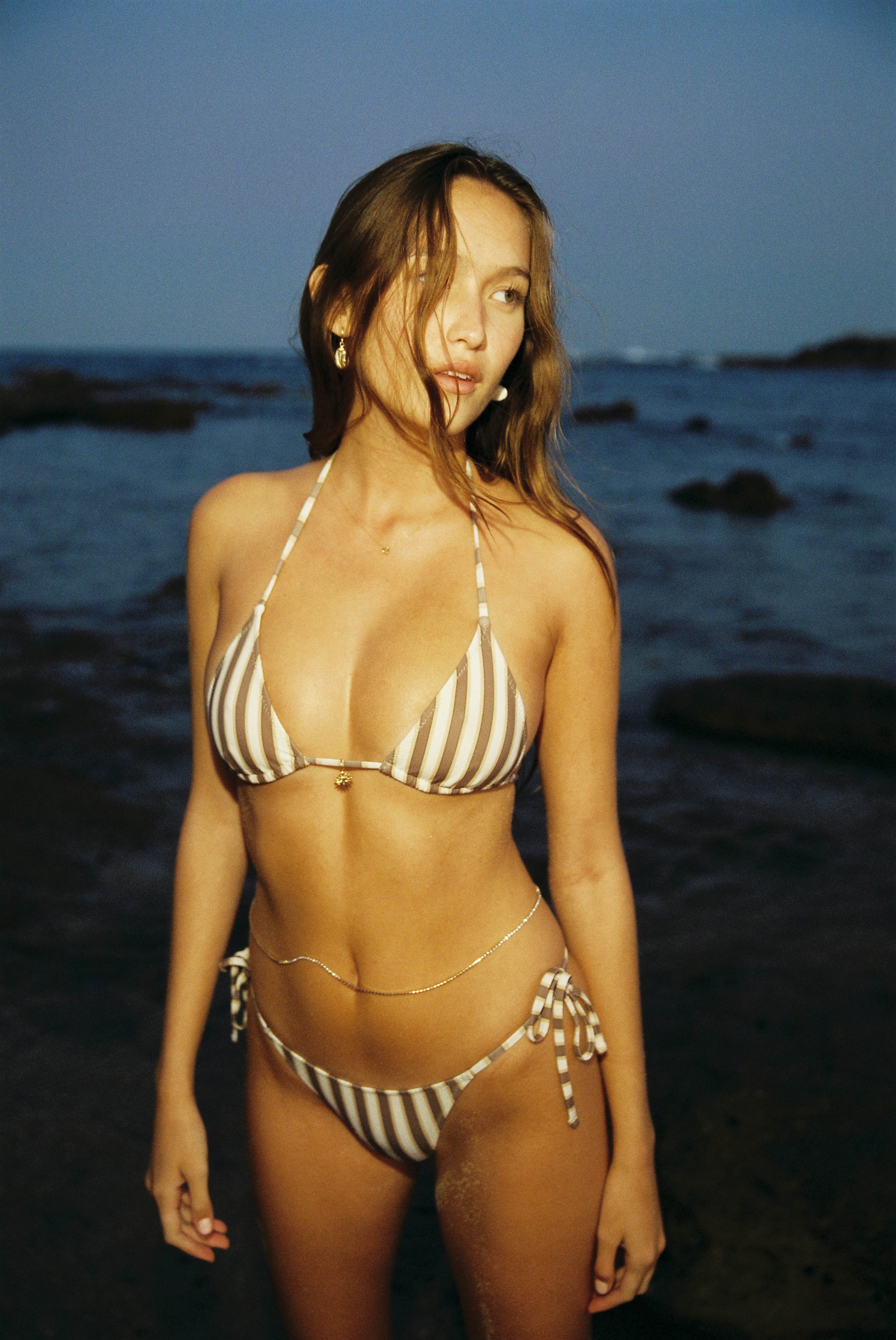
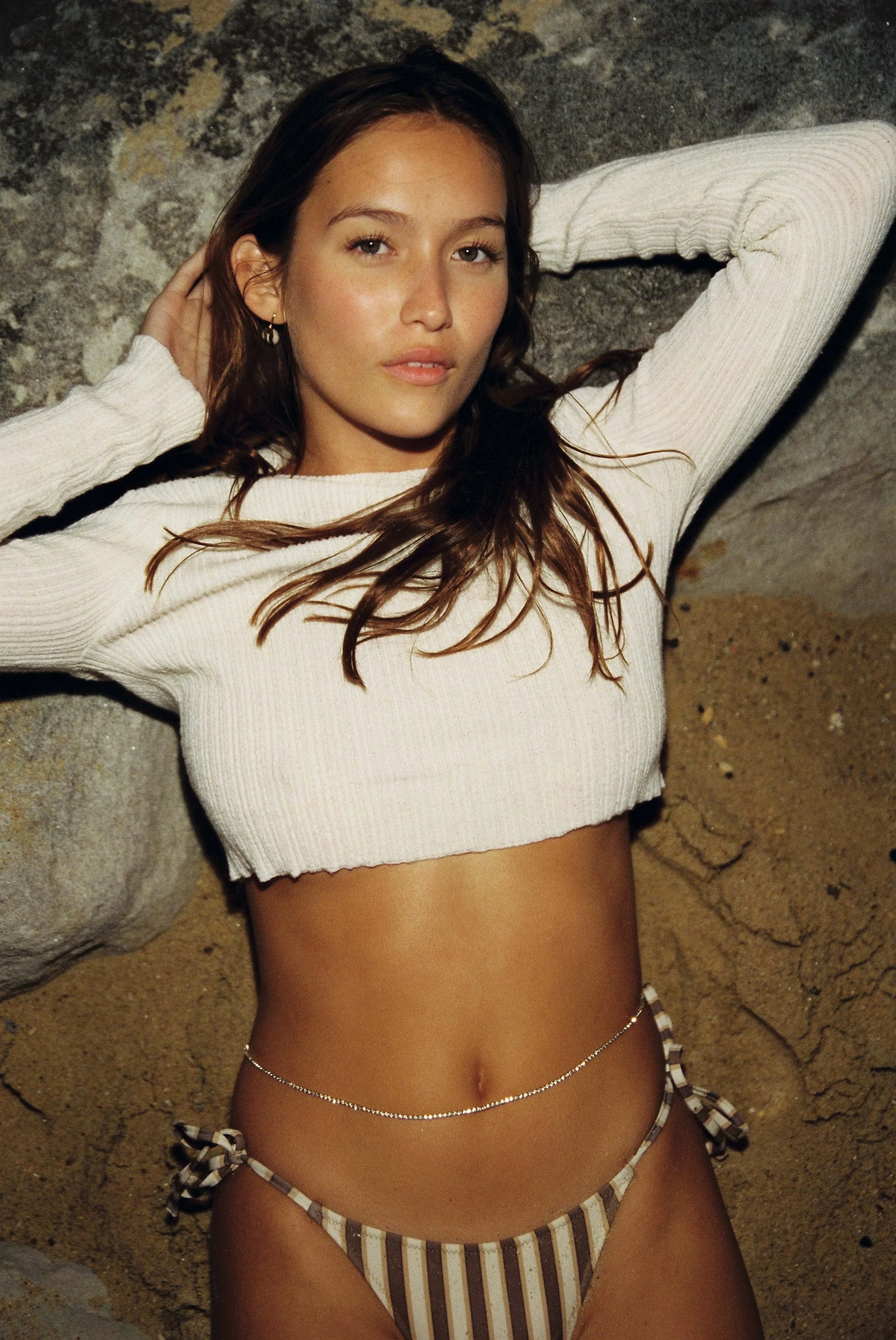
Jennifer Lamb, Chic Management. See the full shoot.
The biggest models all have a vibe to them, a presence they've cultivated over years. People make it about measurements, and yes, agencies still have height requirements, but presence is often what separates the girls who book from the girls who don't, and it's a big part of why some models aren't getting booked. The thing we always need to lean into is feeling great about ourselves, because that's the part the camera actually sees.
The short version
Most people prefer the mirror version of their own face, so a photo will always feel a little foreign.
Concentration shows up above the eyes before it shows anywhere else.
"Nothing behind the eyes" is usually tension around them.
The last hour isn't magic. It's flow, and you can get there sooner.
Being told to relax doesn't relax you. Conversation and laughter do.
You can't have a bad day on a shoot. Protect your headspace, or move the shoot.
Positioning gets you halfway. How you feel gets you the frame.
Common questions
Why do I look tense in photos?
Usually because you're concentrating. When you're thinking about a pose, small muscles in the brow and forehead tighten, and research shows that muscle activity rises with mental effort. It's subtle, but the camera sees it.
How do I look relaxed in a photoshoot?
Not by trying to relax. Get the pose close with your photographer's direction, then shift your attention away from it: talk, laugh, tell a story. A good photographer will keep the conversation going so you're not left thinking about your face.
Why are the last photos of a shoot often the best?
It isn't the time on the clock. It's flow: by the end of a shoot you've usually stopped watching yourself and started enjoying it, and that shows in the face. A good photographer's job is to get you there earlier.
What does "nothing behind the eyes" mean?
It's a common note when a photo feels flat. It's rarely the eyes themselves. It's usually tension in the muscles around them, which stops a real expression from reaching the eyes.
How should I prepare for a swimwear shoot?
Sleep well the night before, talk to your photographer beforehand, and be honest on the day if you're not feeling it. If you're having a genuinely rough week, it's better to move the shoot early than to force it.
Keep reading
Shoots in this article
For models
Signed Isn't the Same as Represented: what new models should know before signing
Why You're Not Getting Booked in 2026, and what to do about it
For photographers
Some of my campaigns:
Oliver Minnett is a photographer and scout based in Sydney.