Working With Models: How to Reach Out, Build Trust, and Organise Portfolio Shoots
If you are new, you will probably get ignored a lot. It can feel personal, but once you see how much bad behaviour, lack of safety, and general mess models deal with, it starts to make sense.
Most models have had photographers push boundaries, waste their time, make them uncomfortable, or overpromise and underdeliver. Some use “collab” as a way to get something for free without offering much back. Some ask for lingerie, swimwear, or nude shoots before they have even shown they can take a decent portrait.
So when you reach out as a new photographer, you are not starting from neutral.
You are starting from a place where the person on the other end has probably had some experiences, or been forewarned about bad behaviour.
That does not mean you are doing anything wrong. It just means you have to be thoughtful about how you approach people, how you explain what you want to make, and whether the shoot actually gives something back to the person you want to photograph.
Writing all your DM’s with ChatGPT, probably won’t help you.
You are not trying to convince someone by pushing. You are trying to make the idea feel clear, safe, useful, and worth their time.
Start by asking if you are reaching out to the right person
A lot of photographers reach too high, too early. They see a model with agency work, a polished book, strong images, and send a vague message asking to “collab” without having the work to back it up.
That is not meant to be cruel. It is just the reality of the exchange.
Before you reach out, ask yourself if the person is actually at your level, if you are offering something they need, and if you can deliver photos that make their book stronger, not just give you a chance to practise.
Models are not props for you to learn on. Everyone starts somewhere, but no one owes you their time, image, or trust before you have shown you can handle it.
A good portfolio shoot should work for both people. If it only helps you, it is not a collaboration, no matter how you word it.
Your profile is part of the pitch
Before a model replies, they’re going to look at your profile. That profile is already answering a lot of questions before you have even spoken.
Does this person seem professional?
Do they seem safe?
Do they understand how to photograph people?
Can they direct?
Do they work with models respectfully?
Is there a clear style?
Are the images good enough for me to give up my time?
If you are asking to shoot fashion, swimwear, or portraits, but your profile is full of landscapes, cars, or random images that do not show you can photograph people, the model has no reason to trust you can deliver what you are asking for.
It does not mean those photos are bad. They just do not prove what you need them to prove.
If you want to work with models, your profile needs to show you understand the basics. Posing, light, skin tone, framing, expression, direction, taste, and restraint. Those are the things people look for when they decide if you feel like a safe and useful person to shoot with.
Models read your work quickly. If it looks amateur, unclear, messy, or off, they will move on. Most will not explain why.
Do not make the most common request
Do not ask to shoot lingerie, boudoir, implied nude, or anything in that space if you have never done it, because you will probably get ignored, and honestly, you should expect to.
It is one of the most common requests models get, especially from male photographers. Most of the time it feels tacky, lazy, and uncomfortable. It does not feel like the photographer wants to make strong work. It just feels like they want access.
Even if your intention is good, you are stepping into a space that is already full of bad experiences. Unfortunately, I’ve heard countless story about photographers using the work to make requests and demands that are unbecoming of our industry, and am well aware of the space we play in. There’s too much anecdotal
If you cannot take a strong portrait of someone in jeans and a singlet, you probably do not need to be asking them to take their clothes off. The issue is not the styling. It is whether you have enough taste, skill, and care to make the image work without relying on the obvious thing. Many photographers use nudity as a stand in for vulnerability and emotion. They are not shortcut to those things.
Start with work that shows restraint. Shoot simple portraits, clean fashion tests, or agency-style development work. Anything that shows you can make someone look good without making the image feel loaded or cheap.
That kind of work makes you a much bigger green flag later.
The things photographers do that make models switch off
A lot of photographers ruin the opportunity before the model has even had a chance to consider it, usually because the message feels vague, self-centred, too familiar, too long, or like it is hiding the real intention.
They send paragraphs about their creative journey. They over-explain. They use cold, transactional language. They talk about what they want, but never explain why the model should care. They do not have a moodboard, or they send references that are too broad, too sexualised, or disconnected from the work they can actually make.
Some say they have a concept, but the concept is just “you in lingerie at sunset.” Some compliment the model in a way that feels loaded, not professional. Some act like the model should be grateful for the opportunity, even when they have offered nothing specific, useful, or respectful.
That stuff matters. The message is not just about the shoot. It is a small preview of what you might be like on set.
A model does not need your entire artistic philosophy in the first message. They need to know who you are, what you want to make, why you think they are right for it, and whether it feels safe and worth their time.
That is usually enough.
Keep the first message simple
The first message should be short, calm, and easy to respond to. If someone has to work too hard to understand what you want, or feels like they are being dragged into a long conversation before they have even said yes, you have already made it harder than it needs to be.
I often do not even DM first. I will follow someone, engage with their work naturally, and leave a simple comment like, “Would love to work with you sometime.”
That is often enough to open the door without making it feel forced.
I avoid words like “collaborate” because it can sound gamey. It has been used too often by photographers trying to get free labour while pretending the value exchange is even. I also avoid saying “content.” It cheapens the whole thing and makes the shoot sound disposable, when really you should be asking someone to help you make work.
The language should make their time feel valued. It should leave them enough room to say yes, no, or ask for more information without feeling cornered.
Something simple usually works better than a long pitch.
“I’d love to shoot with you sometime if you’re open to it. I think your look would work really well for a clean, simple portfolio test. No pressure at all, but happy to send through references.”
That says enough. It is clear, calm, and respectful, and it does not try to force the whole shoot into the first message.
Send a proper idea, not a vague request
If they are interested, that is when you send more information. This is where you show the shoot has been thought through, without turning it into a 900-word production document.
You should be able to explain the feeling, the rough styling, the kind of location, the images you are trying to make, and why you think it could be useful for their book in a few clear sentences.
A moodboard helps, but only if it actually makes sense. Do not send forty random Pinterest images that all say different things. That does not make you look prepared. It just makes it feel like you have not made a decision.
A good moodboard gives the model confidence that you know what you are trying to make, but still leaves enough space for them to bring something of themselves to it.
The more considered the idea feels, the easier it is for someone to trust you. Not because you are controlling every detail, but because you have shown you are not just hoping the model will turn up and magically make the shoot good.
Make the shoot useful for them
This is the part a lot of photographers skip. They think about what they want to shoot, without really thinking about what the model might need from the exchange.
If a model already has ten beach shoots in their book, do they need another one from you? If their portfolio is full of soft natural light portraits, can you offer something cleaner, sharper, more editorial, or more commercial? If they are trying to get agency work, can you make something that looks like it belongs in a proper development board, not just your personal Instagram feed?
Your idea needs to solve a problem for them, even if that problem is just needing updated images, more range, cleaner digitals, stronger portraits, or work that shows a side of them their current book does not.
That does not mean making boring work. It just means understanding that a good test shoot is not just about your taste, your references, or your desire to build your portfolio.
It is about creating something that makes sense for both people.
When a model feels like you have actually considered them, not just their appearance, the whole conversation changes.
Shoot men first
When I first started testing, one of the best pieces of advice I got from more experienced photographers was to shoot men first. As a straight man, that advice helped me more than I probably understood at the time.
Not many men take photos of other men, and male models do not get the same level of attention as female models. It was easier to organise shoots, and I was able to work with stronger male models much earlier than if I had only been reaching out to women.
It also removed some of the uncomfortable context that exists in this industry.
A lot of female models are used to being approached by male photographers who clearly want something else. Even when that is not your intention, you are still operating inside that history. Shooting men gave me space to learn without that dynamic sitting in the middle of everything. It forced me to build work around direction, light, character, styling, and presence, not just the obvious pull of photographing beautiful women.
The other big thing is that shooting men can feel less political. We do not judge men and women to the same standard, especially in photography, so there is often less to think about and less that can go wrong. In some ways that makes male models harder to direct, because the subtlety has to come from somewhere other than the usual visual cues, but that is also what makes it useful. You have to find nuance.
It made me better. It gave me work that showed I could direct, compose, and create a strong image without the shoot feeling exploitative. By the time I started working more with women almost a year in, I had a stronger body of work, better references, and a clearer understanding of how to run a shoot properly.
I also kept shooting men, which I still think matters.
It might seem ironic considering the work I am known for now, but I genuinely think it made a massive difference because it helped me become someone who looked less like a risk and more like a photographer who had done the work.
Expect to be ignored
When you are new, you will be ignored a lot. It can feel frustrating, but silence is not always a judgement on you or your work. Many models have full inboxes. Many are tired. Many are cautious. Many have no idea who you are. Many do not need the photos you are offering. Some are interested but forget to reply. Some just are not interested at all.
This is normal.
What you should not do is chase too hard, send emotional follow-ups, or make someone feel guilty for not responding. The second you make your disappointment their problem, you have shown them exactly why they were right to be careful.
You can follow up once after a little time has passed, and it should be calm, low-pressure, and easy to ignore if it is not the right fit.
“Hey, just checking in on this. No stress at all if it’s not the right fit, just wanted to put it back near the top of your inbox.”
That is enough.
If they still do not reply, leave it, because the fastest way to turn a maybe into a never is to make someone uncomfortable.
Getting better is what turns no into yes
A no is not always permanent, and being ignored once does not mean someone will never work with you. It usually means you need to keep improving rather than trying to force the same door open.
Sometimes it is a no because your work is not strong enough yet. Sometimes the timing is wrong. Sometimes they do not know you, the idea is not useful to them, or they have seen too many similar messages from people who did not handle the process well.
That is fine.
The answer is not to push harder. The answer is to get better, shoot more, build stronger references, work with people at your level, treat them well, deliver quickly, and make the experience easy enough that people are happy to recommend you.
Models talk. Agencies talk. Makeup artists talk. Stylists talk.
If you are respectful, organised, and good to work with, that starts to matter. A lot of yeses come from being consistent enough that people stop seeing you as a random person in their inbox and start seeing you as someone who actually makes work.
The real secret is professionalism
The best cold outreach is not really about having the perfect message, because a perfect message attached to weak work, unclear intention, or bad energy will not get you very far.
It is about becoming the kind of person people feel safe saying yes to.
Have a clear idea. Be honest about your level. Respect their time. Do not overstep. Do not make the shoot weird. Do not ask for too much too soon. Do not hide the intention. Do not use “portfolio building” as an excuse to get access to someone.
If you say you will send the photos, send them. If you say the shoot will take two hours, do not make it five. If someone sets a boundary, respect it immediately. If the model says no to an image being posted, do not post it.
If you want to become someone people say yes to, you need to be someone they can trust before the shoot, during the shoot, and after the shoot.
That is what changes things.
Not tricks, pressure, or pretending to be more experienced than you are. Just better work, clearer communication, and enough self-awareness to understand that the person in front of your camera is not there for you.
They are there with you.
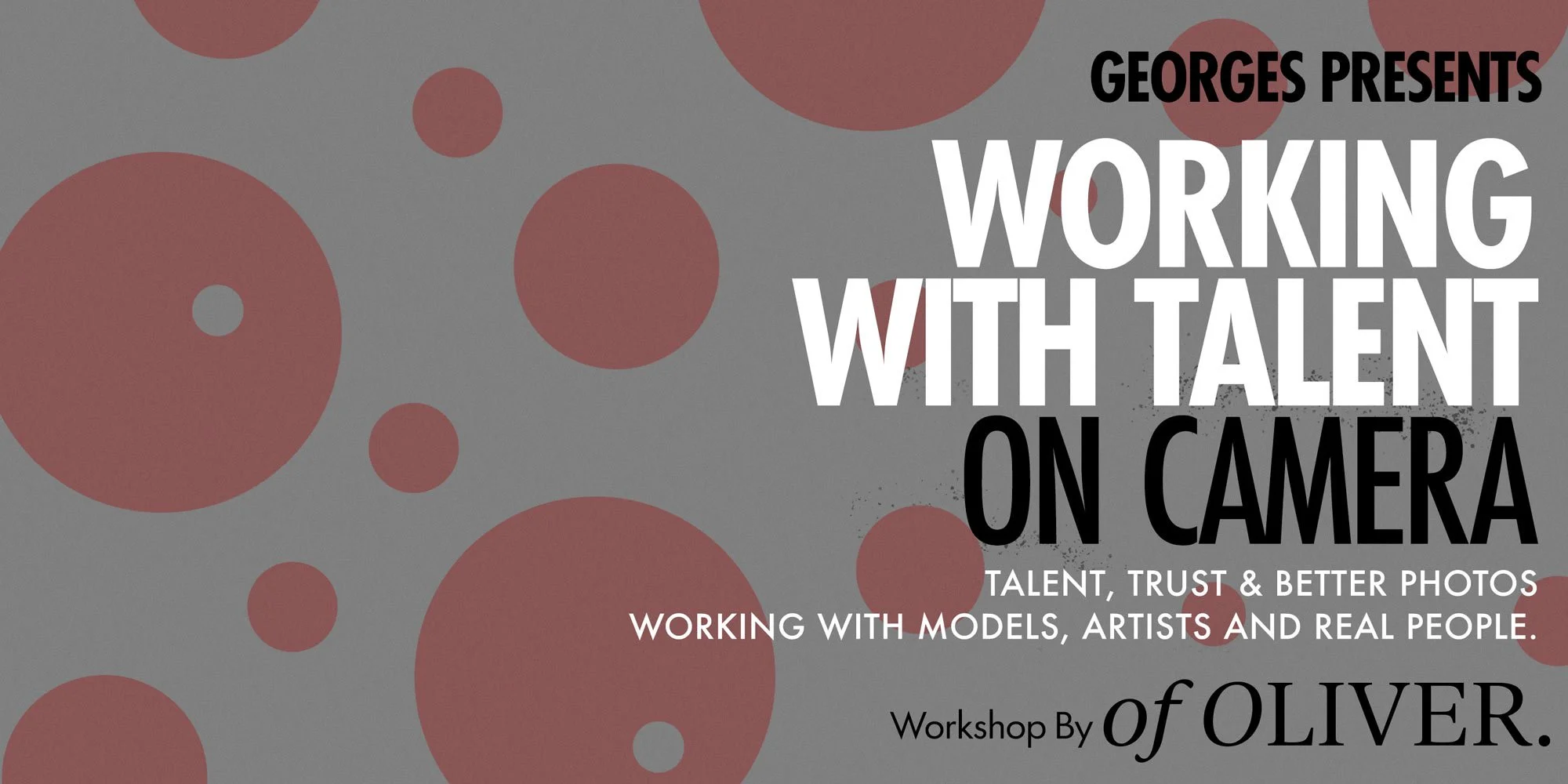
If this lays out some useful stuff, my next workshop is on 28th of May to help you book and build your book!