
Your Portfolio Isn't a Campaign: Why "Good Shots" won’t get you paid.
Most photographers don't struggle because they can't take a good photo.
They struggle because a folder of nice photos is not the same thing as being ready to shoot a campaign.
I see it constantly. Someone has a portfolio full of pretty images. Good light here, a nice moment there, a location that did most of the work. And then a real job comes up, with a client, a brief, a product that has to be shown properly, and suddenly none of it holds together.
Because a portfolio and a campaign are two different things.
A portfolio proves you can make an image. A campaign proves you can make the image someone actually needs, on purpose, under pressure, again and again.
That gap is the whole game. And lately I've been thinking about it a lot, because I've spent the last few months rebuilding my beauty book from scratch.
So to prove a point I've been rebuilding my beauty book
I'm known for swimwear. Beaches, natural light, real people, that whole world.
But I've been deliberately building out a beauty book, and it's not because I got bored. It's because beauty is the most honest test of whether you can actually light. I once had a model agent tell there talent “Oliver shoots beach honey, the man will barely be able to operate a light switch let alone use flash”.
I’ve always thought about that sharp insult, firstly because it’s hilarious, secondly, because it’s entirely inaccurate.
I learnt what I want from light by being in the studio. And when it comes to beauty photography everything is stripped back.
No location doing the heavy lifting. No golden hour bailing you out. No styling to hide behind, no big landscape to carry the frame. It's a face, skin, and light. That's it.
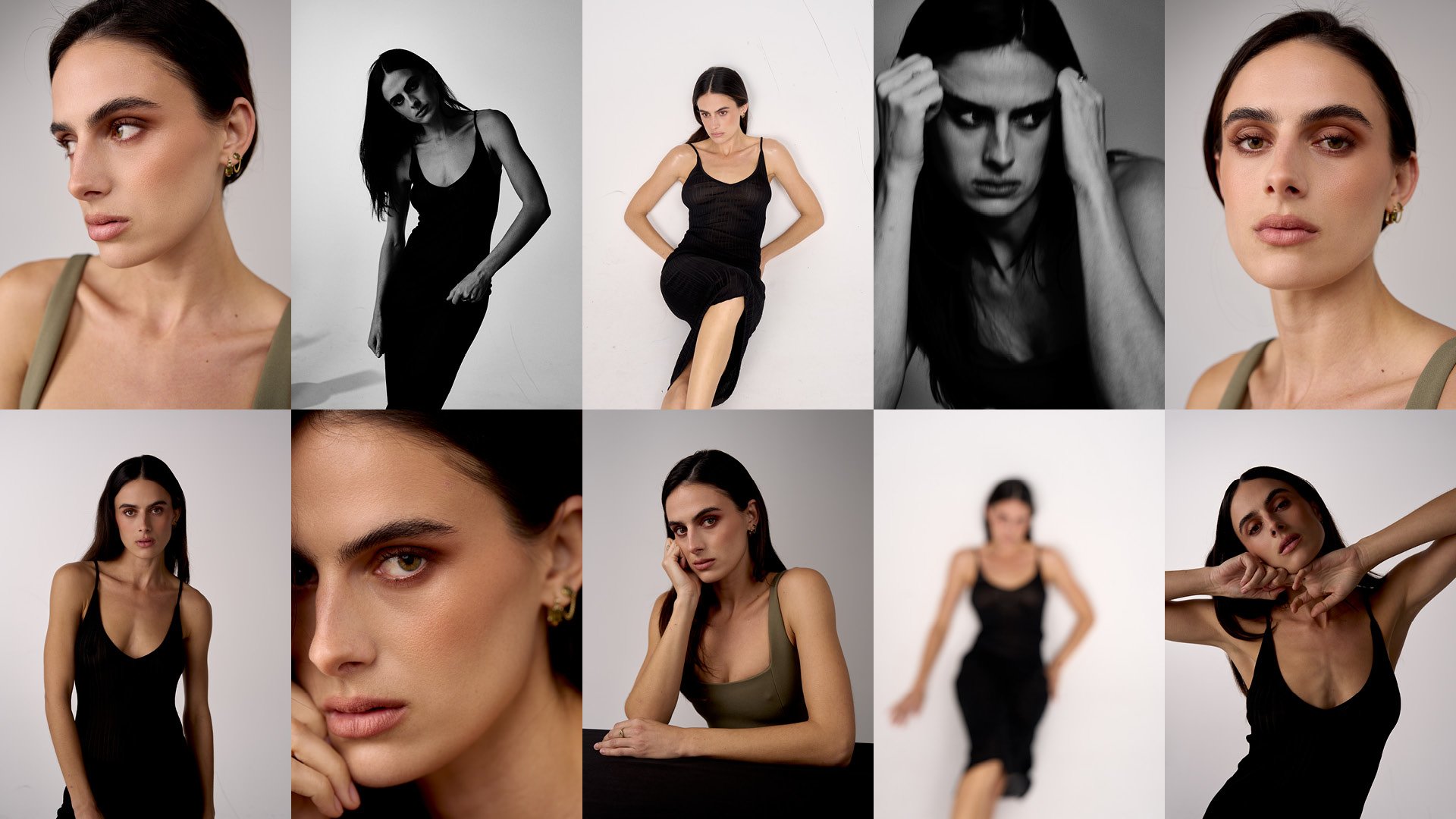
Lillie Bennetts from Merci Management HMUA: Katy Nicholls
If your lighting is weak, beauty is where it gets exposed.
Every decision shows. Where the light falls off. How the shadow wraps a cheekbone. Whether the skin has texture and life or just looks flat and lit. There's nowhere to bury a lazy choice. The image is either controlled or it isn't.
So rebuilding a beauty book isn't a vanity project. It's me putting the least forgiving genre I can think of in front of a camera and proving, frame by frame, that I can put the light exactly where I want it.
Lighting is the thing that turns a portfolio into a campaign
Here's what I want newer photographers to understand.
When a client is deciding whether to hand you a campaign, they are not just asking "can this person make one nice picture?"
They're asking "can this person do it on demand?"
Can you match the light across a full shoot day so the images cut together as a set? Can you hit the same look twice when the first take doesn't work? Can you shape a product properly, control the mood, and deliver something the brand can actually use across a website, a billboard and a phone screen?
That's not luck. That's control.
And control is a technical skill. It's lighting, mostly.
A portfolio built on lucky light says: sometimes I get it right.A book built on deliberate light says: I get it right because I know exactly what I'm doing.
One of those gets you booked. The other one gets you a "we'll keep you in mind."
That's really what a strong book is for. Not to show off your best fluke. To prove you have a process that produces good images repeatedly, because that's the only thing a paying client is actually buying.
The uncomfortable part
A lot of photographers don't want to hear that the fix is technical.
It's more fun to believe you just need a better camera, a cooler location, or a more interesting model. Sometimes you do. But more often, the reason your work doesn't feel campaign-ready is that you don't yet have full command of your light.
You can feel it in your own images. Something is almost there. The face is nice but the shot feels flat. The pose works but the mood is wrong. The picture is fine, but it doesn't feel considered.
That's usually not a talent problem. It's a control problem.
And control is learnable. That's the good news. Lighting is one of the few parts of this job that rewards deliberate practice more than natural taste. You can drill it. You can get to the point where you walk onto any shoot and build the light you want in minutes, instead of hoping the room does you a favour.
That's the whole reason I rebuilt the beauty book the way I did. Not to have prettier pictures. To make the technical command undeniable, so that when a brief lands, the work already answers the client's real question before they've asked it.
Where this is going!?
This is the first thing I'm digging into at Shooting Photography Campaigns: From Brief to Delivery, on Thursday 23 July at Georges Cameras in Chatswood, supported by Profoto.
It's a practical night about turning portfolio-level work into paid, deliverable campaign work. How to read a brief, ask the right questions, build a shot list that's actually possible, and deliver images a client can use. I'll also be interviewing working campaign photographers about how real shoots run when there's money, a deadline and a client on the line.
If you want to go deeper on the lighting side specifically, that's the whole focus of the next session, Practical Lighting: Creating Authenticity With Strobe on Saturday 22 August — five hours, hands-on, building strong light fast and under pressure. The two go hand in hand.
Both are part of From Portfolio to Campaign, the series I'm running to help photographers build a body of work that gets them booked.
Because photographers get told nice photo. Image makers get paid.